How to Choose a Wine Rack
A bottle stored improperly won’t age well. A bottle stored properly but tucked away in a cupboard will be forgotten. The challenge of storing wine bottles lies somewhere between these two pitfalls. First and foremost, it’s about proper storage. It’s about being able to find your bottles without having to move everything around. And, for many, it’s about giving them a special place in the decor.
Choosing a wine rack rarely depends on a single factor. It comes down to three key considerations: how you drink wine, how many bottles you keep, and how you want your bottles to look. This guide reviews the different uses, technical specifications, and available sizes to help you make a decision.
- To age your fine wines over several years: a wine cellar is the only way to ensure stable temperature and humidity levels.
- To store your wine throughout the year and display your collection: a wine rack, a shelf, or a modular wall system.
- For capacity: allow for a 30% to 50% buffer above your current inventory.
- In any case: Store bottles on their sides, away from light, vibrations, and temperature fluctuations.
Don't have time to read it all? Find the right storage solution in three questions →
Determine the intended use before choosing the format
Before comparing models, you need to clarify what you expect from your storage solution. There are three main uses, and each calls for a different solution.
Long-term storage
If your goal is to age fine wines over several years, the requirements are strict: a stable temperature between 10 and 14 °C, ideally around 12 °C; controlled humidity between 60 and 75%; darkness; and no vibrations.
These conditions cannot be improvised. They require a natural cellar or an electric aging cellar, specifically designed for this purpose.
An open storage unit placed in a living area will never serve this purpose. It’s best to know this from the start: when it comes to aging exceptional wines, no shelf or rack can replace a dedicated wine cellar.
Short rotation and preheating
Most wine enthusiasts don’t follow a long-term aging strategy. They buy cases of six or twelve bottles, drink them within a year, and simply want to keep their bottles within easy reach and at the right serving temperature.
This use, by far the most common, opens up a much wider range of options: a utility cabinet, a shelf, a dedicated piece of furniture, or a pantry.
Presentation and staging
There is one aspect that technical guides often overlook: a bottle is also an object. Its label, shape, and history all contribute to the atmosphere of a room. Displaying a selection on a wall, in an entryway, or in an open kitchen is as much an aesthetic choice as it is a practical one.
It is in this context that wall-mounted wine racks, wine walls, and shelving systems designed to display rather than hide have emerged.
Technical criteria you need to know
Regardless of the format you choose, there are a few storage guidelines to follow. Ignoring them is tantamount to spoiling the wine before you’ve even opened it.
The supine position: a non-negotiable rule
A bottle sealed with a cork should be stored on its side. This keeps the wine in contact with the cork, which maintains its moisture and seal. A dried-out cork lets air in and causes the wine to oxidize.
Any proper wine storage follows this horizontal orientation. Only natural sweet wines, fortified wines, and bottles with screw caps can be stored upright over the long term.
Light, vibrations, and temperature fluctuations
Direct light, especially UV light, degrades the aromas. Vibrations disturb the sediment and accelerate aging. Sudden temperature fluctuations stress the wine.
A good location is therefore dark, stable, and quiet. For short-term storage, these requirements are flexible; for longer-term storage, they become critical.
The issue of accessibility
An often-overlooked factor: if reaching a bottle means moving three others out of the way, it will end up forgotten at the back of the shelf. Open-fronted shelving, where every bottle remains visible and within easy reach, changes the way we use it on a daily basis.
This is one of the reasons why systems that display the label facing you—rather than the back of the bottle—are preferred.
Overview of Storage Formats
Here are the main types of bottle storage solutions, along with their strengths and practical limitations.
The traditional locker
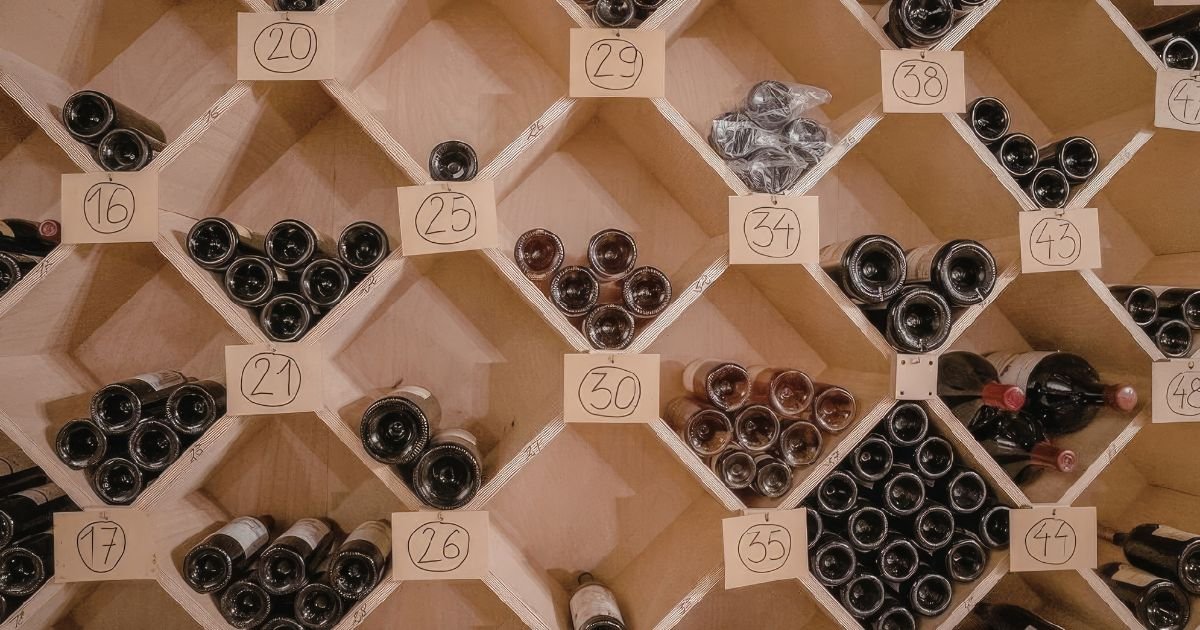
Whether made of wood, metal, or polystyrene, the rack is the most common storage solution. A metal or wooden bottle rack can be placed on the floor, stacked, or slid under a countertop. Inexpensive and quick to set up, it can be expanded simply by stacking additional units.
Its limitations lie in its appearance—which is often more functional than stylish—its bulkiness, and the fact that its capacity is fixed once the stack is assembled. For beginners or for storing a supply in a pantry, the wine rack does the job just fine.
The wine storage cabinet
Whether it’s a sideboard, console table, or china cabinet with built-in bottle racks, wine storage furniture is appealing for its dual purpose. It fits seamlessly into your existing decor and combines storage with usable counter space.
On the other hand, its capacity remains limited, and wine preservation is only average when bottles are exposed to light or stored upright behind glass. It’s an elegant supplementary solution, but rarely the primary choice for a growing collection.
The wall shelf and the modular system
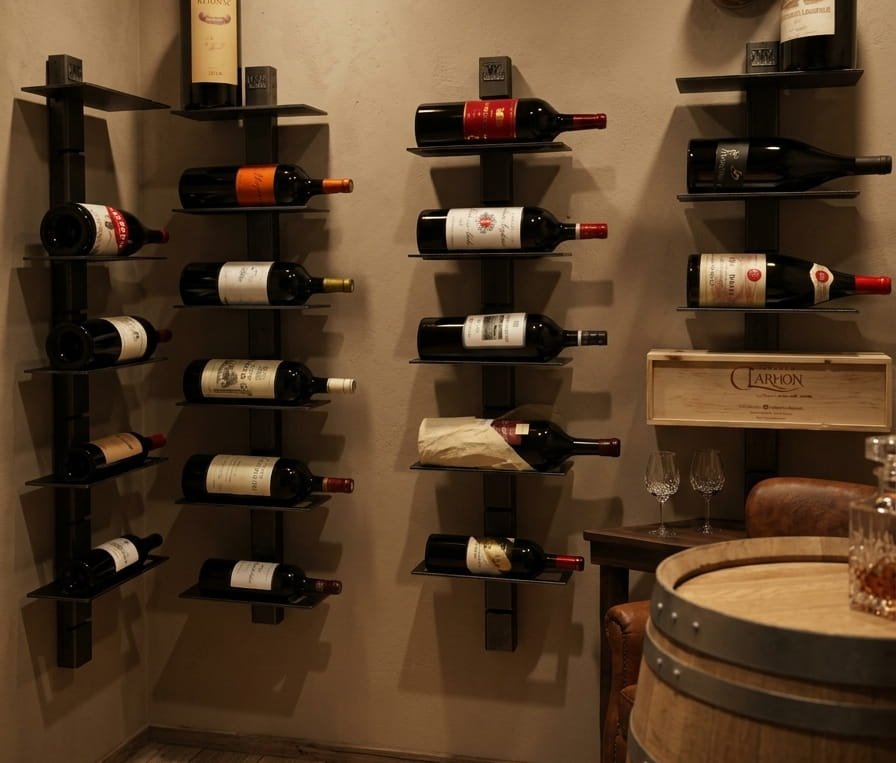
A wall-mounted shelf makes use of vertical space rather than floor space. A wall-mounted wine rack or bottle rack frees up floor space, displays bottles at eye level, and turns storage into a decorative feature. Modular systems take it a step further: they allow you to add modules as you acquire more bottles, without having to redesign the entire setup.
The Wine Line system exemplifies this modular approach, in which the wall serves as a backdrop for a constantly evolving collection. There are two caveats: a sound, load-bearing wall is required, and the wine is intended for rotation or immediate service, not for long-term storage under controlled conditions.
The wall-mounted wine rack and the custom wine wall
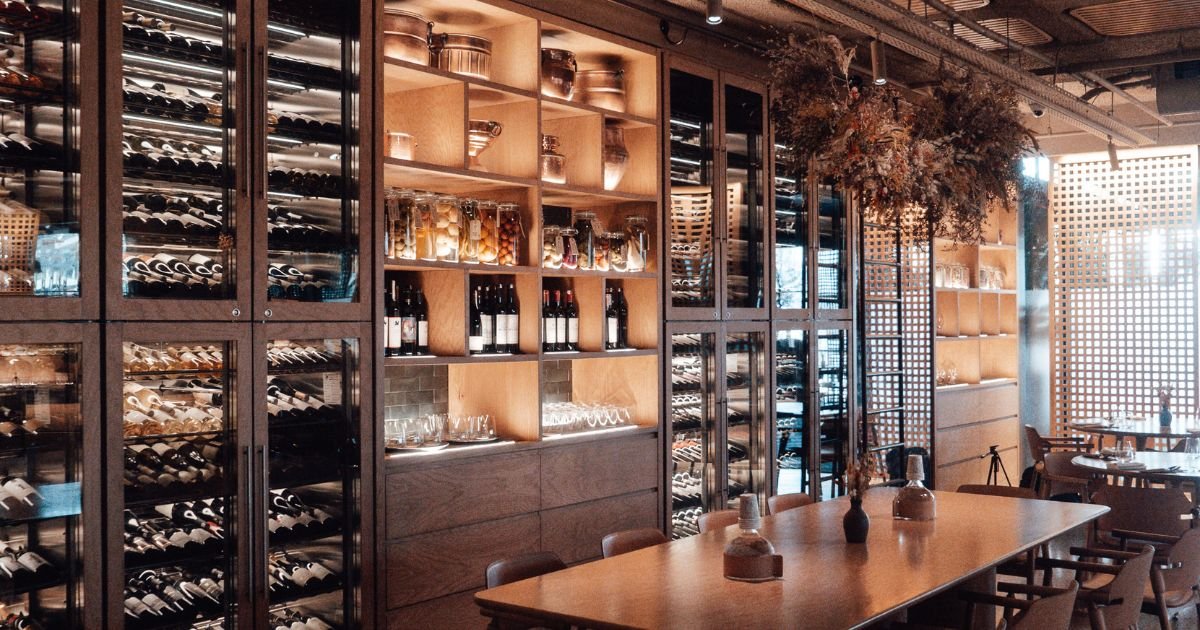
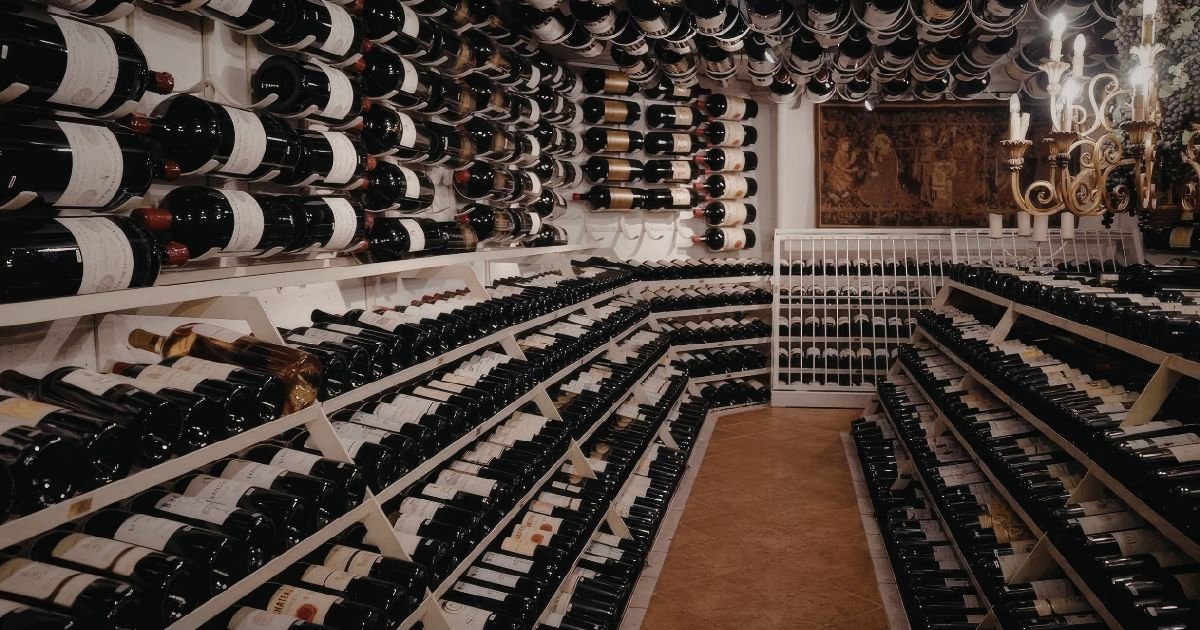
For large collections, built-in wine cellars and custom wine walls offer seamless architectural integration, sometimes with climate control. The storage capacity is substantial, and the result is spectacular. The downside is the cost and the construction work involved: these installations require custom design and a construction project, whereas a wine rack or shelf can be set up on its own in just a few hours.
The electric wine cooler
Finally, the electric wine cooler deserves to be recognized for what it is: a device for preserving wine, whether for serving or aging. Storage isn’t really the main focus here, since the emphasis is on regulating temperature and humidity.
If your primary goal is to age bottles under stable conditions, this is the option for you. If your goal is to organize and display them, the previous options are a better fit.
The issue of capacity
Choosing a capacity means planning ahead. The instinct is to count the bottles you have now, but you should actually be projecting your needs for the next three years. Here are some guidelines by profile:
- Occasional wine enthusiast: 12 to 24 bottles are enough to cover your regular purchases and a few bottles to keep on hand.
- Regular wine drinker: 24 to 60 bottles allow for a comfortable rotation and the building of a small reserve.
- Collector: 60 to 150 bottles, with a need to organize them by type or region.
- Serious collection: once you have more than 150 bottles, the question becomes whether to opt for a dedicated wine cellar or a wine rack.
A simple rule of thumb for making this choice: allow for 30 to 50% more capacity than your current inventory. A collection never stays the same, and a storage space that’s already full leads to piling things up—and ultimately, poor storage conditions.
Materials and Aesthetics
The material is about much more than just aesthetics: its durability, maintenance, and how well it fits into your home all depend on it.
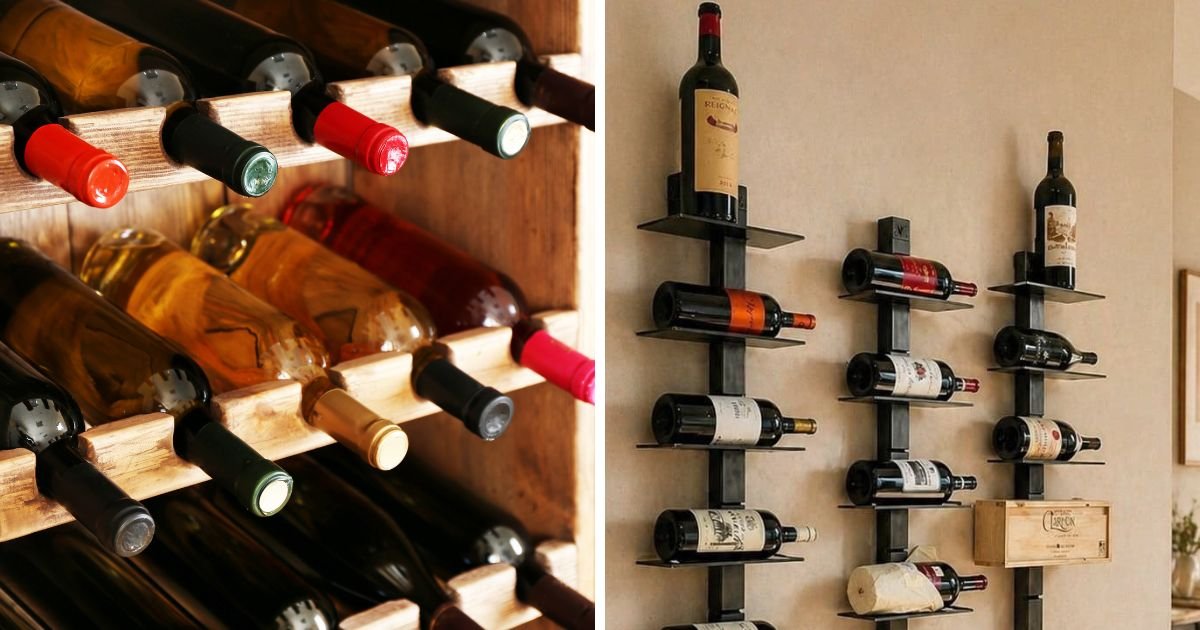
Wood: oak, pine, beech
Wood adds warmth and a natural touch. A wooden wine rack complements both classic interiors and Scandinavian-style spaces, and oak offers lasting durability. Its sensitivity to high humidity and changes in atmospheric conditions remains the main concern, especially in a damp cellar.
Metal and steel: black, raw, or weathered
Metal gives storage a contemporary feel, reminiscent of a workshop. A metal bottle rack or wine shelf offers remarkable structural stability, and treated, lacquered, or stainless steel versions are highly resistant to humidity.
Finishes play a significant decorative role: raw steel with a vintage feel adorns a wall with a bold presence, its patina adding to its charm, while a matte black lacquer blends in discreetly. This raw steel finish is one of the hallmarks found on the most sophisticated wall systems.
Please note that in very humid environments, it is recommended to use corrosion-resistant steel or a protective coating to maintain the appearance over time.
The mix of materials and design
The combination of wood and metal, the interplay of finishes, and the attention to design are what distinguish a utilitarian storage solution from a decorative piece. A designer bottle rack or wall-mounted bottle holder is chosen as much for its style as for its function. This is where storage ceases to be merely a functional item and becomes a stylistic statement.
Making the Right Choice: Three Key Questions
When it comes time to make a decision, break it down into three clear questions.
First, what is your primary use? Long-term storage, short-term rotation, or display? The answer immediately points you toward a dedicated wine cellar, a wine rack, or a wall-mounted shelf.
Next, how will your collection evolve over the next three years? A static inventory works well with a fixed-capacity format. A growing collection requires a scalable system that can expand without having to start over from scratch.
Finally, what level of integration are you looking for? A functional storage solution that can be hidden away, a piece of furniture that blends in with the existing decor, or a bold display that turns wine into a decorative element?
Once these three questions have been asked, the format almost suggests itself.
Find my storage solution
What's the best way to store your bottles?
Three questions to help you determine the right format for your needs, your budget, and the space you have available.
01 What will be your main use for it?
02 How many bottles do you need to store?
03 Where should you place it in your home?
Our recommendation
A wine cellar
Aging fine wines over several years requires a stable temperature and controlled humidity. Only a wine cellar—whether natural or climate-controlled—can guarantee these conditions. No shelf or storage unit can replace it: you might as well get it right from the start.
Our recommendation
A locker or a small shelf
For a collection you’ll use throughout the year, a storage bin or small shelf is all you need: it’s affordable, easy to set up, and convenient to access. It’s the perfect solution for getting started or keeping a small stash on hand while you wait for your collection to grow.
Our recommendation
A modular wall-mounted system
Display, showcase, and expand your collection: a modular wall system does it all. The bottles are at eye level, with the labels facing you, and the wall expands module by module as your collection grows. The Wine Line system, made in France, is a perfect example of this approach.
Our recommendation
An extensive wall-mounted system
With an already extensive collection, a modular wall system can cover an entire wall without sacrificing flexibility. Each module builds on the previous ones: the display grows as the collection expands. The Wine Line system is thus built up, module by module.
Our recommendation
A custom wine rack
For collections of more than 150 bottles, the focus shifts to a custom-built wine wall: architectural integration, substantial capacity, and a spectacular appearance. This is a full-scale design project. However, a modular system like Wine Line can serve as its scalable foundation.
What if the solution were the wall?
For those looking to combine expandability, an attractive display, and space-saving design, the wall is an often-overlooked solution. A modular wall-mounted system holds bottles at eye level, with the labels facing you, and expands module by module as your collection grows. The wall becomes a wine cellar.
This is the Wine Line system’s approach: snap-together modules, a wall mount, a raw or colored steel finish, and a scalable design that adapts as the collection grows. The focus remains on rotation and service, with no claim to long-term storage under controlled conditions. For the display and organization of a living collection, few solutions offer as much flexibility and visual impact.
Learn more about the Wine Line system →
Frequently Asked Questions
Do you need a specific type of wall to mount a wall-mounted wine rack?
A load-bearing, sound wall is recommended, especially for heavy setups. Drywall alone is not strong enough to support the weight of dozens of bottles: you need fasteners suitable for the surface and, ideally, an anchor in a solid wall or on a reinforced stud frame.
How many bottles can fit on a meter of wall space?
It depends on the spacing between the racks, but a well-designed wall-mounted system typically holds between 8 and 12 bottles per linear meter, in a single row. By stacking multiple levels vertically, this capacity can be increased.
Does a wall shelf keep food as fresh as a cellar?
No, and that’s not its purpose. A wall rack ensures proper rotation and storage at the right room temperature. To age fine wines over several years under stable conditions, a dedicated wine cellar remains essential.
Can champagne and magnums be stored on the same rack?
The best-designed modular systems accommodate various bottle sizes, from 75 cl to magnums, and are also suitable for champagne bottles. For sparkling wines, the internal pressure keeps the cork moist, so the bottle’s position matters less than it does for still wine. Simply check that the racks are compatible with the diameters and weights of larger bottles before setting up your system.
How should you store your wine bottles in an open-concept kitchen?
An open kitchen is well-suited to wall storage, which frees up counter space and turns a section of wall into a decorative feature. However, keep bottles away from direct heat sources—such as the oven and stovetop—and from overly bright light to preserve wine intended for short-term consumption.
A wine collection that grows at your own pace.
Modular wall-mounted shelves in raw or lacquered steel. Holds up to 22 bottles per module, 2-year warranty, free shipping on orders over €350.
Explore the collectionExcessive alcohol consumption is harmful to your health. Please drink responsibly.