
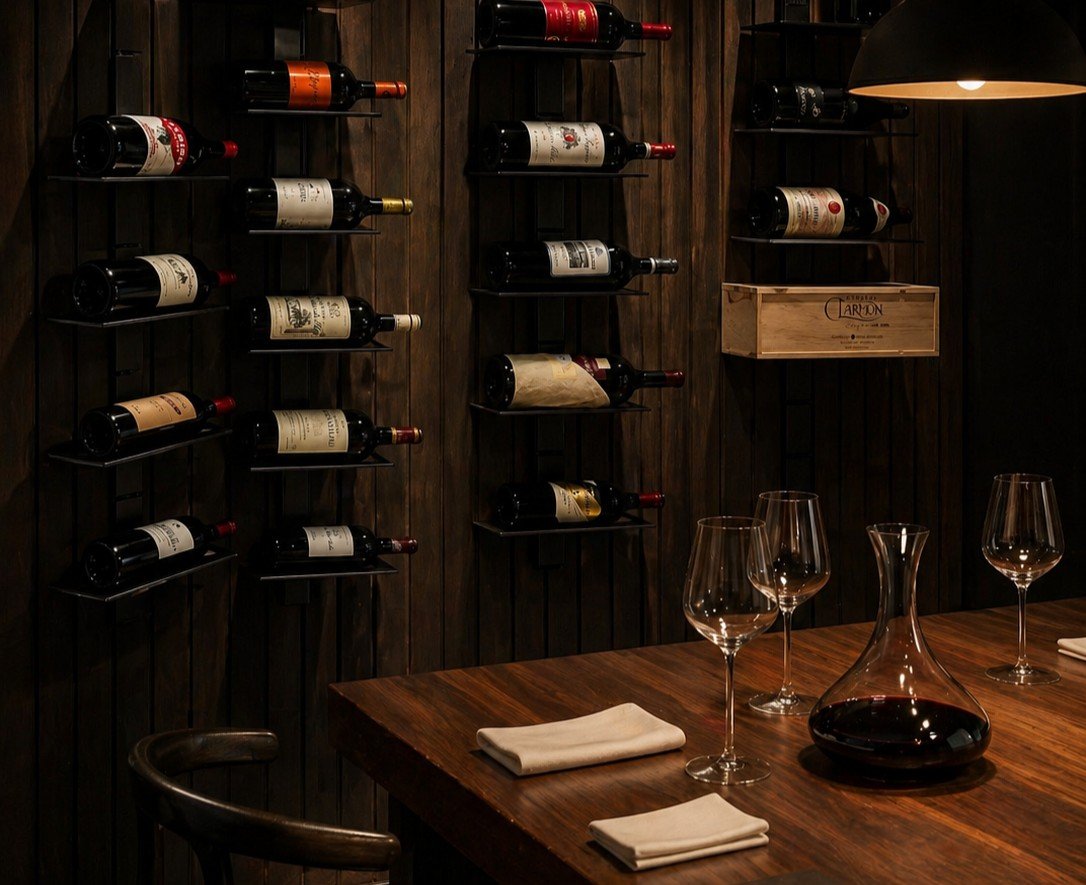
How to Organize Your Wine Cellar: Methods and Solutions for 2026
A growing collection, bottles piling up, and no idea where the 2015 Margaux is. Organizing your wine cellar properly is first and foremost about preservation and ease of use, not decoration. Here’s the method, the right conditions, and the technical choices that ensure your storage system lasts over time.
The 5-step method
Before moving a single bottle, take the time to establish the overall structure. These five steps set the stage for everything else: preservation, clarity, and the ability to adapt.
1. Determine how you will use your basement
It all starts with a simple question: what is your cellar used for? There are three main uses.
- Serving cellar: for bottles to be enjoyed in the coming weeks or months, at serving temperature.
- Aging cellar (or maturation cellar): for wines that need to develop under stable conditions over several years.
- Versatile wine cellar: a compromise that combines both uses in separate areas.
This initial decision sets the tone for everything else: temperature selection, storage type, and layout of the different areas.
2. Take inventory of your collection
List your bottles by wine type (red, white, rosé, champagne), by region (Bordeaux, Burgundy, Champagne, Rhône Valley), and by vintage. This list will serve as the foundation for your future wine cellar logbook. Without an inventory, you can’t maintain an organized collection.
3. Identify temperature zones
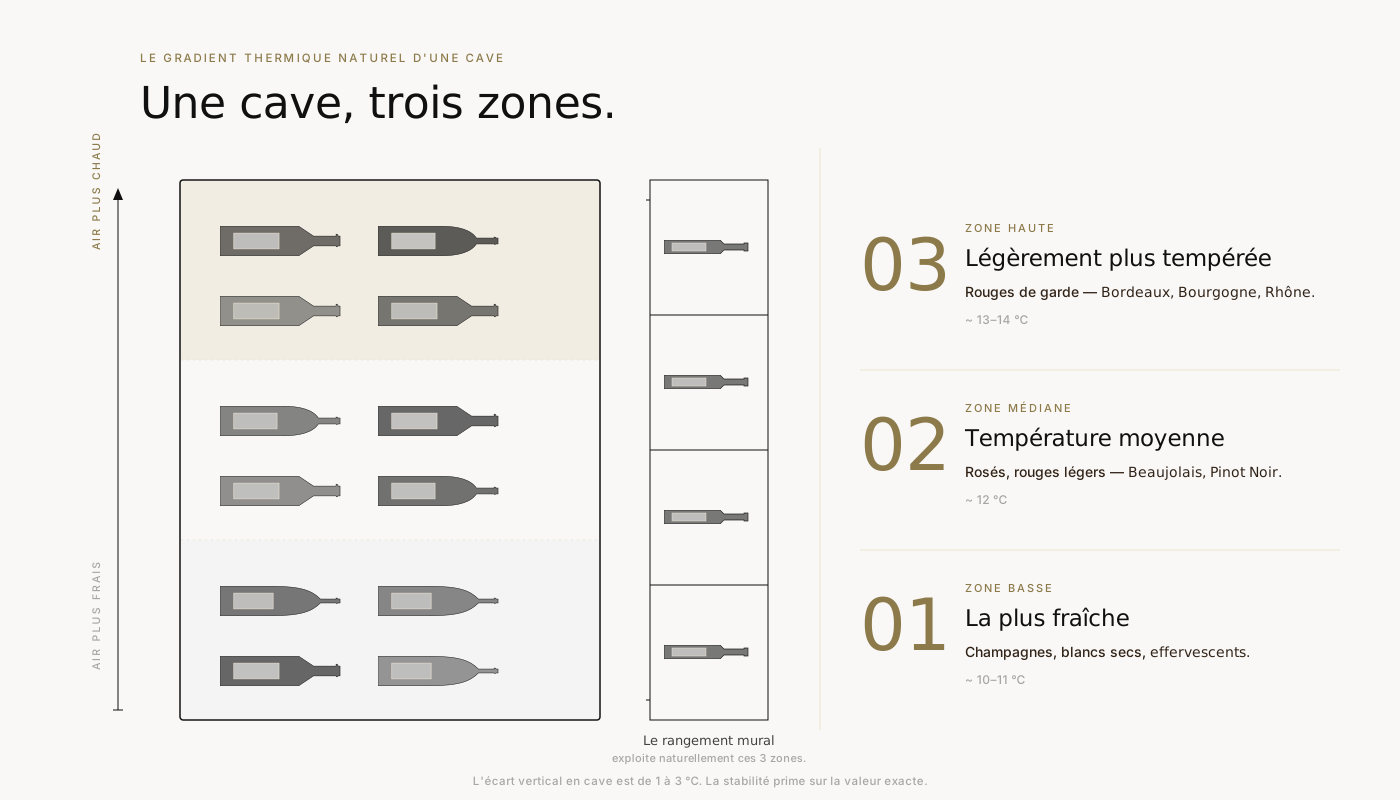
A wine cellar does not maintain a uniform temperature: the lower section is cooler, while the upper section is slightly warmer. This natural temperature gradient is an advantage when it comes to storing each type of wine in its ideal location (we’ll come back to this later).
4. Choose a modular storage system
This is a step that’s often overlooked. A fixed storage solution works well if your collection remains constant, but as soon as it changes—whether due to regular additions, new formats, or a move to a different room—a modular system like a modular wall-mounted wine rack allows you to expand or reconfigure your wine cellar as your collection grows, without having to take everything apart.
5. Keep a cellar logbook
Whether you use a paper notebook or an app, it doesn’t matter: the key is to keep track of every bottle (date of purchase, location, peak drinking window). That’s what turns a simple collection into a well-organized wine cellar.
What's the best way to organize the bottles?
The order in which you store the bottles depends directly on the cellar’s temperature conditions. Here’s how to arrange each wine according to the zone it occupies.
The temperature zone rule
In a cellar maintained at a consistent temperature (around 12 °C on average), a natural temperature gradient occurs: warm air rises, and cool air sinks. This temperature difference of 1 to 3 °C between the bottom and top of the cellar allows each type of wine to be stored in its ideal location.
| Cellar area | Thermal position | Type of wine to serve |
|---|---|---|
| Lower area | The freshest | Champagnes, dry white wines, sparkling wines |
| Middle zone | Average temperature | Rosés, light red wines (Beaujolais, Pinot Noir) |
| Upper zone | Slightly milder | Red wines for aging (Bordeaux, Burgundy, Rhône) |
Temperature stability is more important than the exact temperature. A cellar that maintains a constant temperature of 14°C preserves wine better than one that fluctuates between 10°C and 16°C depending on the season.
The orientation of the bottle
Always store bottles horizontally: this keeps the wine in contact with the cork, preventing it from drying out and maintaining the seal. Placethe label facing up: this allows you to identify the bottle at a glance, minimizing handling and preserving the sediment in aged wines.
Important exceptions: spirits (whiskey, cognac, armagnac) and certain fortified wines with short corks (Tawny and Ruby Port) should be stored upright. However, Vintage Port, Banyuls, and Maury with long corks should be stored on their sides, just like a grand cru.
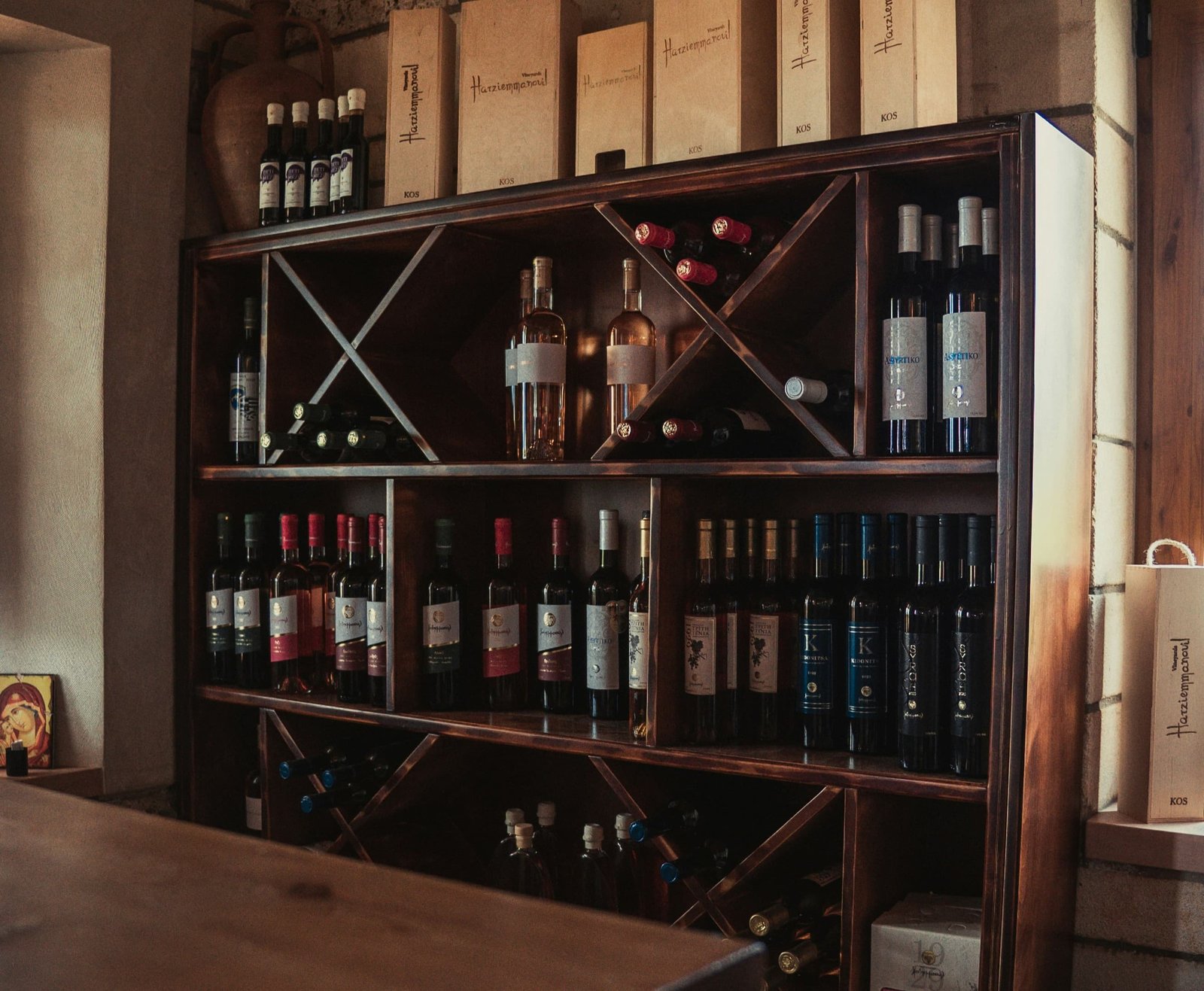
Distinguish between wines for aging and wines to drink now
A well-organized wine cellar combines two principles. The temperature logic (top/bottom axis) we’ve already discussed, and an accessibility logic (front/back axis): wines meant for aging, which won’t be touched for years, should be placed in the most stable area (often the bottom), and wines to be consumed soon should be within easy reach, ideally at the front. This separation prevents you from accidentally opening a bottle that’s supposed to age for another five years.
Maximizing Space: Tips That Make a Real Difference
Whether you have a full-fledged wine cellar or just a small cupboard, making the most of the space is often the key. A few simple choices can make a big difference.
Make the most of vertical space with wall storage
A modular wall rack naturally takes advantage of the temperature gradient in the cellar: warm air rises, while cool air sinks toward the floor. By arranging your bottles across the full height of a wall, you can ensure that each type of wine is stored at its ideal temperature without any additional equipment.
The use of walls also makes a big difference in terms of floor space. Rather than taking up floor space, wall shelves free up floor space and allow you to:
- Store a large number of bottles in a small space
- Adjust the setup to fit the available height
- Keep each bottle visible and within reach (with the labels facing you)
- Add modules over time without having to take everything apart
For wine enthusiasts who want to combine functionality with style, modular steel wall-mounted wine racks are a great solution for both small spaces and large cellars.
A modular wall shelf that grows with your wine collection.
Raw or lacquered steel, holds up to 22 bottles per module, with tool-free clip-on shelves. Suitable for a traditional wine cellar, a contemporary living room, or a professional tasting area.
Explore the collectionGroup by usage in addition to type
In addition to organizing by appellation, create functional zones: “to drink this month” at the front, “to drink within the year,” “long-term aging” at the back or on higher shelves, and “special occasions” that’s easy to spot at a glance. This user-friendly layout is more practical for everyday use than a meticulous system that ends up being forgotten.
Label and number the locations
Number each compartment (A1, A2, B1…) and record these references in your wine log. You can locate any bottle in seconds, without disturbing the others. Essential for collections of more than 50 bottles.
Let the air circulate
Avoid stacking bottles so they touch each other: leaving a small space between each bottle allows air to circulate and helps maintain consistent storage conditions. Open shelving (such as metal shelves) facilitates this airflow and provides better visibility of the labels, which also reduces the need to handle the bottles.
Think modular from the start
A collection always grows faster than you think. Choosing a system that can be expanded (with additional modules or side-by-side or vertical extensions) saves you the expense of having to start from scratch two years down the line.
Storage conditions to be followed
Good organization is useless if storage conditions are poor. Five factors to keep an eye on.
Temperature: Stability Above All Else
The ideal storage temperature is around 12 °C, with an acceptable range of 10 to 14 °C. Above 14 °C, aging accelerates; below 10 °C, it slows down.
More than the exact temperature, it is stability that matters. A cellar that remains at a constant 13 or 14 °C year-round preserves wine better than one that fluctuates between 8 and 18 °C depending on the season. Sudden temperature changes cause the cork to expand and contract repeatedly, which can damage it.
Humidity: around 70%
- Too dry (less than 50%): the corks dry out, air gets in, and the wine oxidizes.
- Too humid (over 80%): mold on the labels and corks.
- Ideal: around 70%, within an acceptable range of 60% to 80%. This range ensures the cap remains airtight without damaging the labels.
Light: The Silent Enemy
Direct light can damage wine, especially UV light. Opt for a wine cellar that is kept completely dark, with lighting used only when you’re inside. If you choose an electric wine cooler, make sure it has a UV-blocking glass door.
Vibrations and odors
Avoid placing the wine cooler near appliances that vibrate (such as washing machines or freezers). Also, keep it away from strong-smelling products: paints, solvents, strong-smelling cheeses, etc.—the cork lets odors through.
Ventilation and carbon filter
For an electric wine cooler, check the charcoal filter regularly: it ensures proper air circulation and protects the bottles from unwanted odors. For a natural wine cellar, gentle ventilation (via a vent or duct) is sufficient to maintain clean air without disrupting the temperature.
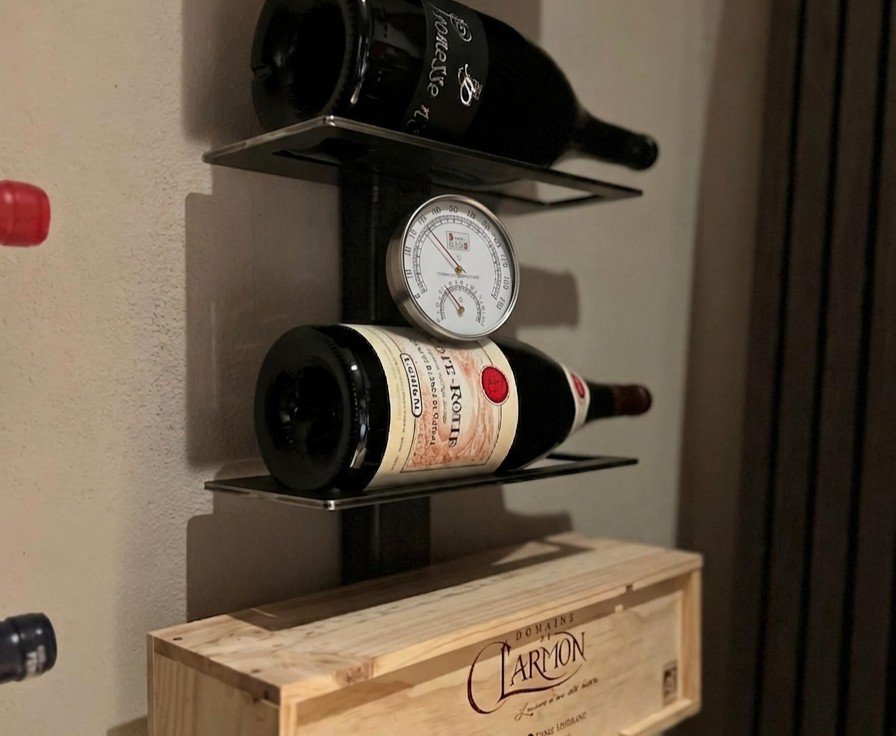
What factors should you consider when choosing a storage system?
Not all storage solutions are created equal. Here are the factors to consider before making a purchase.
| Criterion | Floor-standing cabinet | Wall shelf | Electric wine cooler | Closed cellar |
|---|---|---|---|---|
| Footprint | Important | Virtually zero | Important | Important |
| Capacity | High | Tall (height-adjustable) | Limited by the model | Average |
| Modularity | Depending on the model | High (lateral and vertical extension) | Very low | Low |
| Label visibility | Variable | Optimal | Good | Limited (doors) |
| Air circulation | Variable | Excellent (openwork) | Active ventilation | Limited |
| Temperature and Humidity Control | Depends on the cellar | Depends on the cellar | Active (adjustable) | Depends on the room |
| Aesthetics | Classic, traditional | Contemporary, showcasing the bottles | Technology, design | Discreet, built-in |
| Ideal use case | Natural wine cellar, extensive collection | Compact spaces, living room, finished basement | No basement available | Integration into existing furniture |
The Case of Large Formats
Magnums (1.5 L), Jeroboams (3 L), and specialty bottles (such as Jura clavelins and Alsace flutes) rarely fit in standard wine racks. If your collection includes any of these or if you plan to purchase them, make sure your storage system can accommodate at least one module designed for these sizes.
Which material should I choose?
Every material has its own advantages. The choice depends on your budget, the look you’re going for, and the specific requirements of your room.
- Wood (oak, pine, beech) remains a classic choice. It fits easily into a traditional wine cellar and effectively dampens vibrations. One thing to watch out for: its susceptibility to high humidity over the long term, which can cause swelling or mold on lower-end models.
- Terracotta (honeycomb panels or bricks) offers excellent thermal mass and naturally regulates humidity. A suitable choice for a natural underground cellar. Limitations: heavy weight, limited modularity, very rustic appearance.
- Raw steel lends an industrial character and develops a patina over time. Sturdy, openwork, and versatile. Note: Steel conducts heat and does not provide thermal inertia on its own, unlike stone or terracotta. This is not an issue in an already temperature-controlled environment (a finished cellar, an air-conditioned living room, a stable interior), but should be considered in a natural cellar subject to significant seasonal temperature fluctuations. See the modular wall-mounted wine rack in raw steel.
- Painted steel offers the same durability with a more contemporary finish, in a color that won’t fade and blends seamlessly into any type of interior (living room, dining room, open-concept kitchen). See the painted steel model or the mixed version that combines both finishes.
- Electric wine coolers are typically made of glass and stainless steel. They allow for precise control of temperature and humidity, but they have limited capacity and come at a higher price.
Wood and terracotta are well-suited for natural wine cellars; steel is versatile and works equally well in a dedicated wine cellar or a living space; electric wine cellars are the turnkey solution when a natural wine cellar isn’t available.
What kind of storage system should you choose for your wine cellar?
A few questions to help you find the right solution for your project.
Good habits for everyday life
Once your pantry is organized, a few simple habits will help keep it tidy over time.
- Update the cellar log with every transaction: adding a new bottle, removing a bottle for tasting, or moving a bottle to a different area.
- Handle the bottles as little as possible, especially wines meant for aging: each time you handle them, the sediment is stirred up.
- Regularly check the condition of the corks (seepage = problem), the labels (moisture stains), and the level in the bottle (abnormal drop).
- Rotate the wines you plan to drink on a first-in, first-out basis to avoid accidentally letting a wine age that isn't suited for it.
- Fill from the bottom and avoid empty rows: full bottles add thermal mass, which helps stabilize the temperature. A well-stocked wine cellar maintains its conditions better than one that is half-empty.
- Reorganize once or twice a year: this is a good opportunity to review the layout, remove wines that have reached maturity, and adjust the sections if the collection has grown.
In summary: your checklist
- Define the use (service, storage, multipurpose)
- Conduct a comprehensive inventory
- Take advantage of the temperature gradient (white and sparkling wines on the bottom, age-worthy reds on the top)
- Bottles lying on their sides, labels facing up
- Distinguish between wines for aging and wines to drink now
- Maximize space with modular wall storage
- Monitor temperature (10–14 °C, ideally 12 °C) and humidity (60–80%, ideally 70%), and keep away from light
- Keep a cellar log up to date
Organizing your wine cellar effectively means, above all, choosing a system that grows with your collection rather than limiting it. If you’re looking for a durable, modular solution that works equally well in large cellars and small spaces, explore theWine Line rangeof modular wall-mounted wine racks: made of steel and designed to expand, they adapt to both your wall and your collection.
A wine collection that grows at your own pace.
Modular wall-mounted shelves in raw or lacquered steel. Holds up to 22 bottles per module, 2-year warranty, free shipping on orders over €350.
Explore the collectionExcessive alcohol consumption is harmful to your health. Please drink responsibly.