Wine for aging or table wine: What's the difference, and how can you tell them apart?
Wine for aging, wine to drink young, table wine. One of these three terms was eliminated in 2009 and says nothing about a bottle’s quality. The other two determine whether you need a wine cellar or a cupboard. You might as well know which is which before spending any money.

“Table wine,” a category that has not existed since 2009
The European reform of the common organization of the wine market (Regulation (EC) No. 479/2008, with implementing rules set forth in Regulation (EC) No. 607/2009) has redefined the categories. This is therefore not a French decision: it was EU law that eliminated the “table wine” category; France merely implemented it. Since August 1, 2009, wines that do not claim either AOP or IGP status fall under the category of wines without a geographical indication (VSIG).
Be careful with the terminology, because that’s where everyone gets it wrong. The category is called VSIG. “Vin de France” is the designation that identifies it on the label, and it appears only if the grapes were harvested and vinified in France. A VSIG made from a blend of grapes from several countries carries a different designation, such as “vin de l’Union européenne.” Not all VSIGs sold in France are “Vin de France.”
Another point to clarify: the French category has been replaced, not banned. The term “table wine” is still used elsewhere in the world and survives in everyday language, where it loosely refers to everyday wine. This meaning has no legal standing.
The most interesting change concerns the label. A wine without a geographical indication may list its grape variety and vintage, something that the former “table wine” was not permitted to do. This freedom is subject to certain conditions: at least 85% of the grapes must come from the claimed vintage or grape variety (100% if multiple grape varieties are listed), and the claim must be certified. In France, this certification is handled by FranceAgriMer, but only for VSIGs that claim a grape variety and/or a vintage (Decree No. 2010-1327 of November 5, 2010): the producer must be pre-approved, the wine must be certified before being sold, and the DGCCRF then conducts inspections at the distribution stage.
As a result, some winemakers choose this designation deliberately. A blend that falls outside the appellation’s specifications, a grape variety planted where the decree does not allow it, or winemaking practices deemed too unconventional: all of these can produce an excellent wine, but one that doesn’t fit into the usual categories. It will be released as a “Vin de France.” The Domaine de Trévallon, which was excluded from the Les Baux-de-Provence AOC due to an unapproved Syrah-Cabernet blend, is a textbook example of this.
- AOC (Appellation d’Origine Contrôlée): the French designation. The area is clearly defined, and the specifications govern grape varieties, yields, and, in some cases, aging. The connection to the terroir is the most stringent.
- PDO (Protected Designation of Origin): the European designation. It is not synonymous with AOC: AOC is the mandatory national step required to obtain PDO status. Both designations may appear on the label.
- PGI (Protected Geographical Indication): a larger area, more flexible rules. Not to be confused with PDO; the level of restrictions is not the same.
- Vin de France: no geographical indication. Grape variety and vintage have been permitted since August 1, 2009, subject to certain conditions.
None of these designations say anything about a wine’s aging potential. A prestigious AOC may be intended to be drunk within a year. A Vin de France may have the structure of a wine meant for aging. The appellation is an indication of style and origin, not a promise of longevity.
What is a young wine?
We’re talking about a wine meant to be drunk young. It’s a wine designed to be enjoyed within 1 to 3 years of the harvest. This isn’t an official category; rather, it’s a winemaking intention established right from the harvest.
Maceration is brief, to extract only a small amount of tannins. The wine is aged in tanks rather than barrels, to preserve the fruit rather than add structure. The acidity remains moderate, and the wine appears round and approachable right from the bottle. The result is a supple, fruity wine that’s ready to drink and requires no patience.
That is both its appeal and its limitation. What makes it so good—its vibrant fruit, freshness, and energy—is exactly what time spoils first. A Provence rosé, a Beaujolais, a crisp Sauvignon Blanc, a light, thirst-quenching red: these wines have nothing to gain by waiting in the cellar. They lack the substance to age.
Two important points to note. A wine meant to be drunk young is not a cheap wine: some classified growths are meant to be opened within three years. And it is not a wine without an appellation: most of those sold in France are AOC or IGP.
So the right question is never “Is this a good wine?” It’s “When should I open it?” The question remains: what, in a bottle, determines the answer?
A wine suitable for aging isn't just a label claim
Look for “vin de garde” on a bottle—you won’t find it. There is no regulation governing this term. It is an oenological concept—a characteristic of a wine whose structure allows it to develop greater complexity over several years.
The distinction matters, and many people miss it. A wine that “ages well” simply holds up: it doesn’t spoil too quickly. A wine with aging potential does something else entirely. It evolves. Its tannins soften through polymerization, and its primary aromas of fresh fruit give way to tertiary notes (forest floor, leather, spices, and truffle for reds; honey and candied fruit for some whites). The wine becomes different—often more complex.
Not all wines follow this path. In fact, most of them don't.
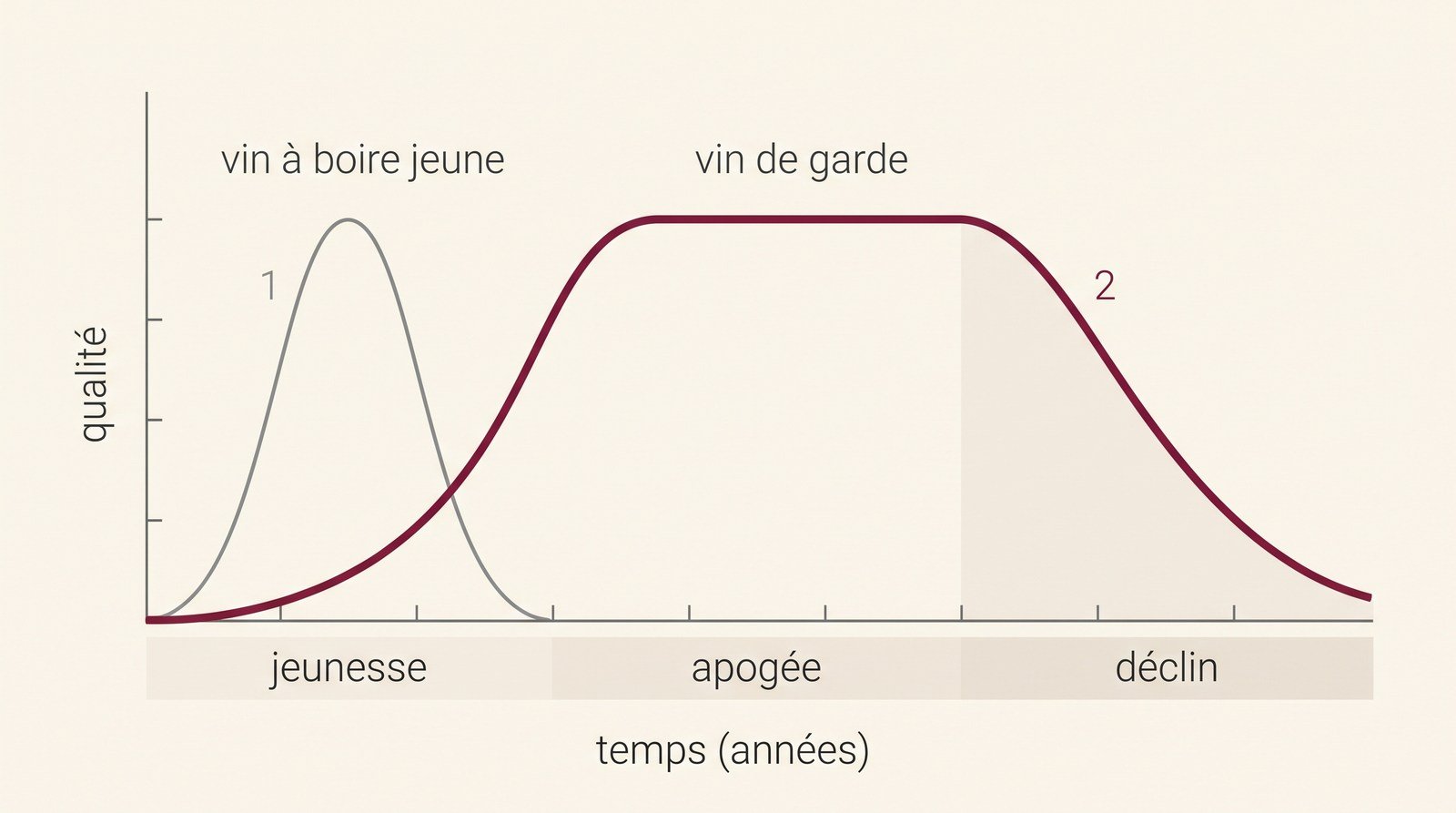
Youth, Prime, Decline
According to a classic educational model, a wine goes through three stages. In its youth, the fruit dominates, the body is sometimes a bit harsh, and the tannins are grippy. Next comesthe peak—that plateau where a balance is struck between structure and aromas. Then comes the decline: the fruit fades, the acidity remains the sole element, and the wine becomes hollow.
This model glosses over a phase that you will, however, encounter: the “closed” phase—that difficult stage when a wine meant for aging seems flat, muted, almost disappointing, even though it is actually in the midst of evolving. Don’t jump to the conclusion too quickly that a bottle is past its prime. It may simply be “closed.”
The key question is where the peak lies. For a rosé from the current vintage or a Beaujolais Nouveau, it comes quickly and the plateau is short. For a great, tannic red, it may lie much further down the line, with a plateau that stretches over several years. Waiting for a wine that lacks the structure to age is simply pushing it toward its decline.
What Really Sets a Wine Meant for Aging Apart from a Wine Meant to Be Drunk Young
Neither the label, nor the price, nor the name of the château. First, the wine’s structure. Three elements act as natural preservatives: tannins,acidity, and—when present— sugar. The concentration of solids completes the picture. The rest, as we’ll see below, does not contribute to this potential: storage, corking, and bottle size merely preserve or destroy it.
| Criterion | A wine to be enjoyed young | Wine for aging | How to Spot It |
|---|---|---|---|
| Tannins (red) | Smooth, mellow, and subtle. The wine goes down easily. | Dense, tight, and sometimes a bit harsh when young. They need time. | On the palate: a dry sensation on the gums, a rough feeling on the tongue. Be careful—aggressive astringency can also come from green tannins, which come from unripe grapes: these will never mellow. Look for fruit notes underneath. |
| Acidity | Moderate. The wine seems round and easy to drink. | Prominent. It is the backbone of aging, especially in white people. | Salivation after a sip indicates acidity. It is a factor in a wine’s longevity, not a sign of structure: a light, acidic white wine is not a wine meant for aging. |
| Residual sugar | Absent or negligible (dry wines). | Aged with sweet and semi-sweet wines: the sugar protects the wine. | The description on the label (sweet, syrupy) and the sweet taste on the palate. |
| Alcohol content | Often lighter. | Varies. A high degree is sometimes accompanied by a high level of maturity. | The lowest figure in the table. Some of the wines best suited for aging have an alcohol content of 8 to 10° (German Rieslings, Chenins from the Loire). A wine with an alcohol content of 14° is not automatically a wine for aging, and a light wine is not necessarily destined to be drunk young. |
| Concentration | A light, aromatic, straightforward wine. | Full-bodied, long finish, aromas that linger after swallowing. | A long finish indicates quality and concentration, not aging potential: a wine with a very long finish may be meant to be drunk right away. Consider this in relation to the tannins and acidity. |
| Livestock Farming | A short aging period in the tank. The fruit character is preserved. | Aged in oak barrels for a longer period: the wood releases tannins and allows for micro-oxygenation. | The phrase “aged in oak barrels” or “aged in barriques.” This is also a weak indicator: some of the greatest wines meant for aging never see wood (Riesling, Chablis). |
An honest observation about this chart: no single criterion is enough on its own. It’s the balance of these factors that makes a wine suitable for aging. A wine that’s very tannic but lacks fruit will never become a great wine as it ages; it will simply lose what little it had. Time doesn’t fix anything; it reveals what was already there. The phrasing is a bit dry, but it sums up the mechanics pretty well.
How to Identify a Wine Suitable for Aging on a Label
Before you open the bottle, all you have is the label. Here’s what’s worth reading:
- The grape variety, when specified. Some grape varieties naturally produce tannic or very acidic wines, while others do not at all. This is an indication of structure, to be considered in conjunction with the other factors.
- Alcohol content. It says more about the style than about the wine’s aging potential. Use with caution.
- Aging claims. “Aged in oak barrels,” “aged for 12 months in barriques”: the producer has invested time and wood. In our view, this is merely a signal—nothing more: wood is also sometimes used to mask a wine that’s a bit lacking.
- The appellation. It provides information about the style typical of the region and the production specifications. It does not indicate the aging potential of this specific bottle.
- The vintage. A difficult harvest year rarely produces wines with long aging potential, even at a reputable winery. Treat the vintage as a reference point, not as a ranking.
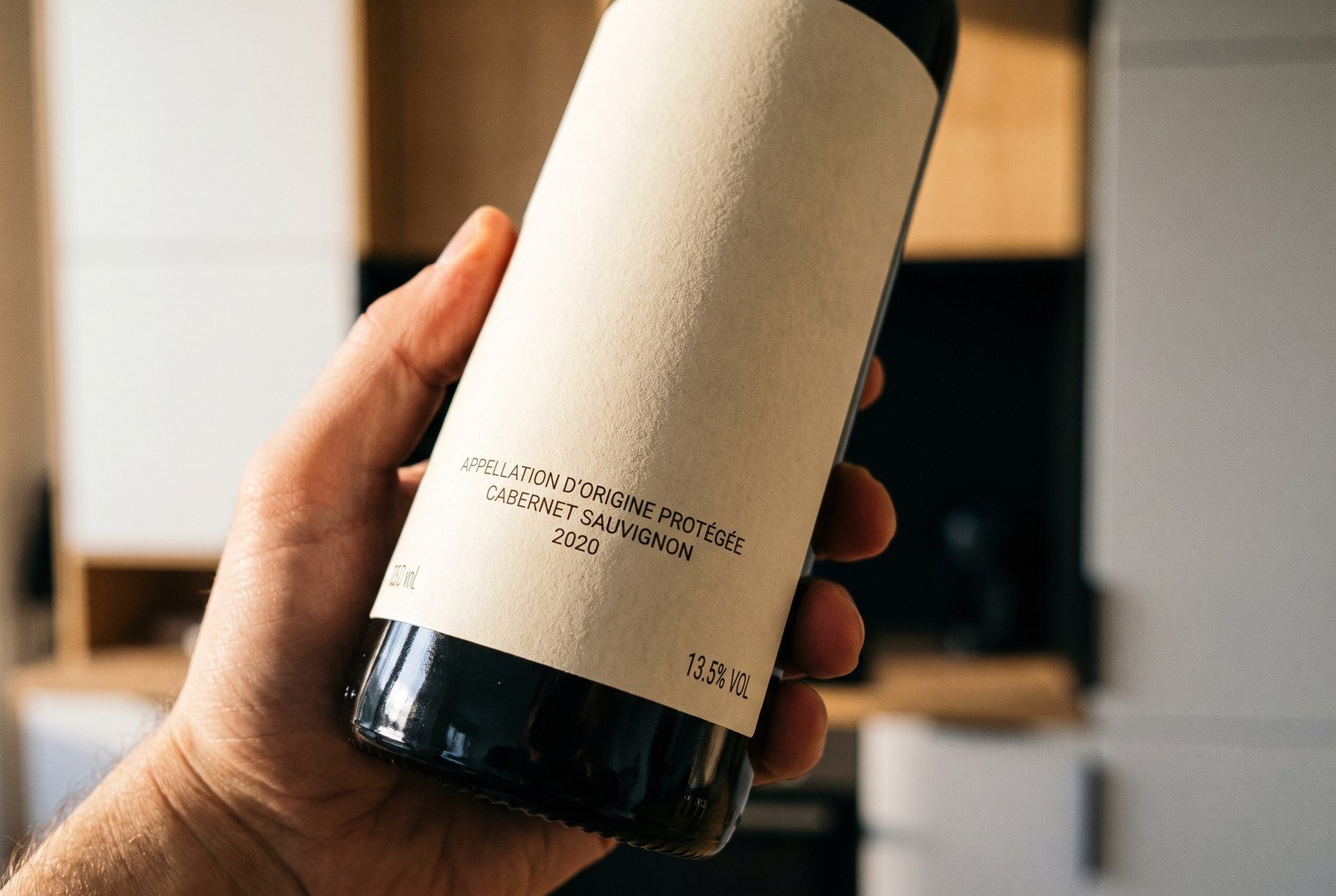
And terms that mean virtually nothing: “grande réserve,” “cuvée prestige,” “aged in the cellar.” Except in cases governed by the specifications of certain appellations, these terms are not regulated designations in France. They are simply marketing terms used by the winery.
That said, there’s an important caveat: a label never tells the whole story. It provides some helpful clues, but for the rest, you’ll have to taste the wine or ask someone. If you’re planning to build a wine collection, our article on which wines to buy for aging goes into detail about what to look for when purchasing.
Should you throw away wine that isn't meant for aging?
No. And it needs to be said, because, in our view, childcare has sometimes become a form of snobbery.
The vast majority of bottles produced worldwide are made to be drunk young: reference works estimate that more than 90% of wines are meant to be drunk within a year and less than 1% are meant to age beyond five years. This is not a design flaw; it is intentional. A lively, lemony white, a thirst-quenching, fruity red, a spring rosé: their quality lies in their fruitiness, energy, and freshness. These are precisely the qualities that time destroys first.
Keeping a wine that’s meant to be drunk young for five years doesn’t improve it. It dulls it. You end up with a tired wine that has lost its fruitiness without ever gaining in complexity, and you blame yourself for opening it too late. It’s not the wine’s fault.
A successful wine—as we like to put it—is one that’s enjoyed at the right moment.
How long can you keep wine?
Three categories, with intentionally broad ranges. Actual aging times depend on the region, the vintage, and, above all, storage conditions.
| Family | Approximate range | Typical Profile |
|---|---|---|
| Short guard | 1 to 3 years | Fruity wines with low tannins and low acidity. Rosés, aromatic whites, and light reds. Best enjoyed for their fruitiness. |
| Average guard | About 3 to 10 years | Well-structured without being heavy-handed. Reds with good tannic structure; dry whites with nice acidity. |
| Long guard | 10 years and older | High concentration, dense tannins, or high acidity; often aged in barrels. Some sweet wines, in which sugar acts as a preservative, and vintage champagnes far exceed these limits. |
These ranges are intentionally overlapping. Be wary of charts that specify a precise aging period by appellation: two bottles from the same appellation and the same vintage, if stored differently, will not age in the same way.
A wine meant for aging that is not stored properly will never become a great wine
This is the point that everyone underestimates. Even the world's best aging potential won't survive improper storage. The conditions that really matter, in order, are:
- Temperature stability is more important than the absolute temperature. A cellar maintained at a constant 16 °C is better than a room where the temperature fluctuates between 10 and 22 °C. The generally accepted storage range is around 12 to 14 °C.
- Darkness. Light can spoil wine, especially whites, rosés, and sparkling wines in clear bottles. Tinted glass limits exposure but does not eliminate it: store your wine away from direct sunlight.
- Humidity should be around 70 percent. Air that is too dry will eventually dry out the cork; air that is too humid will damage the labels and promote mold growth.
- Closures. Natural cork, synthetic cork, screw caps: their oxygen permeability varies, and so does the wine’s evolution. This is a key factor in a wine’s aging potential—one that is often overlooked.
Two common misconceptions deserve to be set straight. First, domestic vibrations: experimental studies have found no effect at levels significantly lower than those produced by a washing machine or a passing truck. There’s no need to obsess over it. Next, the issue of storing bottles on their sides: a five-year Australian study found no perceptible difference between bottles stored on their sides and those stored upright, and the question obviously doesn’t arise with screw caps. Storing bottles on their sides remains a reasonable precaution with natural cork; it’s not a law of conservation.
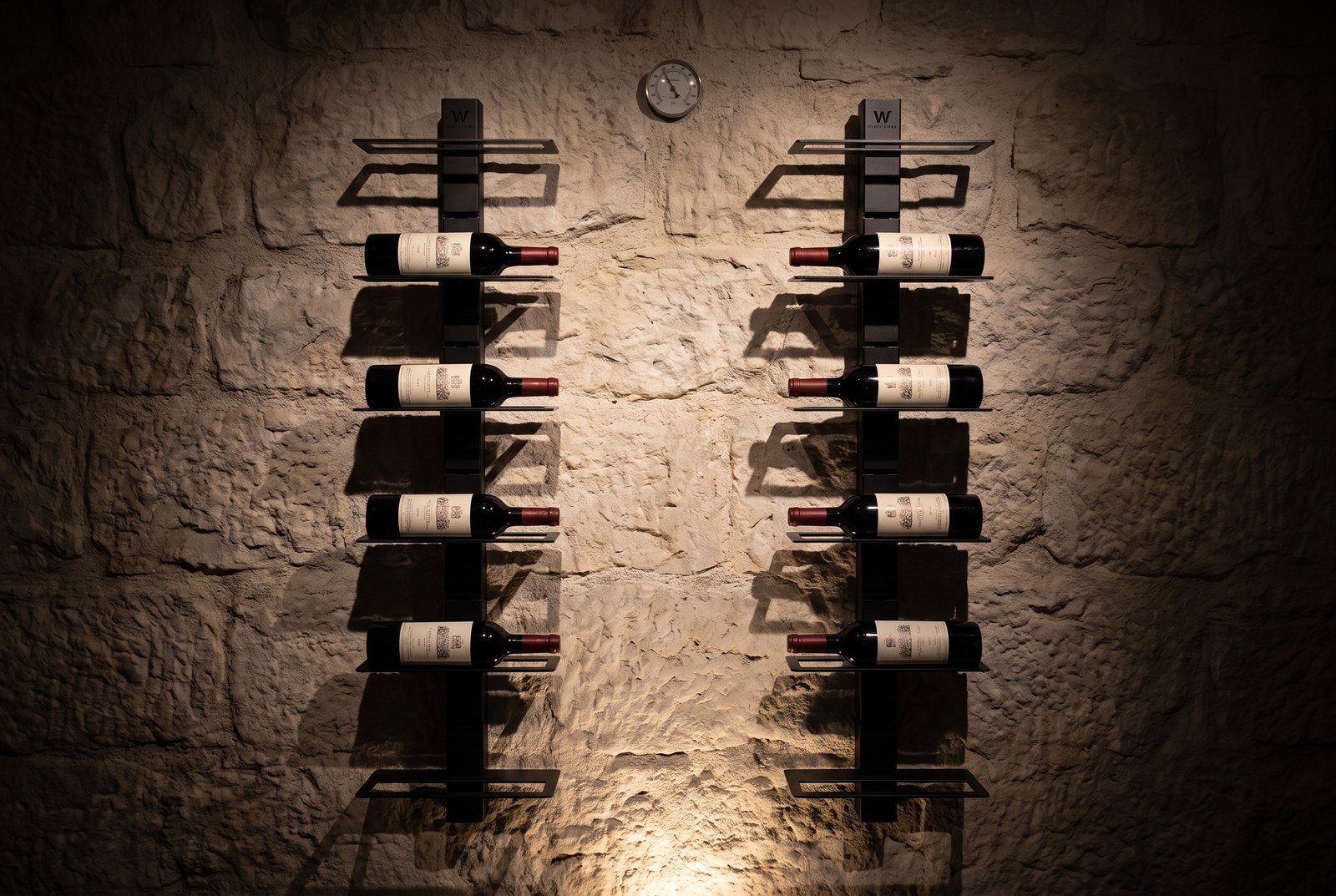
A quick note to clear up a common misunderstanding. No storage system, regardless of its type, regulates temperature or humidity, nor does it extend the life of any bottle. It’s the storage room itself that preserves the wine. What a storage system provides is more modest but perfectly real: space, stable bottle storage, easy access, and labels that are legible from the front. A modular wall-mounted wine rack does exactly that, and keeps you from forgetting a case at the back of a closet. It makes your wine collection easy to manage; it does not replace the storage room itself: for long-term aging, the room must first meet the conditions listed above.
Your Questions About Aged Wine and Table Wine
Does table wine still exist?
It no longer exists as a regulatory category: it was eliminated by the European reform, effective August 1, 2009, and replaced by wines without a geographical indication, identified in France by the term “Vin de France.” The term continues to be used colloquially to refer to everyday wine, but it has no official status.
Can a "Vin de France" be a wine suitable for aging?
Yes. This designation indicates the absence of a geographical indication, not a level of quality. Some winemakers choose this category to operate outside the specifications of their appellation, and their wines may possess all the structure necessary for aging.
How can you tell if a wine will age well?
Consider its structure: tannins, acidity, sugar (if any), concentration, and aging. On the palate, a tannic wine with fruit in the background, nice acidity, and a lingering finish has what it takes to hold up. On the label, note the grape variety, appellation, vintage, and aging notes.
Is an AOC wine necessarily a wine meant for aging?
No. The appellation specifies the origin and production methods, not the wine’s shelf life. Many AOC wines are meant to be enjoyed within three years.
Which wines can be stored the longest?
Wines whose structure acts as a preservative: high tannin content, high acidity, or high sugar content in the case of sweet wines. Color alone is not a determining factor: a dry white wine with high acidity can age longer than a supple red.
Can you age a wine that's meant to be drunk young?
Technically, it will hold up for a while, but it won't improve. It will lose its fruitiness without gaining any complexity. You might as well open it while it's still good.
How long does wine last once it's been opened?
Allow 3 to 5 days for a red or white wine that has been recorked and placed in the refrigerator (including red wine, which should be brought to room temperature before serving), 1 to 2 days for a sparkling wine, and several weeks for a sweet wine or fortified wine. The bottle aging discussed in this article applies only to unopened bottles.
One last piece of advice—and a very practical one at that. The next time you’re hesitating over a bottle, ignore the text at the bottom of the label and ask yourself just one question: Does this wine have the potential to age? The tannins, acidity, and finish will give you the answer. The rest is just red tape.
A wine collection that grows at your own pace.
Modular wall-mounted shelves in raw or lacquered steel. Holds up to 22 bottles per module, 2-year warranty, free shipping on orders over €350.
Explore the collectionExcessive alcohol consumption is harmful to your health. Please drink responsibly.