
How to Set Up a Wine Rack: From a Bare Wall to Your First Bottle
A leaky basement wall, a south-facing living room wall, a shared wall heated on the other side by a boiler. Three walls where people in France place bottles every weekend—and three mistakes. A wine wall doesn’t begin when you drill the first hole; it begins when you choose the wall and decide what to do with it. Finishing, insulation, lighting, materials. Here’s how to prepare the wall before installing anything on it, so the result will last for ten years—and not just in the photo.

Where to Install a Wine Rack: Which Location Should You Choose?
Here’s a useful distinction to keep in mind before choosing a location: a wine cellar for aging and a wine cellar for serving. Aging requires stable conditions over the course of years. A serving cellar, on the other hand, holds bottles that will be drunk within a few weeks or months. A wall in the living room works perfectly well as a serving cellar. It will never serve as a cellar for aging.
| Location | Dominant constraint | Appropriate attire | Realistic Use |
|---|---|---|---|
| Underground cellar | Humidity, condensation | Stone, brick, breathable plaster | Long-term storage |
| Living Room / Dining Room | Heating, natural light | Dark matte paint, wood, panels | Wine Cellar, Display |
| Kitchen | Heat, splashes, temperature fluctuations | Polished concrete, washable paint | Bottles for drinking on the go |
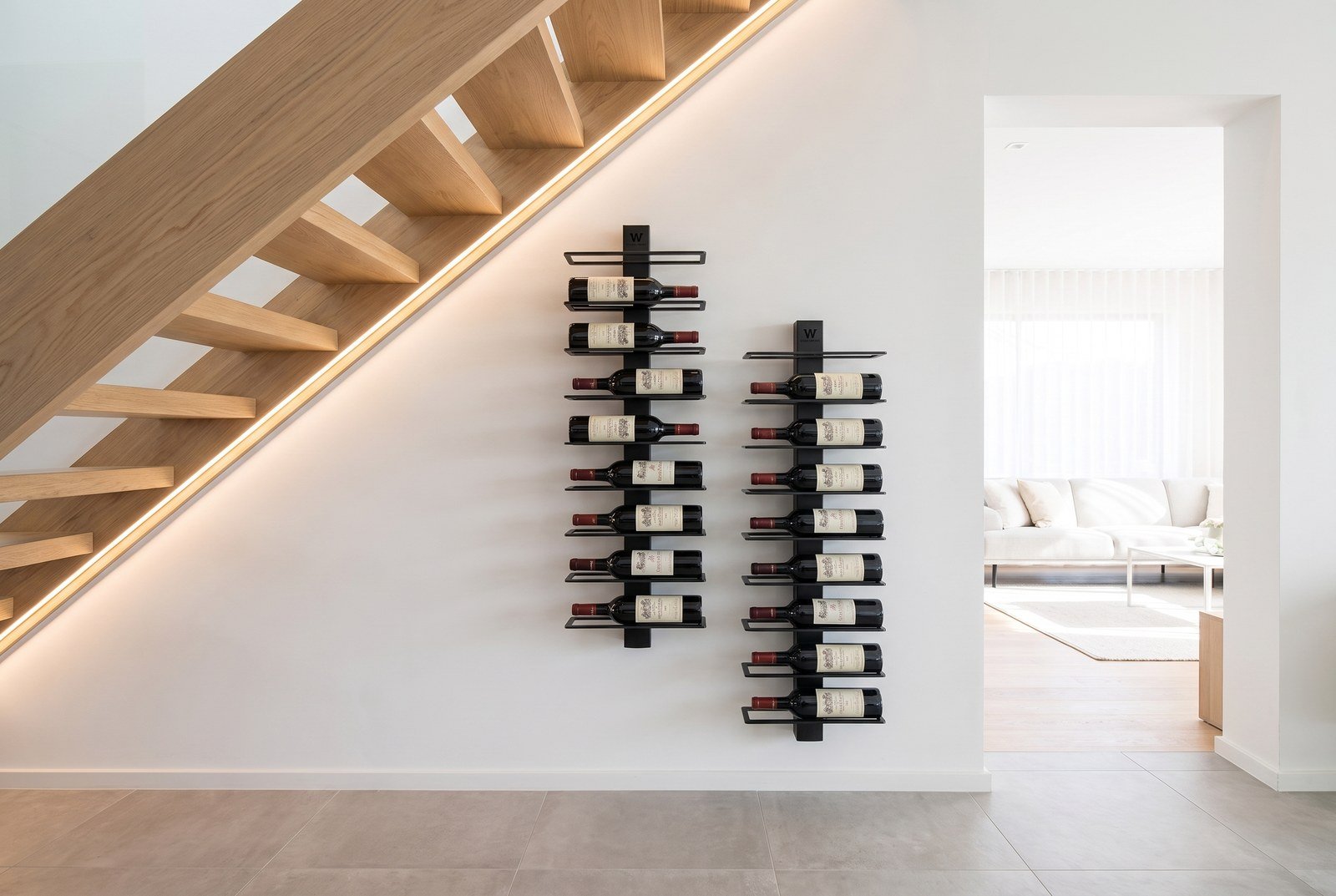
| Under the Stairs | Limited space, variable height | Wood, panels, paint | Serving wine cooler, space-saving |
| Garage | Freezing in winter, overheating in summer, vibrations | Plaster, paint, panels | Buffer storage, only if it doesn't freeze |
A quick note about the garage, since it’s the default storage option and the most expensive one. An unheated garage drops below freezing in the winter. But wine freezes at around -5 to -6 °C: as it freezes, it expands, pushing the cork out of the neck or causing the bottle to burst. This isn’t a fluctuation to monitor—it’s a total loss. If your garage freezes, it’s not suitable for storing anything at all. And under a poorly insulated roof, the July heat wave does the rest.
What factors should you consider before installing a wine rack?
Wine hates four things: heat, temperature fluctuations, direct light, and vibrations. Your wall will act as a barrier between the bottles and all of that.
The storage temperature ranges from 12 to 14 °C, with a relative humidity of 60 to 75 percent to prevent the corks from drying out. What matters most is not the absolute value, but stability.
A room whose temperature fluctuates between 10 and 22 °C throughout the seasons will cause your bottles to age more quickly than a room kept at a constant 16 °C—even though 16 °C isn’t an ideal target temperature: at that temperature, wine simply ages faster than it does at 12 °C.
The 3 walls on which you shouldn't hang anything before renovations:
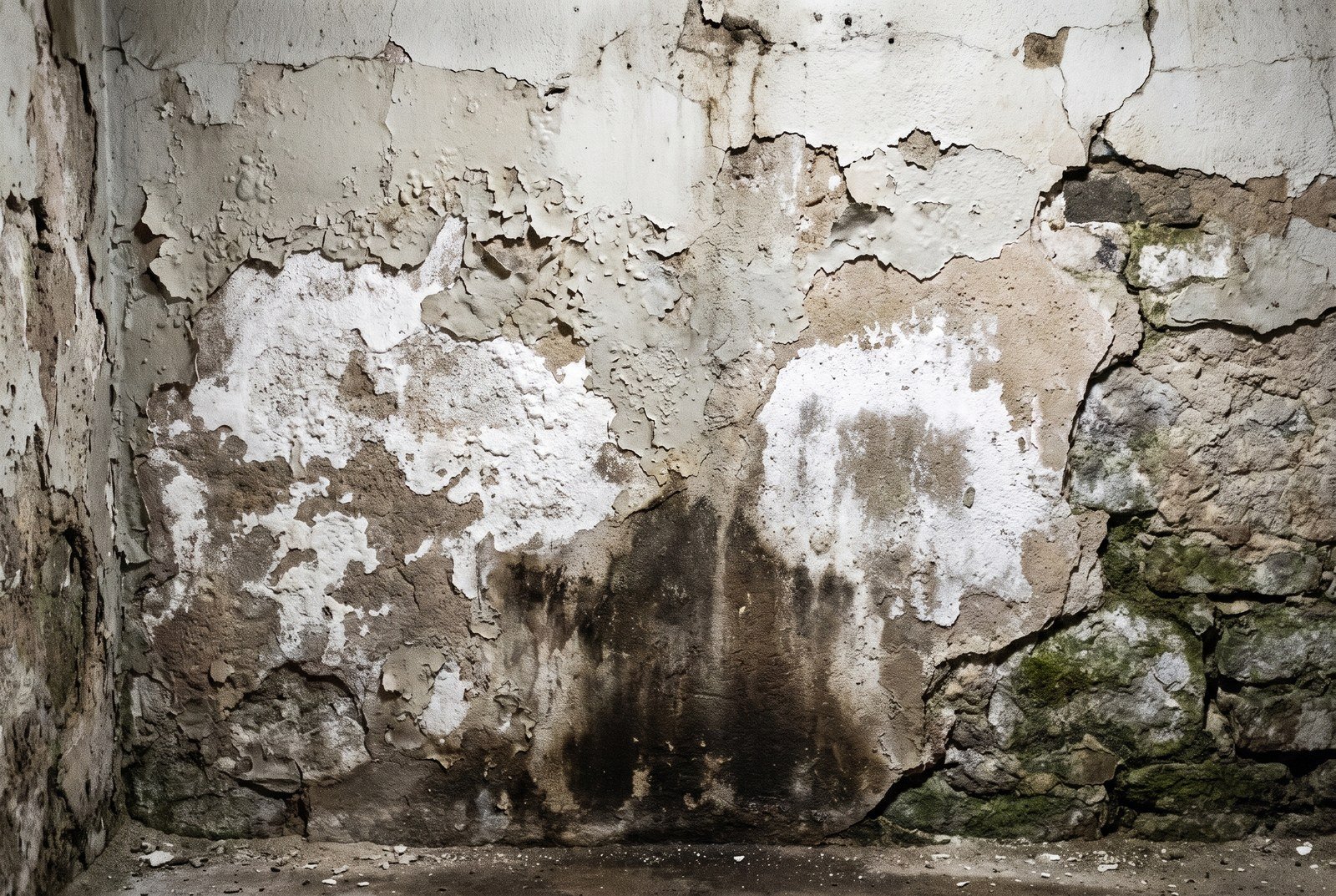
- The leaky wall. White streaks, saltpeter, peeling paint. A wall that’s letting in water shouldn’t be decorated—it needs to be repaired.
- A wall facing due south, or one facing a floor-to-ceiling window. Direct sunlight damages the wine and heats the wall through radiation.
- The wall is heated from the other side— by the boiler, the hot water tank, the chimney flue, and the radiator in the adjacent living room. Just put your hand on it in the winter, and you’ll know.
Insulate and Remediate: The Crucial Step
It’s the invisible layer—the one you never see in Pinterest photos—and yet it’s what determines whether your wine rack will hold up.
Two distinct problems that are often confused:
- Moisture coming from the ground or from outside (capillary action, seepage) must be addressed at the source: drainage, water-repellent coating, tanking. No type of finish can fix this; it merely hides it.
- Condensation occurs when warm, humid air comes into contact with a cold surface.
Next comes the question of insulation. Not the wall buried underground. That’s the part that works for you: the mass of the soil gives it thermal inertia, and that inertia is exactly what you want in a basement. Insulating it means cutting yourself off from the one thing that naturally stabilizes the room at no cost.
Insulate the surfaces that allow heat to enter: the ceiling when there is a heated room above it, the walls facing the outside or a heated room, and the door, which is often the weakest link.
If you insulate these walls from the inside, there are two rules:
- Always install a vapor barrier on the warm side. Without it, water vapor migrates into the insulation, condenses against the wall, and causes the structure to mold out of sight. This is the most costly mistake, because it doesn’t become apparent until years later.
- Water-resistant insulation. Forget about mineral wool products like rock wool: these are fibrous insulations that absorb ambient moisture, lose their insulating properties, and develop mold. A wine cellar typically maintains a relative humidity of between 60 and 75 percent—precisely the environment that causes them to deteriorate. Opt for closed-cell extruded polystyrene (XPS) or expanded cork, which also helps regulate humidity. Beware of the trap in the home improvement aisle: expanded polystyrene (EPS), which is cheaper, absorbs water through capillary action. One letter makes all the difference.
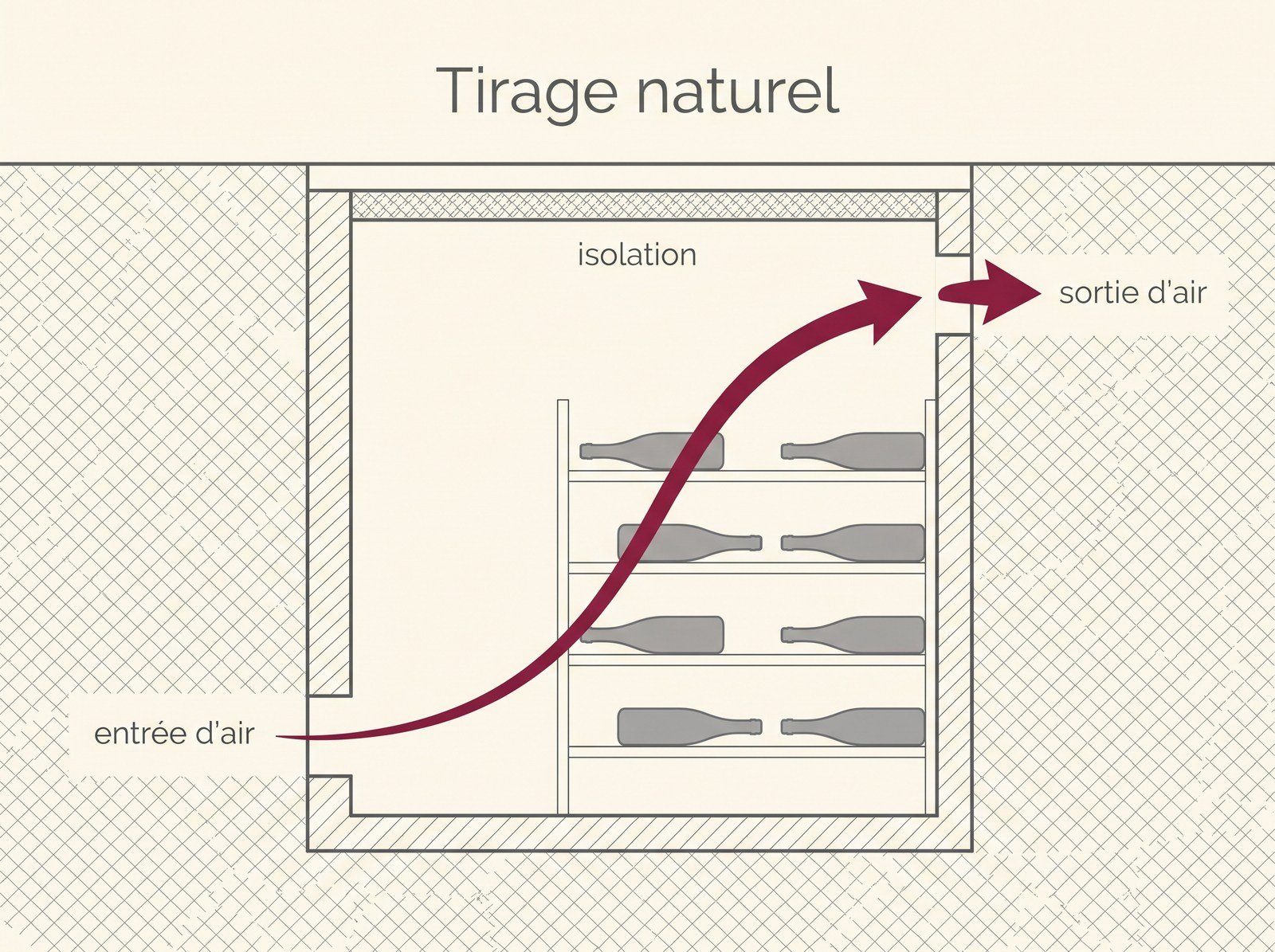
Next, ventilation. A cellar needs fresh air, but without creating a constant draft. The principle is that of natural draft: an air inlet at the bottom, which lets in fresh air, and an outlet at the top, through which the warmer, moisture-laden air—which is lighter—escapes. Ideally, these should be on two opposite walls, so that the air circulates through the room rather than just swirling in place. In a living room, the existing mechanical ventilation system is usually sufficient.
What kind of finish should you choose for a wine wall?
| Material | Rendering | Performance in a damp environment | Effect on labels |
|---|---|---|---|
| Natural stone, or cement-based reconstituted stone | Authentic cellar, texture, warmth | Okay. Move the plaster boards aside; they're for dry rooms. | Eats up the light, makes it hard to read |
| Facing brick | Character, warmth, visual rhythm | Good | Solid background, medium contrast |
| Solid wood | Warm, matte, subdued | To be addressed; sensitive to fluctuations | Good contrast with dark colors |
| Decorative panels | Quick, clean, modern installation | Varies depending on the composition | Uniform background, very easy to read |
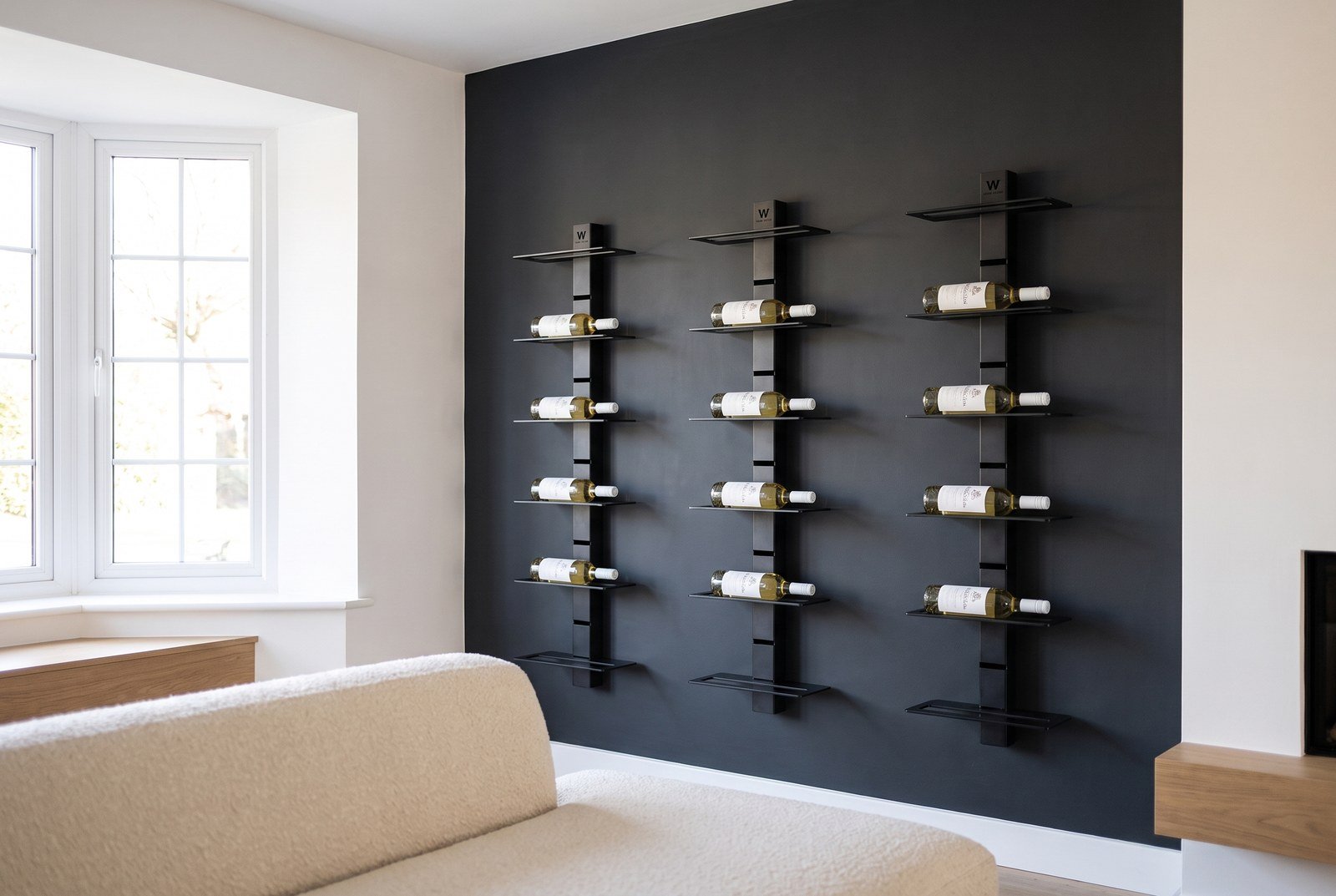
| Dark matte paint | Minimalist, contemporary, understated | Works well with breathable paint (microporous, lime, silicate). A film-forming acrylic paint will blister. | Best contrast, detached labels |
| Polished concrete | Raw, mineral, contemporary | For use in living areas on dry surfaces. Do not use in basements: the film will peel off due to rising damp. | Neutral, easy-to-read background |
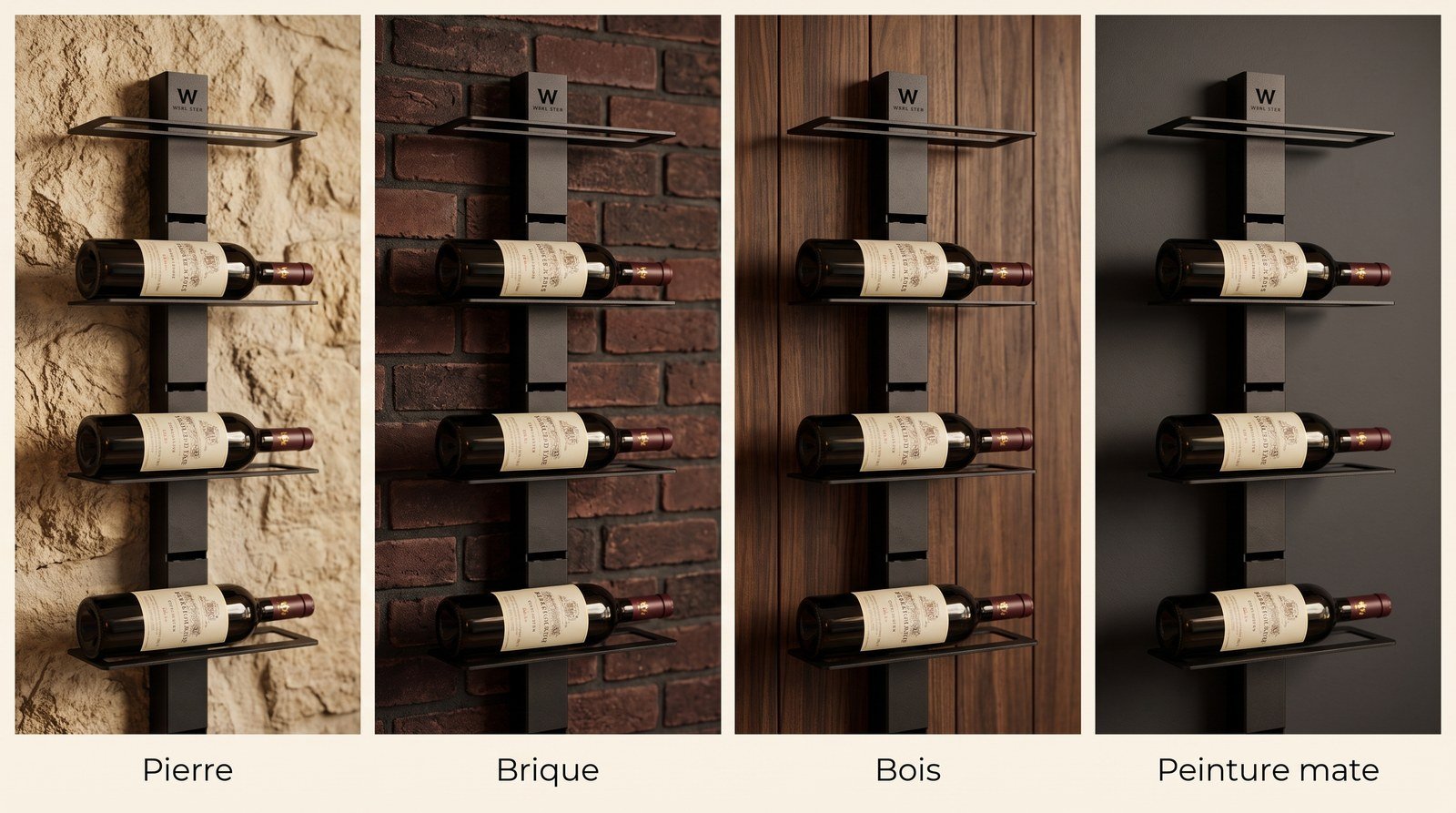
Two DIY store pitfalls to keep in mind.
The term “reconstituted stone” covers two very different types of products: cement-based tiles, which are suitable for damp areas, and plaster-based tiles, which are lightweight and easy to install but are only suitable for dry rooms. For a basement wall, the latter type should be avoided.
As for the paint, choose a breathable type: a standard matte acrylic paint forms a plastic film behind which moisture condenses, causing the wall to develop mold under the paint.
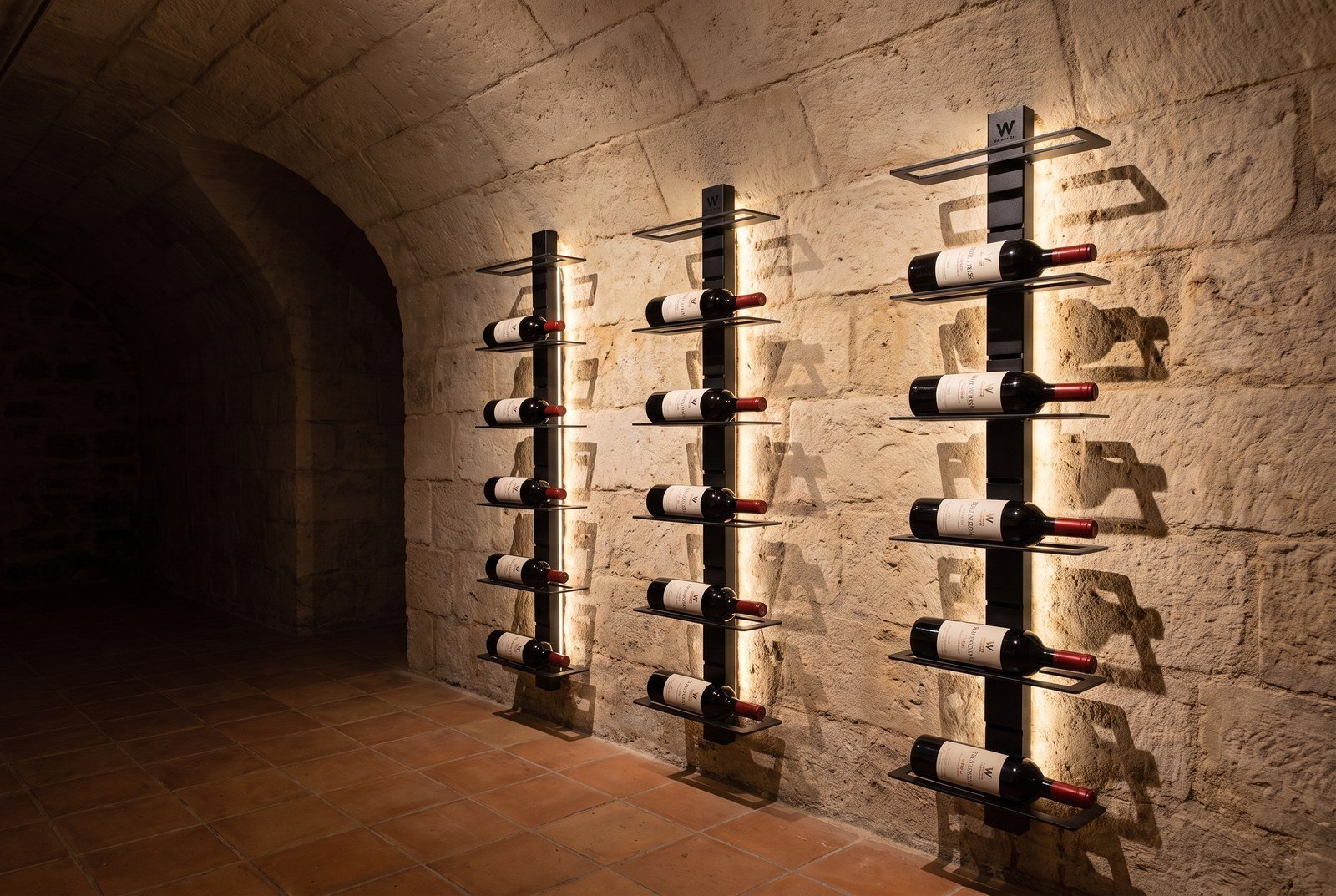
A tip: Exposed stone is beautiful, but it’s a poor backdrop for bottles. It absorbs light, its texture creates shadows, and the labels get lost against it. If the wall is already stone, keep it, but compensate with strong, low-angle lighting. If you’re starting with a bare wall and your goal is to showcase your bottles, a dark, matte background will make them stand out much better.
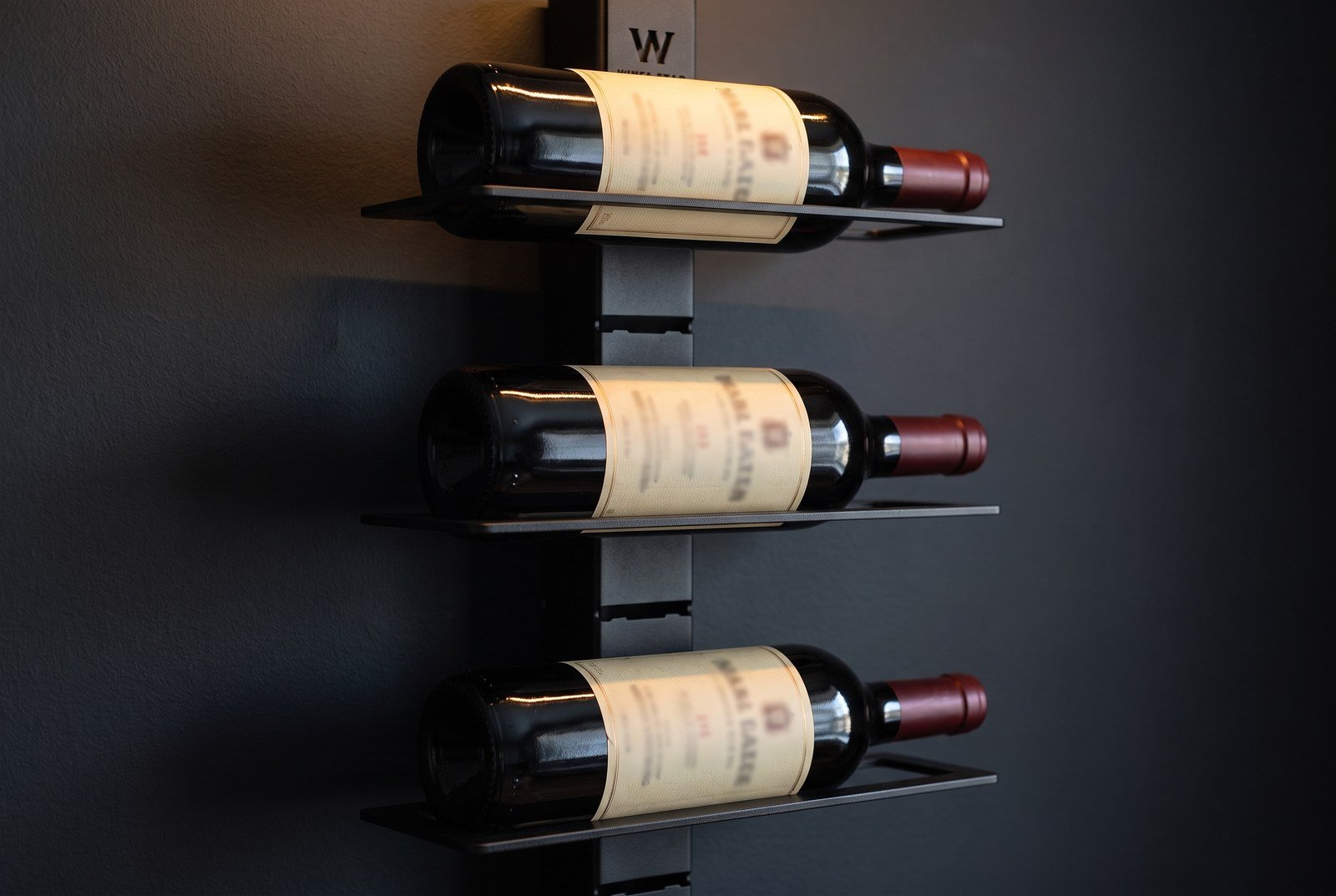
One thing to keep in mind about panels: avoid using MDF in damp areas, as it swells. In basements, opt for mineral-based materials or panels designed for damp areas.
What kind of lighting should you choose for a wine wall?
A well-decorated but poorly lit wall is still a dark wall. It is the least expensive part of the project and, in fact, the most cost-effective.
3 simple rules:
- LEDs only—but don’t be fooled. The advantage of LEDs is thermal: they generate almost no heat and emit no UV light. However, white LEDs still contain a high proportion of blue light—the kind that triggers the well-known “taste of light” during prolonged exposure. So they aren’t neutral for wine; they’re simply much less harmful. Avoid halogen and incandescent bulbs, which convert most of their energy into heat and warm up the wall and the bottles in front of them.
- Low-angle lighting. A light source positioned above and directed along the wall reveals the texture of the wall surface and illuminates the labels from the side. This is what creates the sense of depth.
- Don't light up the entire room. A cellar flooded with white light loses all its atmosphere. Light up the wall, and leave the rest in the shadows.
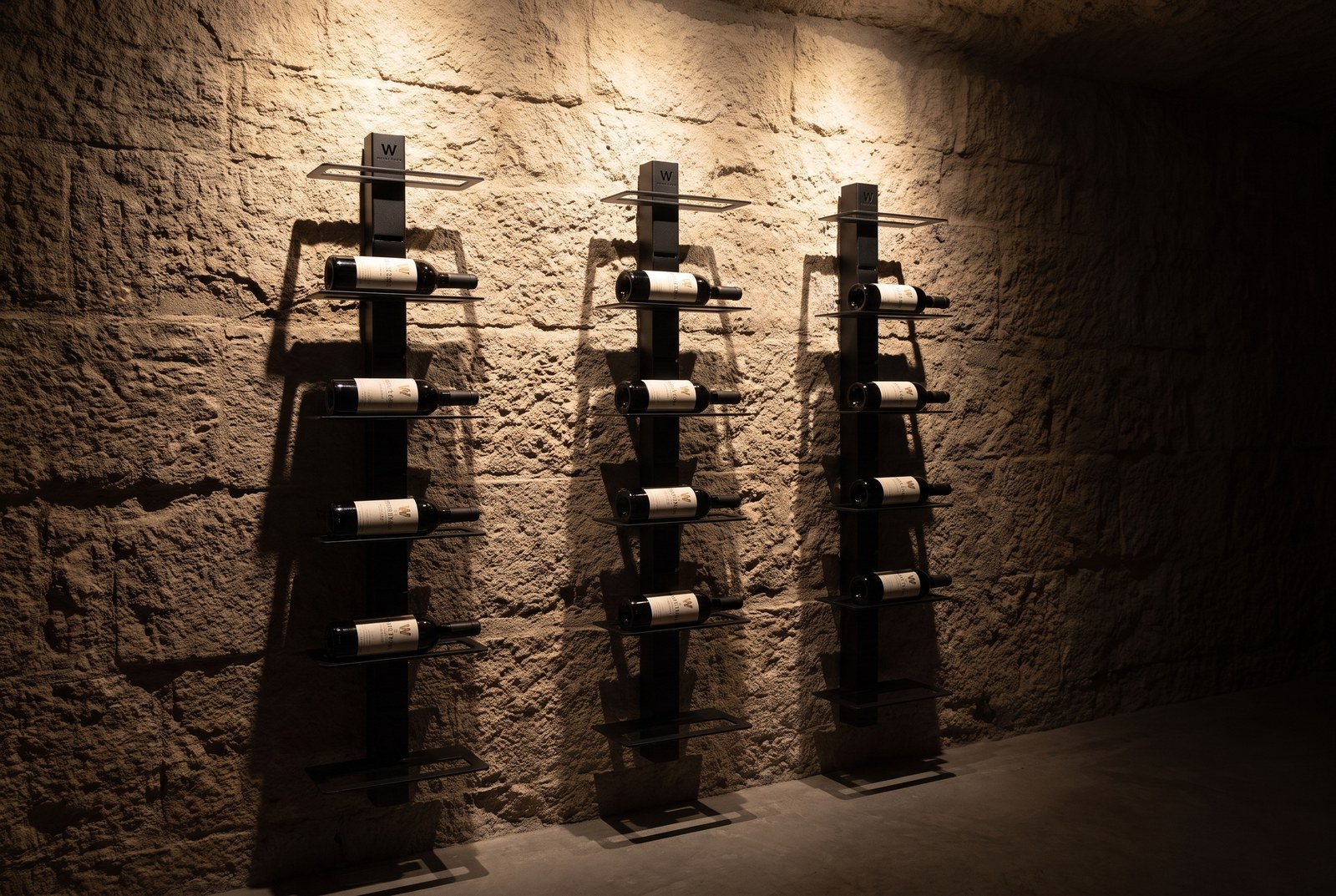
When it comes to light color, stick with warm whites: less blue, and a look that doesn't come across as clinical. And turn everything off when you leave the room.
What kind of wall-mounted storage should you choose for your bottles?
The wall is sound, finished, and well-lit. All that remains is the gesture that gives meaning to everything else.
The deep rack, which stacks bottles horizontally and hides the labels. And the wall-mounted storage with visible labels, which turns the wall into a display and saves you from having to pull out twelve bottles just to find the right one.
On a wall that you’ve taken the trouble to finish, the second principle applies: you didn’t install siding just to hide it behind a wooden block.
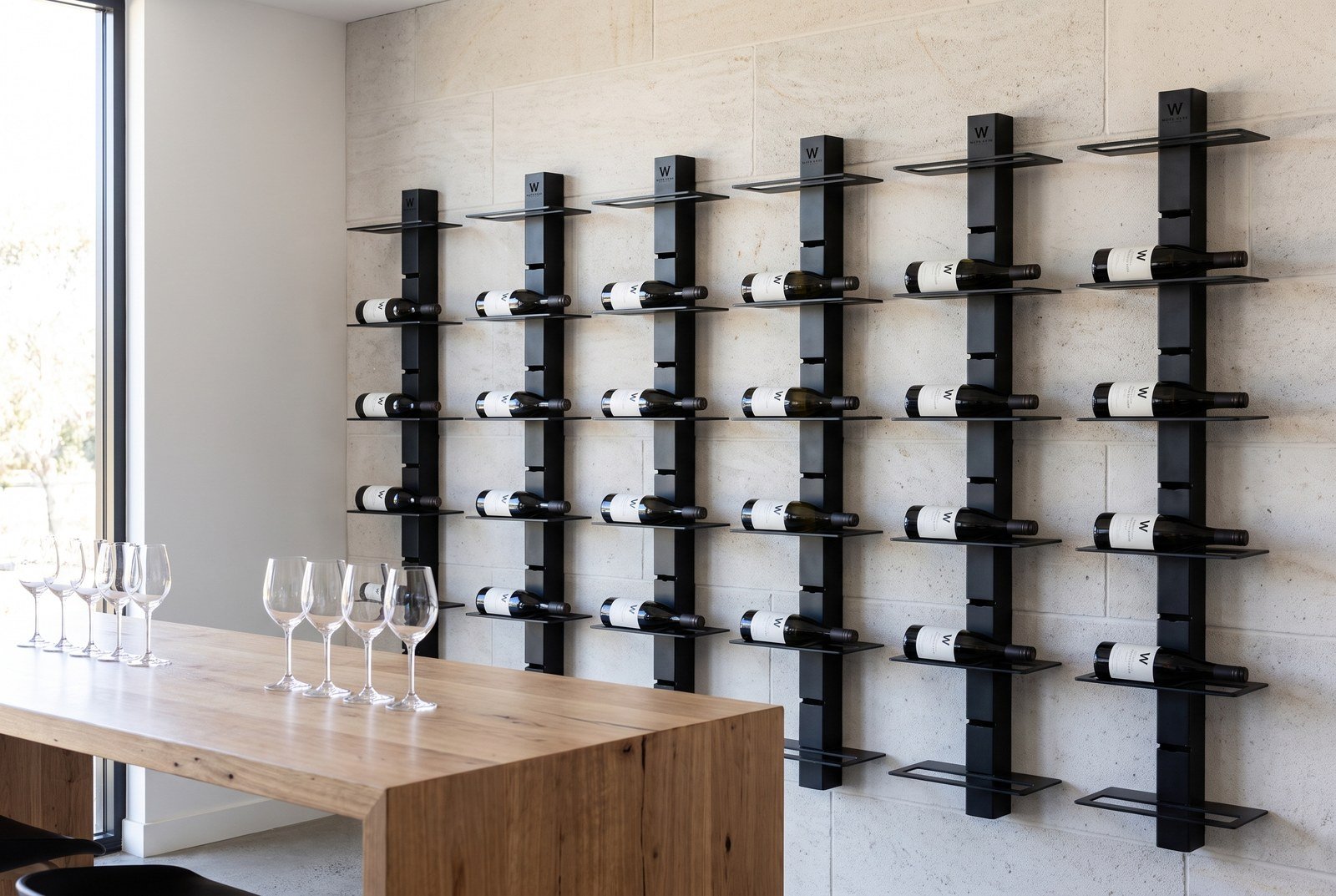
The Wine Line® wall-mounted system consists of modules that are 118 cm high by 30 cm wide and only 14.8 cm deep. You start with one module, add more as your collection grows, and the shelves snap into place and can be repositioned without tools. It accommodates magnums and champagne bottles alike.
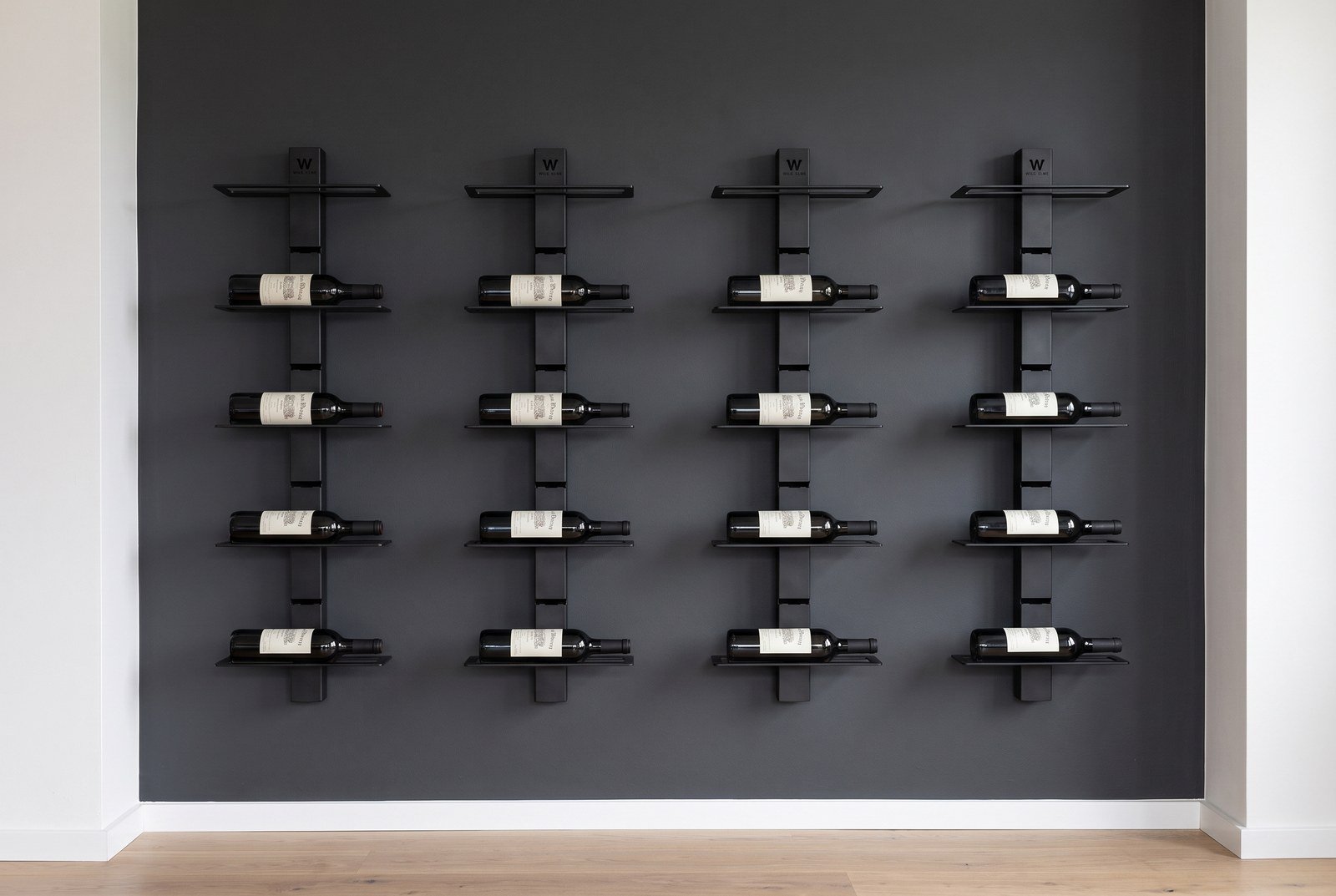
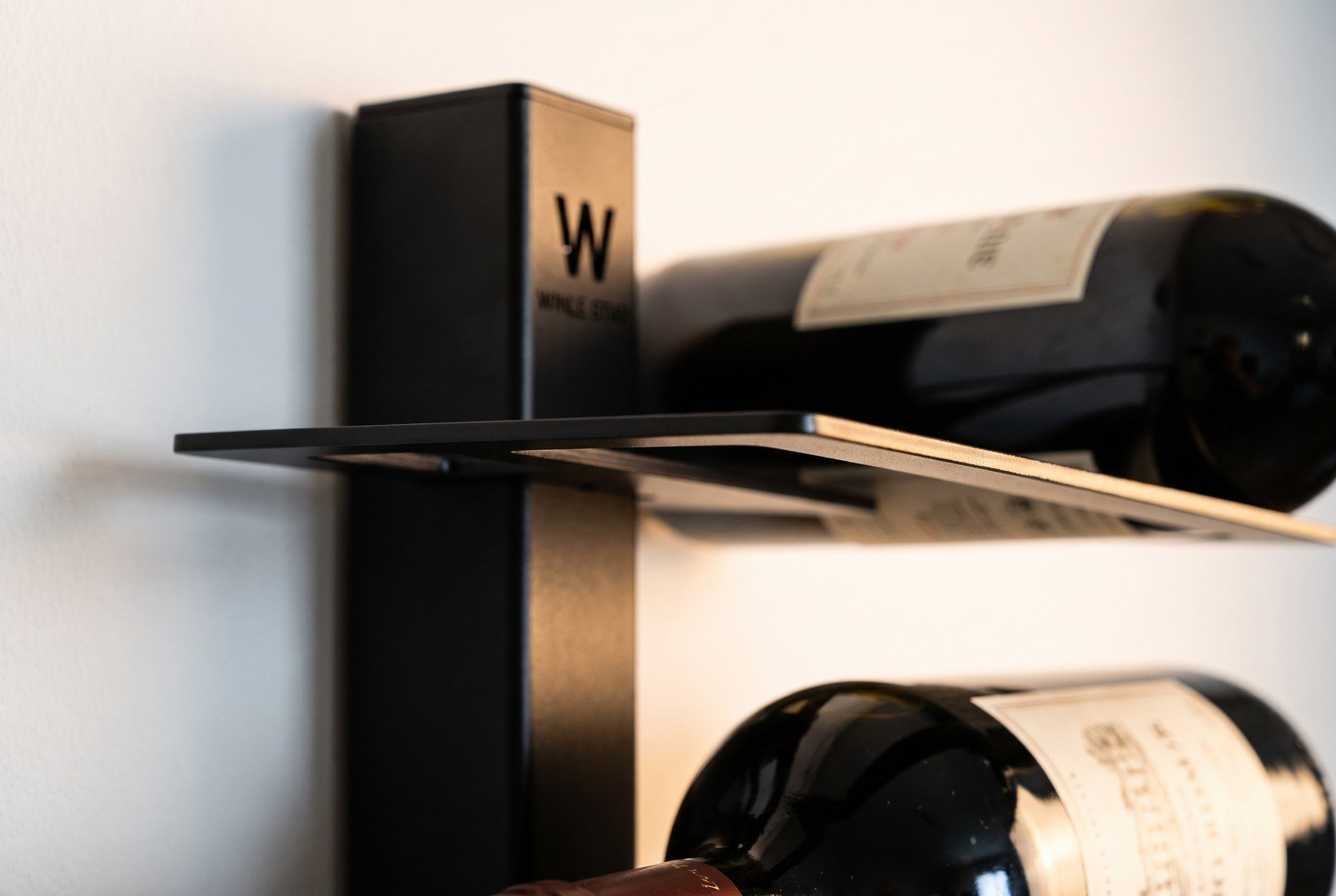
A Wine Line® module holds 11 bottles on single shelves, is only 30 cm wide, and can be arranged side by side as desired. Made of 2 mm steel, with a raw finish for dry areas or a lacquered finish for humid environments; installation instructions included. Packs starting at €149.
If you want to know how much weight your wall can actually support, what type of mounting to use, and whether to choose a wall-mounted or floor-standing wine rack, you’ll find all the details in our comparison of wall-mounted and floor-standing wine racks. And if your project is leaning toward a tasting area with a counter and glasses, check out how to set up a real wine bar at home.
Frequently Asked Questions
How can you effectively insulate the wall of a wine cellar?
First, address the source of the moisture (rising damp, seepage). Next, know what you’re insulating: not the wall buried in the ground—which provides the desired thermal inertia—but the surfaces exposed to heat (the ceiling in a heated room, exterior walls, doors). If you’re insulating from the inside, install a vapor barrier on the warm side and choose a water-resistant insulation material, such as extruded polystyrene (XPS) or expanded cork, rather than mineral wool, which absorbs moisture and can develop mold. And make sure to ventilate: insulating without proper ventilation simply shifts the problem elsewhere.
What kind of wall covering should you choose for a damp basement wall?
A mineral-based material that can withstand a humid environment: natural stone, cement-based engineered stone, facing brick, and breathable plaster. Avoid using plaster facing panels—which are intended only for dry rooms—as well as MDF and panels not designed for humid rooms, as they will swell. If you’re painting, use a breathable paint.
Can a wine rack be installed somewhere other than a wine cellar?
Yes, as long as you adjust how you use it. A wine rack in the living room, kitchen, or under the stairs makes an excellent serving cellar for bottles you’ll open within the year. For long-term aging, you need stable conditions that a heated living space cannot provide. And avoid the garage if it freezes: wine freezes at around -5 to -6 °C and pushes out the cork.
What kind of lighting should I use for a wine wall without damaging the wine?
Warm-white LEDs that cast a low-angle beam on the wall, turned on only when you’re in the room. LEDs generate almost no heat and emit no UV rays, but they do emit a high proportion of blue light: turning them off when you leave the room is the best way to protect your wine. Halogen and incandescent bulbs should be avoided, as they heat up the wall and the bottles.
What wall color best showcases the bottles?
A dark, matte background. Charcoal gray, deep green, matte black. The light-colored labels stand out clearly against it, and the glass of the bottles catches the low-angle light without any distracting glare.
Do you need an underground wall to store wine?
No, but that’s the simplest approach. A buried wall naturally provides the thermal inertia and humidity control we’re looking for, which is why we don’t insulate it. Elsewhere, we have to recreate these conditions: limit heat gain, avoid direct sunlight, and stay away from heat sources.
A wine collection that grows at your own pace.
Modular wall-mounted shelves in raw or lacquered steel. Holds up to 22 bottles per module, 2-year warranty, free shipping on orders over €350.
Explore the collectionExcessive alcohol consumption is harmful to your health. Please drink responsibly.