Setting Up a Wine Storage Area Under the Stairs: Measure Before You Buy
Four measurements taken in ten minutes. That’s what separates a successful under-stair storage solution from a cabinet that’s too deep—one you end up shoving into the garage. Under a staircase, the height changes with every step: a storage unit that fits at the highest point won’t fit two columns further down, and the depth of a standard cabinet encroaches on the hallway passageway. In both apartments and houses, when there’s no basement or pantry, this nook is often the only space available to store wine bottles somewhere other than at the back of a kitchen cabinet. Take measurements first. The rest will follow.

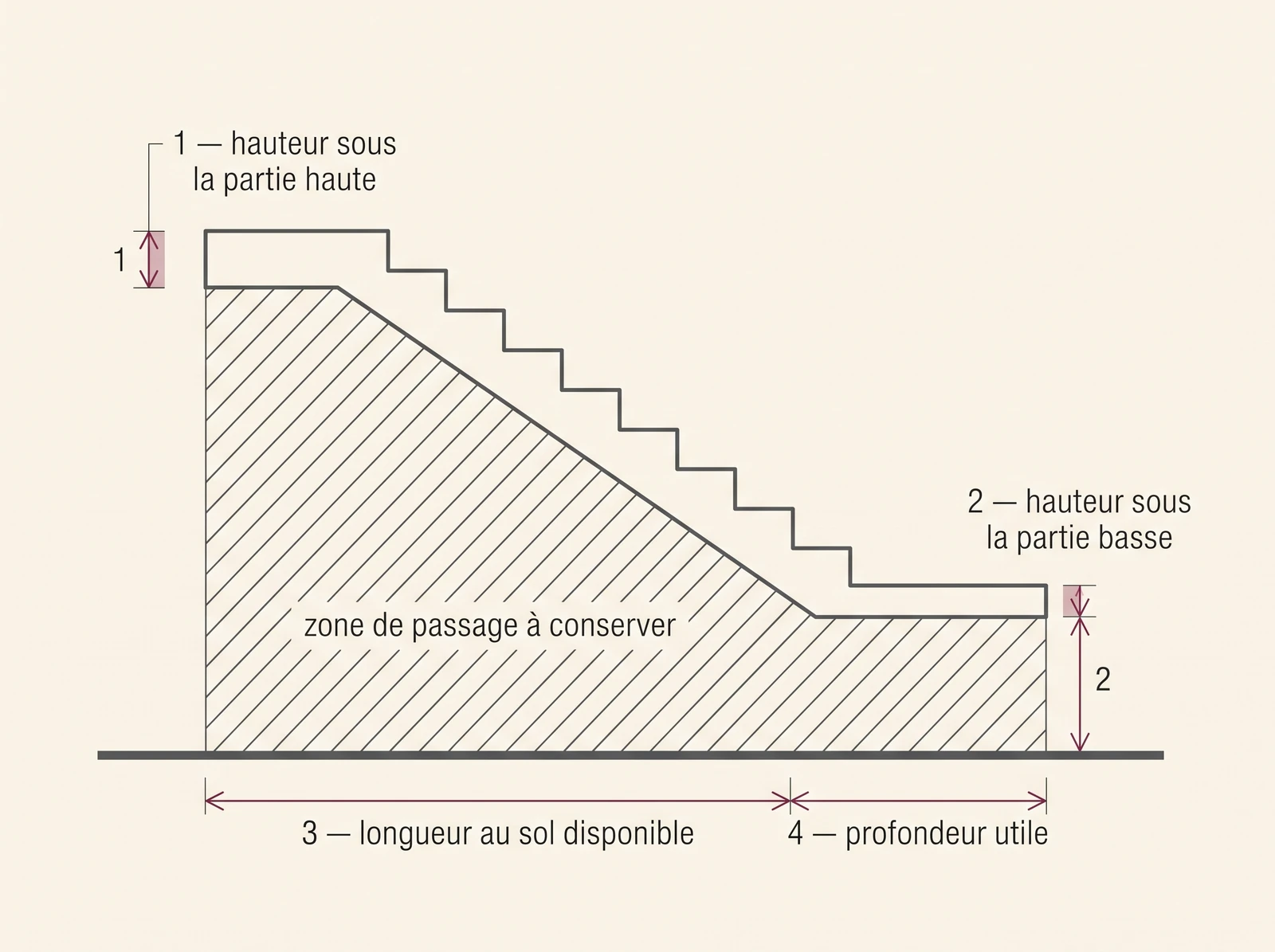
Start by taking four measurements, with a tape measure in hand
A staircase never creates a regular shape. The slope cuts diagonally across the space, and the only reliable way to know what will fit is to measure it. Four measurements are enough.
- Height at the highest point: from the floor to the underside of the staircase, at the point with the most clearance.
- Height at the lowest point: the same measurement, taken where the staircase descends closest to the floor.
- Available depth: from the back wall to the edge of the stairs.
- Width at ground level: from one end of the recess to the other.
Add a fifth factor—one that isn’t quantifiable but is crucial: the space you need in front of you to move around and grab a bottle without having to contort yourself. In a hallway, that’s what makes all the difference.
Transfer these four measurements to a rough sketch, without worrying about scale: a line for the ground, a diagonal line for the slope, and the numbers in the corners. Each column is drawn at its actual height, and the unusable areas are immediately obvious.
One last tip that no one ever mentions: take a photo of the staircase with the measuring tape in place—one photo for each dimension. You won’t want to have to redo the measurements later that evening when it’s time to compare two designs.
Height at highest point: ….. cm
Height at lowest point: ….. cm
Available depth: ….. cm
Width at base: ….. cm
Minimum clearance required in front: ….. cm
Open shelving or a built-in electric wine cooler: what does your space call for?
First, consider the thermal characteristics of this space. A space under the stairs is open to a living area, which is heated in the winter and sometimes bathed in sunlight in the summer. The temperature in a living room hovers around 20 °C in winter and rises above that in summer; a wine cellar, on the other hand, stays around 12–14 °C. The difference is significant, and no furniture can bridge that gap.
The rule of thumb can be summed up in two points. Long-term storage requires freshness and stability, which a wine rack under the stairs that opens onto a living room cannot provide: in this specific location, only a built-in electric under-stair wine cooler can ensure these conditions, with its cooling unit and ventilation requirements. Keeping what you’ll be drinking in the coming months within easy reach requires proper storage.
Let's be frank: a wine rack doesn't produce cold. It doesn't regulate anything or stabilize anything. It holds bottles—with the labels visible—at the temperature of the room where it is mounted.
| Your actual usage | What It Takes | What it looks like under a staircase |
|---|---|---|
| Wines for long-term aging | A cooling and humidity control system | A built-in electric wine cooler, if space and ventilation allow |
| Service cellar, rotation over a few months | Stable storage, bottles laid on their sides | Very good: the lost volume is converted into a useful reserve |
| Staging, immediate access | Legible labels, shallow depth | Very good, especially for wall mounting |
If your plan involves long-term storage, you’d be better off looking into building a real wine cellar at home. It’s not in anyone’s best interest to sell this type of storage solution to someone who’s looking for a wine cooler.
Wood, polystyrene, plastic, or steel: How the material makes a difference
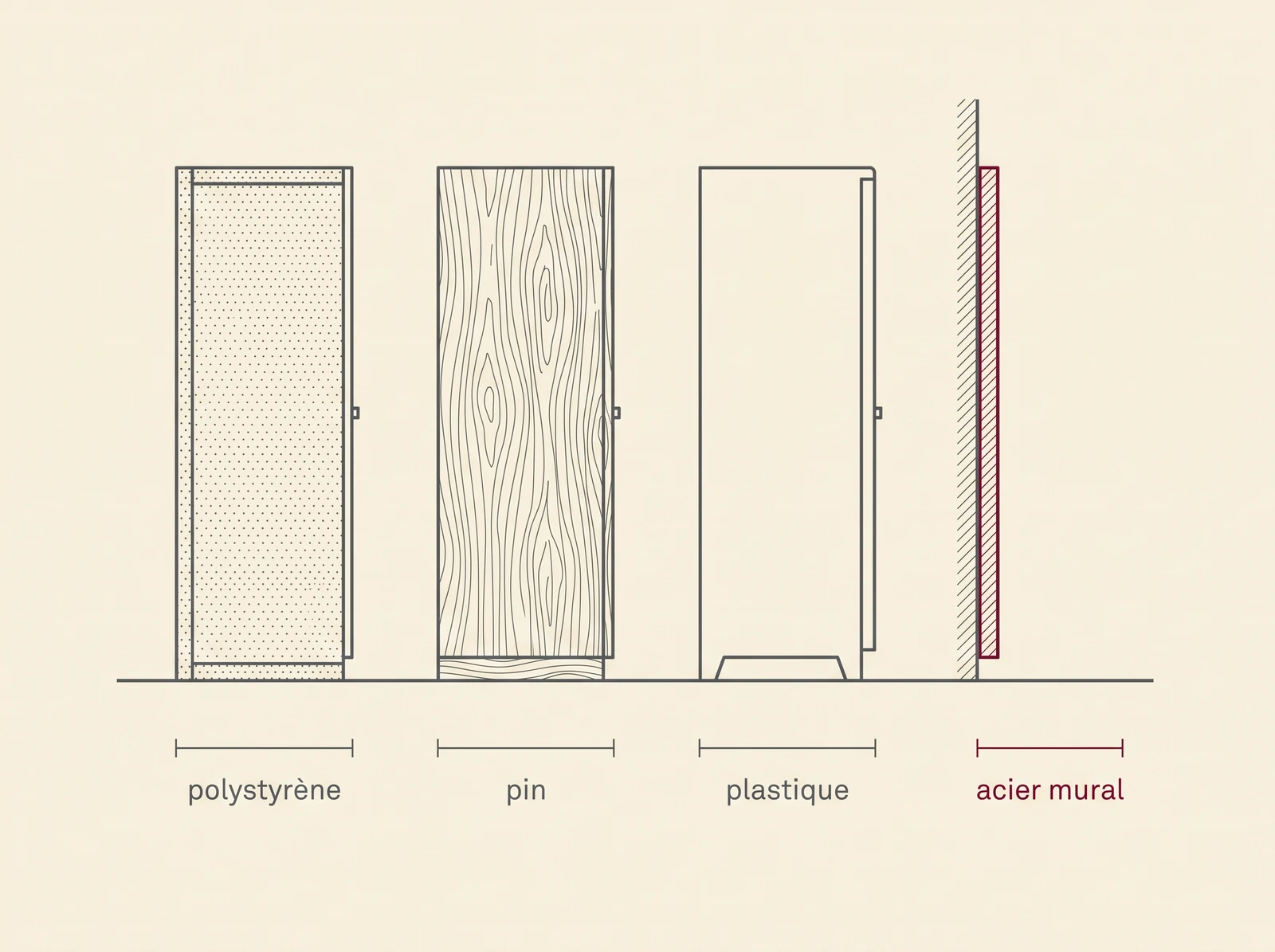
Under a staircase, the key factors are the depth used and the floor space occupied.
Polystyrene or plastic storage bins are inexpensive and stackable, but they take up floor space and offer no visual appeal. Wood—especially stained pine—adds warmth to the overall look; a wooden storage bin sits on the floor and often requires about 30 centimeters of depth, which leaves little room in a hallway. Wall-mounted steel stands out in this regard: a Wine Line® unit is 14.8 cm deep, mounts on the wall, and completely frees up floor space. When it comes to humidity, lacquered steel holds up much better than particleboard; raw steel, on the other hand, requires a dry environment.
What You Can Actually Store Under Your Stairs
Refer back to your floor plan and its dimensions. The capacity is listed column by column, based on the available height at each location.
| Reading Level | Landmark | What This Changes |
|---|---|---|
| Height at the highest point | 118 cm or more | A single unit can hold: up to 11 bottles per module on single shelves, up to 22 on double shelves |
| Height at the lowest point | Less than 118 cm | The column doesn't fit here: save this space for boxes or a drawer |
| Available depth | 15 cm is enough | The structure is 14.8 cm deep; the floor remains unobstructed |
| Width at the ground | In 30-cm increments | Each structure is 30 cm wide; the modules are arranged side by side |
Here’s an example: 2 m at the top, 40 cm at the bottom, 1.60 m wide at the base. You can immediately tell that the upper half will hold full-size bottles and that the lower part won’t hold anything vertical. As for bottle sizes, Bordeaux, Burgundy, Champagne, and magnum bottles all fit in the same opening, as long as the bottle is securely held in place. On a column filled with magnums, you’ll simply have fewer bottles.
Custom woodwork also adapts to this geometry. But a custom design fixes the space as it is on the day of installation, whereas a collection evolves.
The three challenges posed by the space under the stairs
A staircase vibrates every time someone walks on it
Vibration appears on every list of wine’s enemies. When it comes to a staircase in a home, its actual effect is a matter of debate: studies that have measured anything have focused on levels far beyond what one would encounter while walking up and down a staircase, and over periods of a year or more. For bottles you’ll open within the year, the issue remains theoretical.
As for the basic rule, it costs nothing: attach the storage unit to the back wall, never to the staircase structure itself. A wooden staircase is a lightweight structure that moves with each step and transmits impact very easily; a heavy wall moves far less under the same foot traffic.
The type of wall then determines the fasteners to use. A Wine Line® structure is installed using 5 × 50 mm screws and the included drilling template on concrete, brick, wood, or 22 mm OSB. For drywall, use Moly screws; for single-layer drywall, install a 22 mm MDF or OSB reinforcement panel behind the wall. One person is all it takes: less than 5 minutes on wood, less than 10 minutes on concrete. Details on the various configurations are in the installation guide.
Air does not circulate at the bottom of the recess
The space under the stairs is at the bottom of the room, and air tends to stagnate there. The temperature in that space follows the room’s temperature anyway, including when the heat is on; the real issue here is odors. Stagnant air, especially if it’s humid, creates the perfect conditions for mold and musty odors, and a cork stopper isn’t airtight—it lets them through. If the back wall is buried, shares a wall with an unheated space, or opens to the outside, that corner will be cooler than the rest of the room—and often more humid. Also avoid walls with water supply lines running through them.
In this case, a lacquered finish is best: a matte powder-coated finish withstands moisture much better than raw steel and can be cleaned with a damp cloth. Since it’s still a coating, avoid scratching the surface and choose a sound wall over one that’s damp. Raw steel is still an option in a dry interior, provided you apply wax or a light oil from time to time.
Light causes wine to deteriorate
Ultraviolet light isn’t the only culprit. Visible blue light, around 450 nm, breaks down riboflavin and causes what tasters call a “light-induced off-flavor”: this risk mainly affects white, rosé, and sparkling wines, as red wines are largely protected by their tannins. A halogen spotlight placed too close to a horizontal bottle adds heat where it’s not wanted.
That’s why the right setup is: a low-intensity warm-white LED (2,700 to 3,000 K) positioned at an angle. Cool whites above 4,000 K have a blue cast, so they actually harm your bottles instead of protecting them. And avoid placing the storage unit directly in front of a south-facing window.
That leaves the question of the door. Open shelving showcases the bottles and allows air to circulate; a door protects them from light, but it hides the bottles, traps air—and thus odors—and adds an extra step to every serving. Under a staircase that opens onto the living room, open shelving almost always wins out—provided you’re willing to give it a quick wipe down regularly.
Compensate for the slope by varying the number of shelves
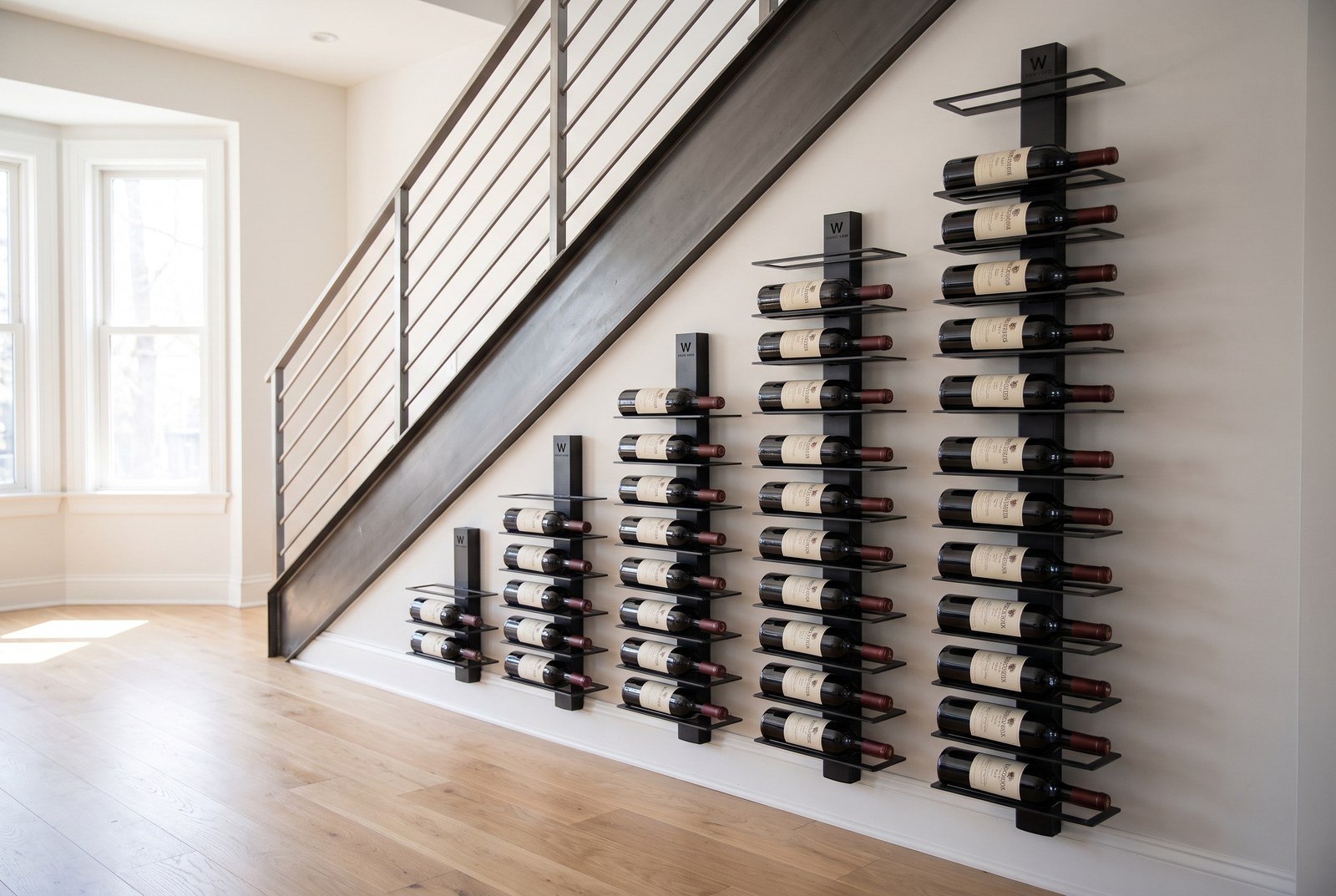
The usual approach is to have shelves made in different heights to follow the slope. There is another method—one that is reversible and less cumbersome—which involves maintaining a constant height of 118 cm and adjusting the number of clip-on shelves in each column.
In practice, you place your units side by side wherever the ceiling height allows, then fill the space from top to bottom: a full column at the highest point, a partially filled column as the slope descends, and no shelf where the clearance becomes too low. The shelves snap into place without tools, so you can adjust the layout later.
That’s the advantage of modular furniture over built-in furniture, and it’s a choice we stand by: you start by setting up the upper section, live with it for a few months, and then add double shelves as your collection grows. No need to cut anything to size, and no need to call the contractor back.
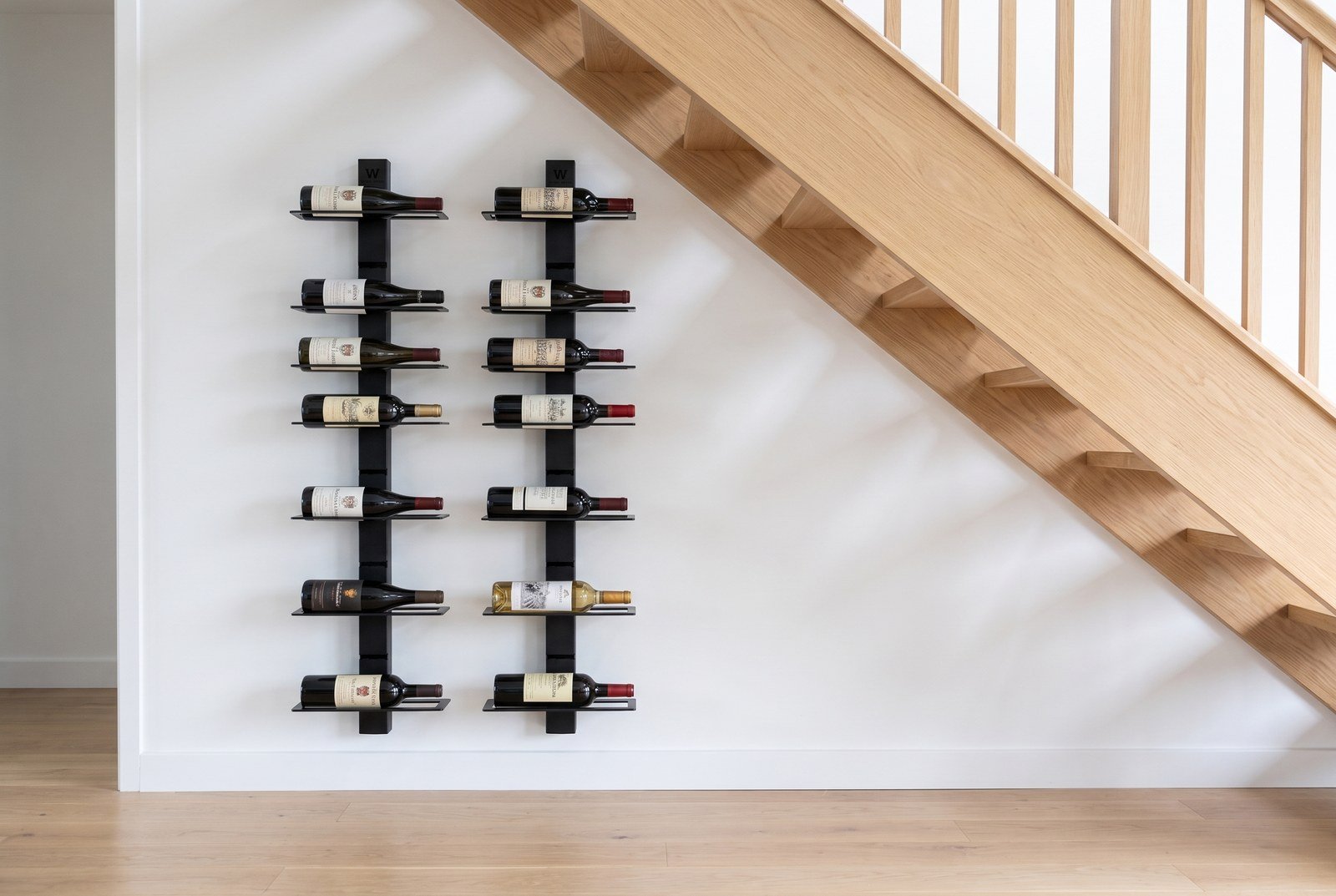
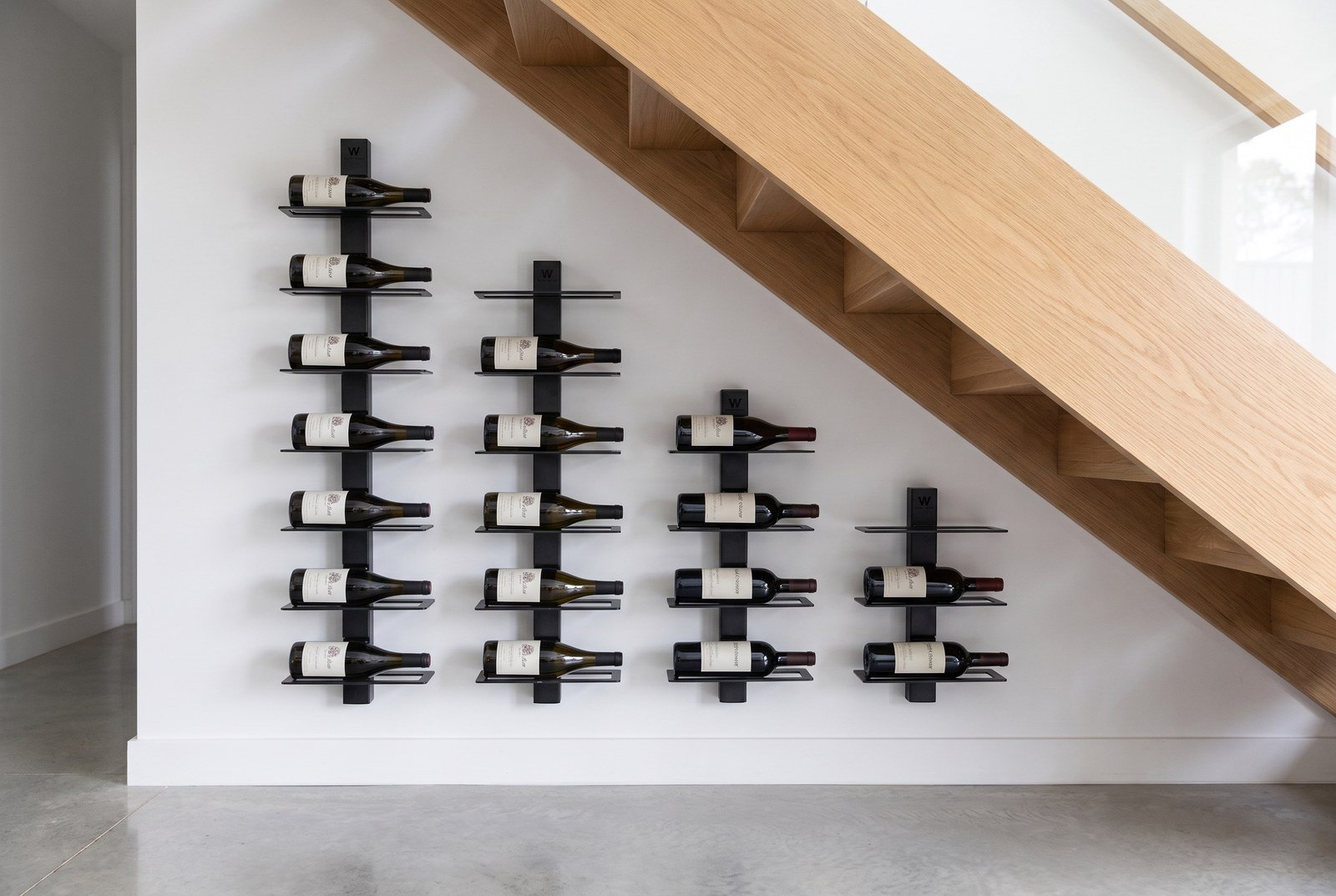
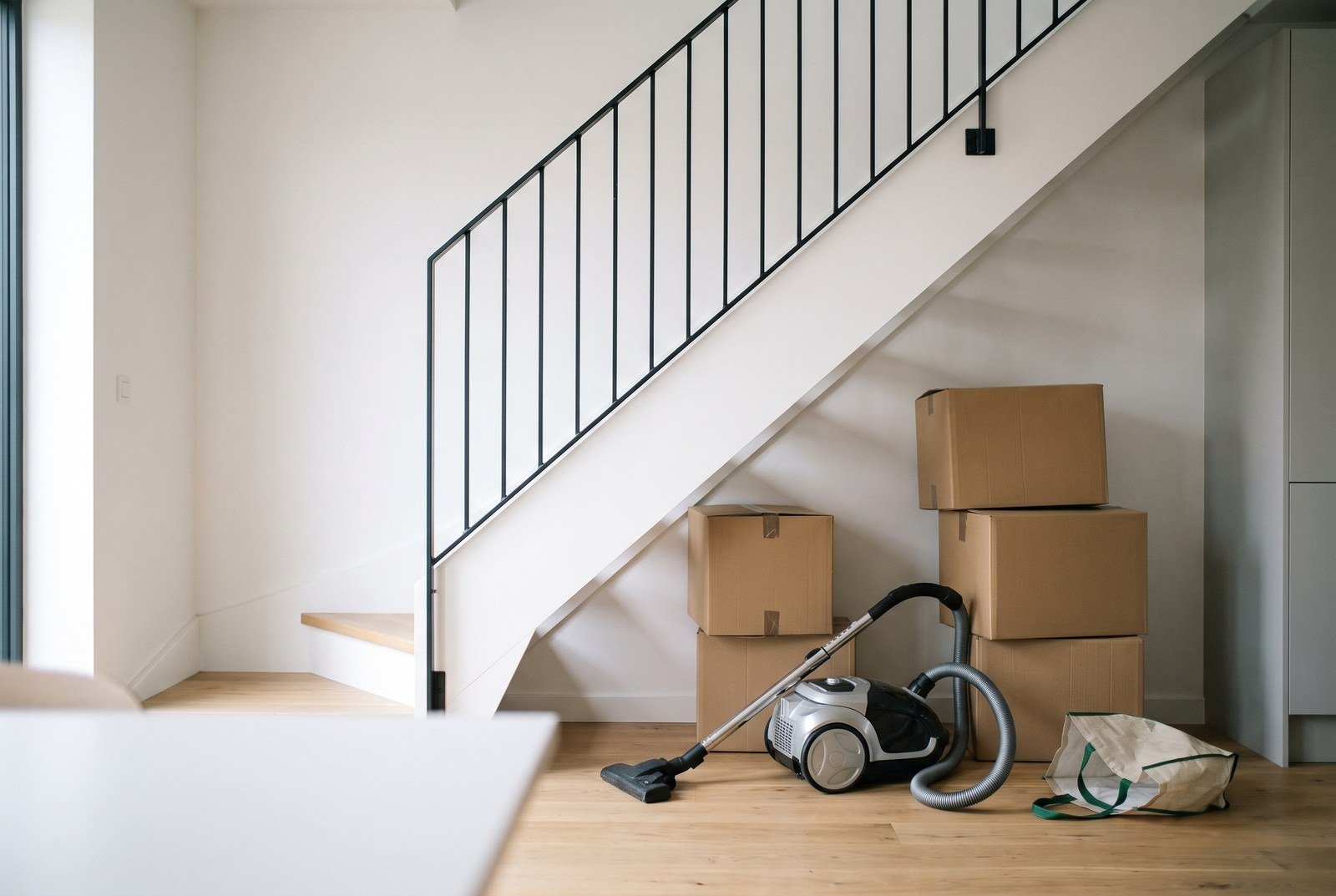
Before / After
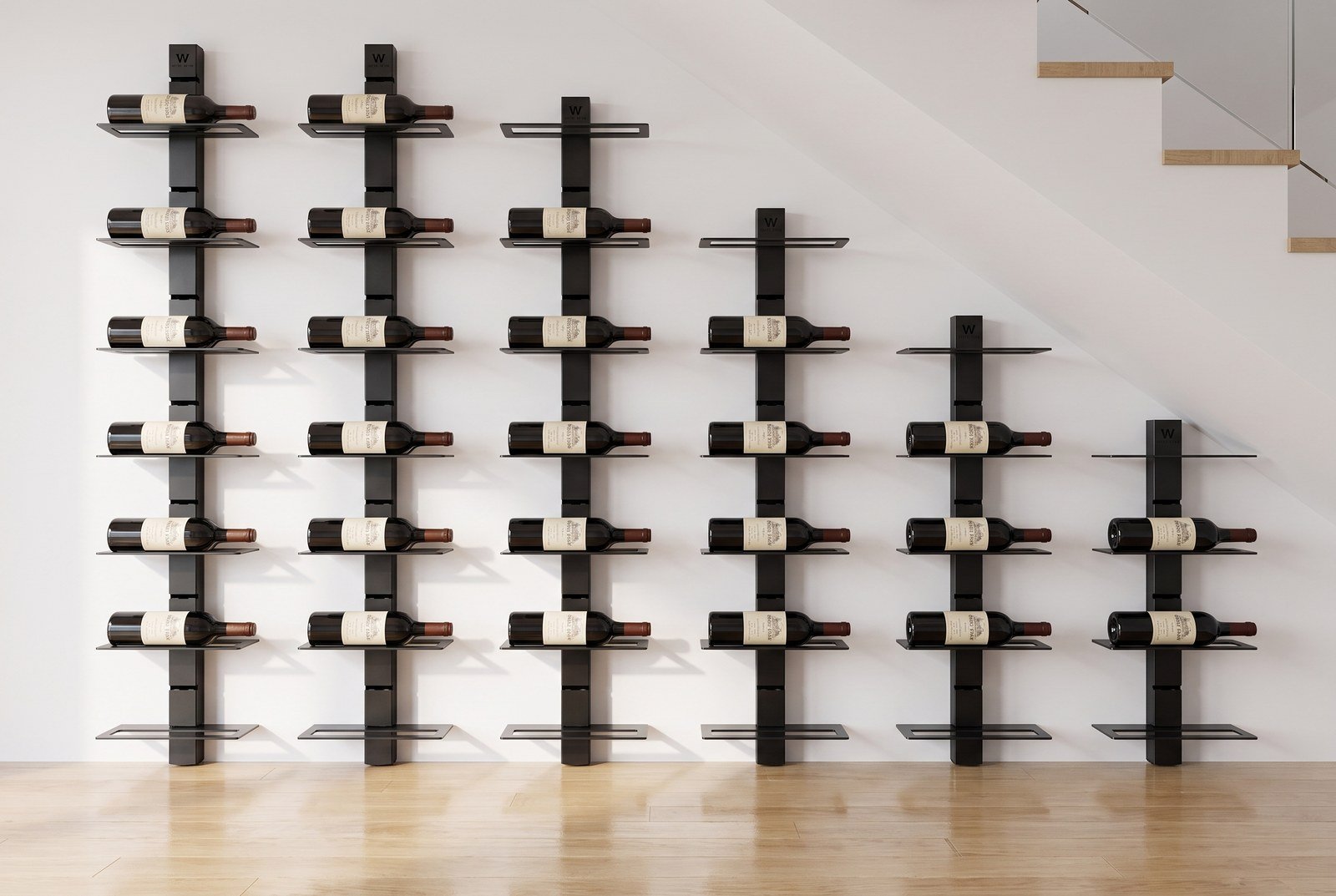
Each Wine Line® module measures 118 cm high by 30 cm wide by 14.8 cm deep and holds up to 22 bottles with double shelves. You can set up the upper section first and add more whenever you like. Made of 2 mm steel, with a 2-year warranty; ready in 24 to 48 hours.
View modular wall shelf setsA wine collection that grows at your own pace.
Modular wall-mounted shelves in raw or lacquered steel. Holds up to 22 bottles per module, 2-year warranty, free shipping on orders over €350.
Explore the collectionExcessive alcohol consumption is harmful to your health. Please drink responsibly.