
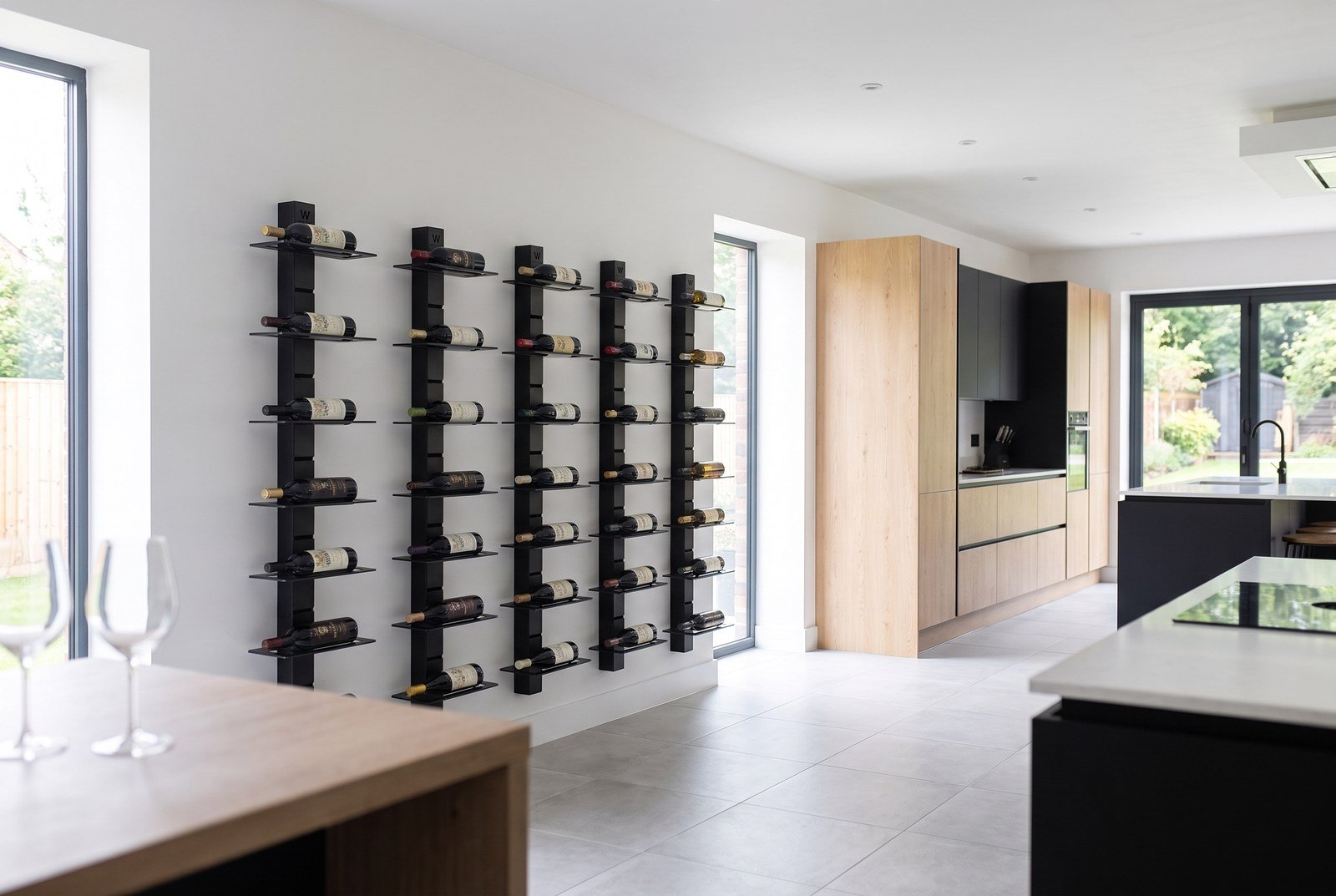
Storing Wine Bottles at Home: Which Room, Which Solution, How Many Bottles?
A case of 12 bottles sitting on the floor of a living room takes up 33 cm by 25 cm of floor space. And it’s a stack you’ll never open, because you can’t see any of the labels. Those same 12 bottles, laid flat against a 30-centimeter-wide wall, take up not a single centimeter of floor space. The problem with storing wine at home is almost never a problem with the furniture. It’s a problem of space.

Before storing your wine bottles at home, choose the right spot
The space dictates the solution, not the other way around. A beautiful cabinet placed in the wrong spot doesn't store things well, while a modest storage unit in a cool hallway does the job much better.
What wine requires can be summed up in two points: a fairly cool and, above all, stable temperature, protected from direct light, and away from vibrations and strong odors. The recommended storage temperature is 12 to 14 °C: no heated room in a home reaches that low, which doesn’t rule out any options but sets the benchmark. The rest (humidity, long-term storage, opened wine) is detailed in our guide on how to store wine without a cellar.
So take a look around your home before you buy anything. The right spot already exists—it's just being used for something else.
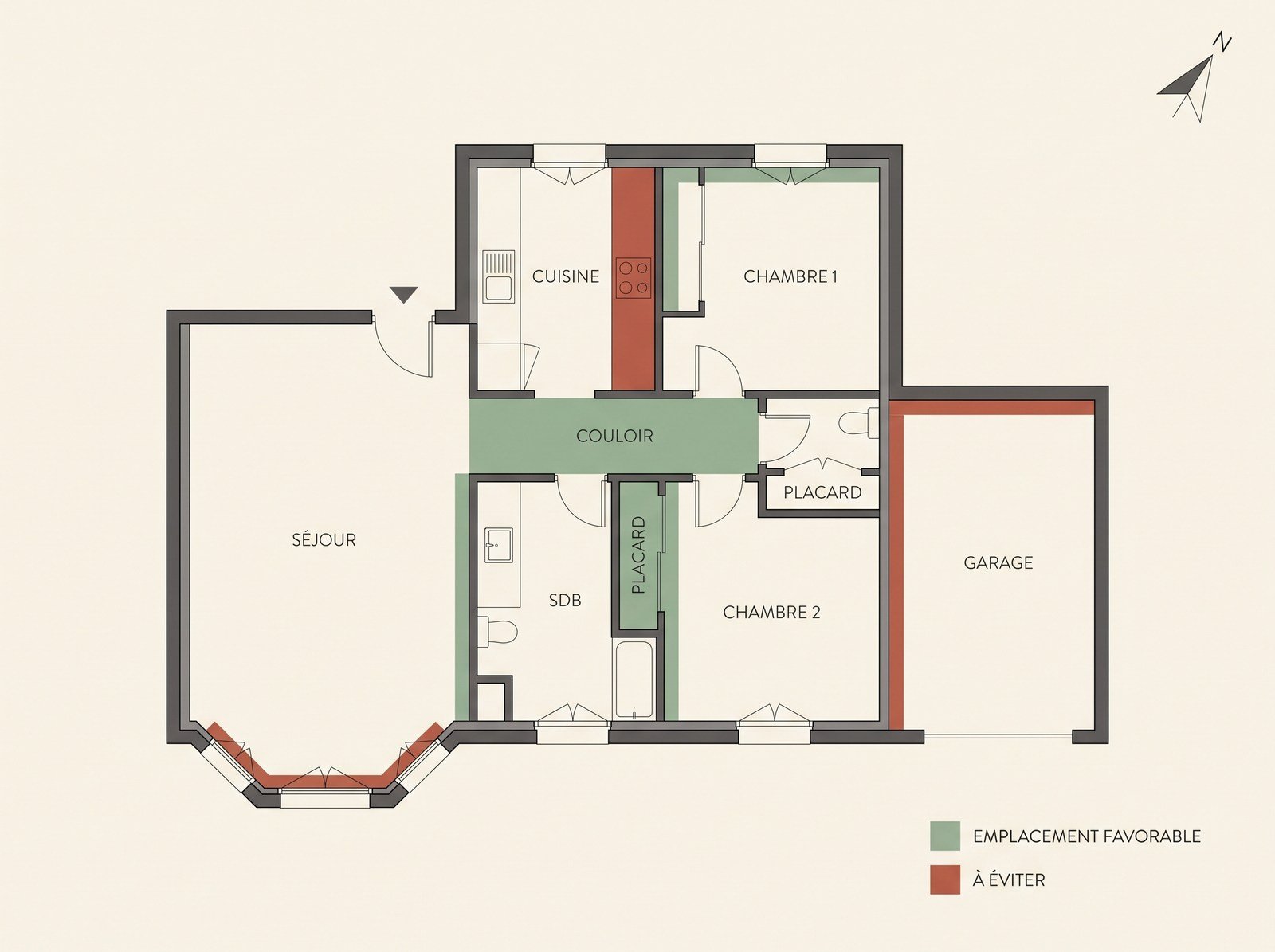
Where should you store your wine bottles at home, room by room?
| Play | What you can store there | Tailored Solution | Realistic capacity | To be avoided at all costs |
|---|---|---|---|---|
| Kitchen | Service bottles, rotation every few weeks | Wall-mounted storage on a cold wall, low cabinet in a base unit | 6 to 20 bottles | The top of the refrigerator, the area around the oven and the stovetop |
| Living Room / Dining Room | Serving suggestions and wines to drink within the year if the bottle is kept at a moderate temperature | Bottle display, open shelving, base cabinet | 20 to 60 bottles, depending on the wall area | Behind a south-facing window, above a radiator |
| Hallway / Entryway | Longevity and functionality: an interior wall is the most stable part of a home | Shallow wall storage (less than 20 cm) | 20 to 60 bottles along a 2- to 3-meter-long wall | A passage that's too narrow (bottles get knocked over every time someone passes through) |
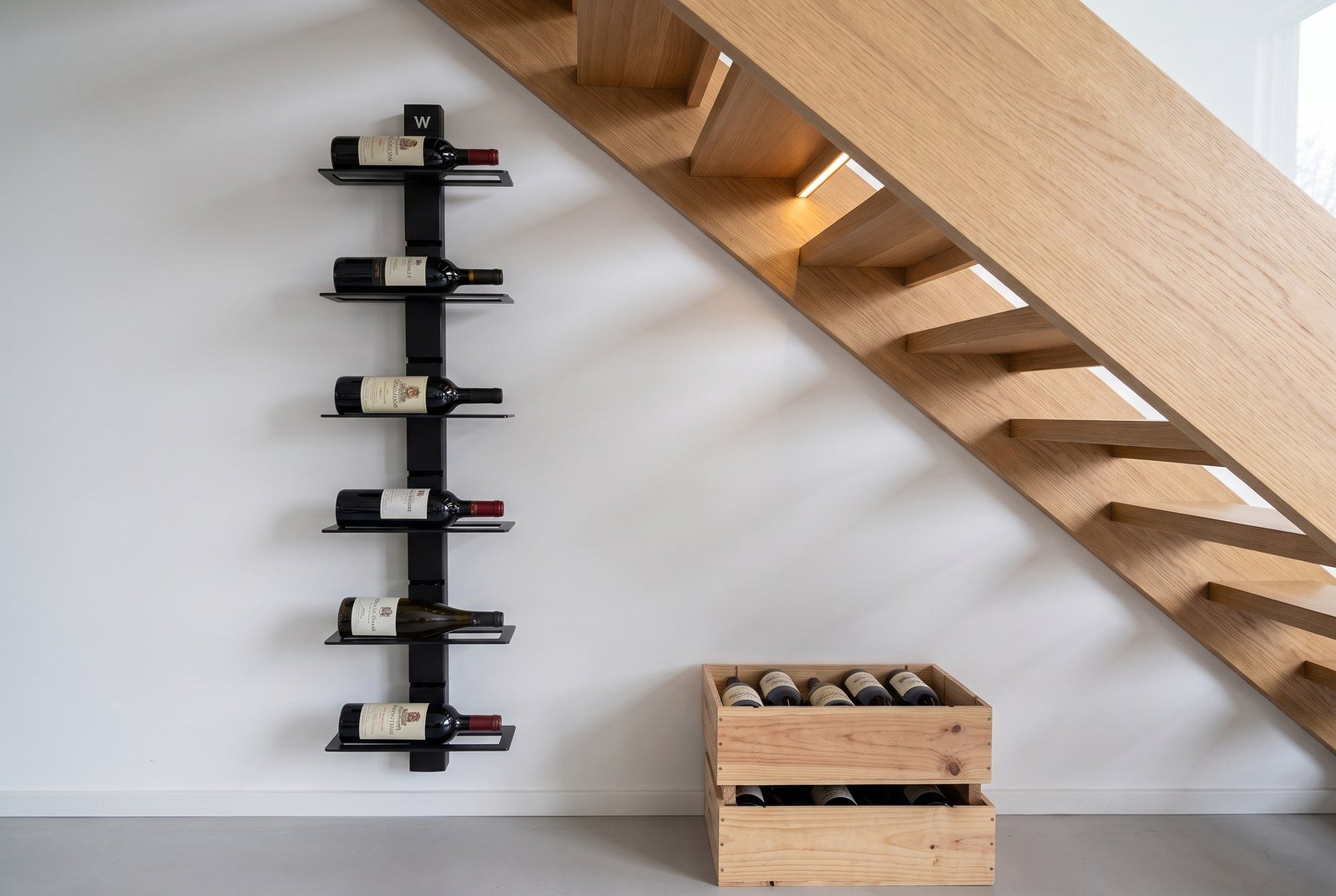
| Under the Stairs | Long-term storage is only possible if the temperature in the area remains below 15 °C year-round; at temperatures above 18 °C, think in terms of years, not decades | Stacked lockers, wall-mounted structure on the back of the partition | 30 to 100 bottles | Stacking without spacers: a wooden or metal staircase vibrates with every step |
| Closet / Walk-in Closet | Store in a dark place | Base cabinet installed, sliding shelves | 12 to 40 bottles | Direct contact with a hot water tank or a duct |
| Pantry / Laundry Room | Hold, if the air isn't superheated | Cabinet or wall-mounted unit with a lacquered finish (often used in damp areas) | 30 to 80 bottles | The dryer and the washing machine: constant vibrations |
| Bedroom | Pantry and utility room—often the least heated room (16 to 17 °C, compared to 19 °C in living areas) | Discreet storage cabinet, small wall-mounted unit | 10 to 30 bottles | A wall shared with the bathroom |
| Garage / Basement | Store only if the temperature never drops below freezing | Floor-level cabinet, raised a few centimeters | 50 bottles or more | Freezing. At around -5 °C, the wine pushes the cork out or causes the bottle to burst. And the smell of fuel |
These capacities are estimates, calculated based on horizontal Bordeaux-style bottles. See the next section for the exact calculation.
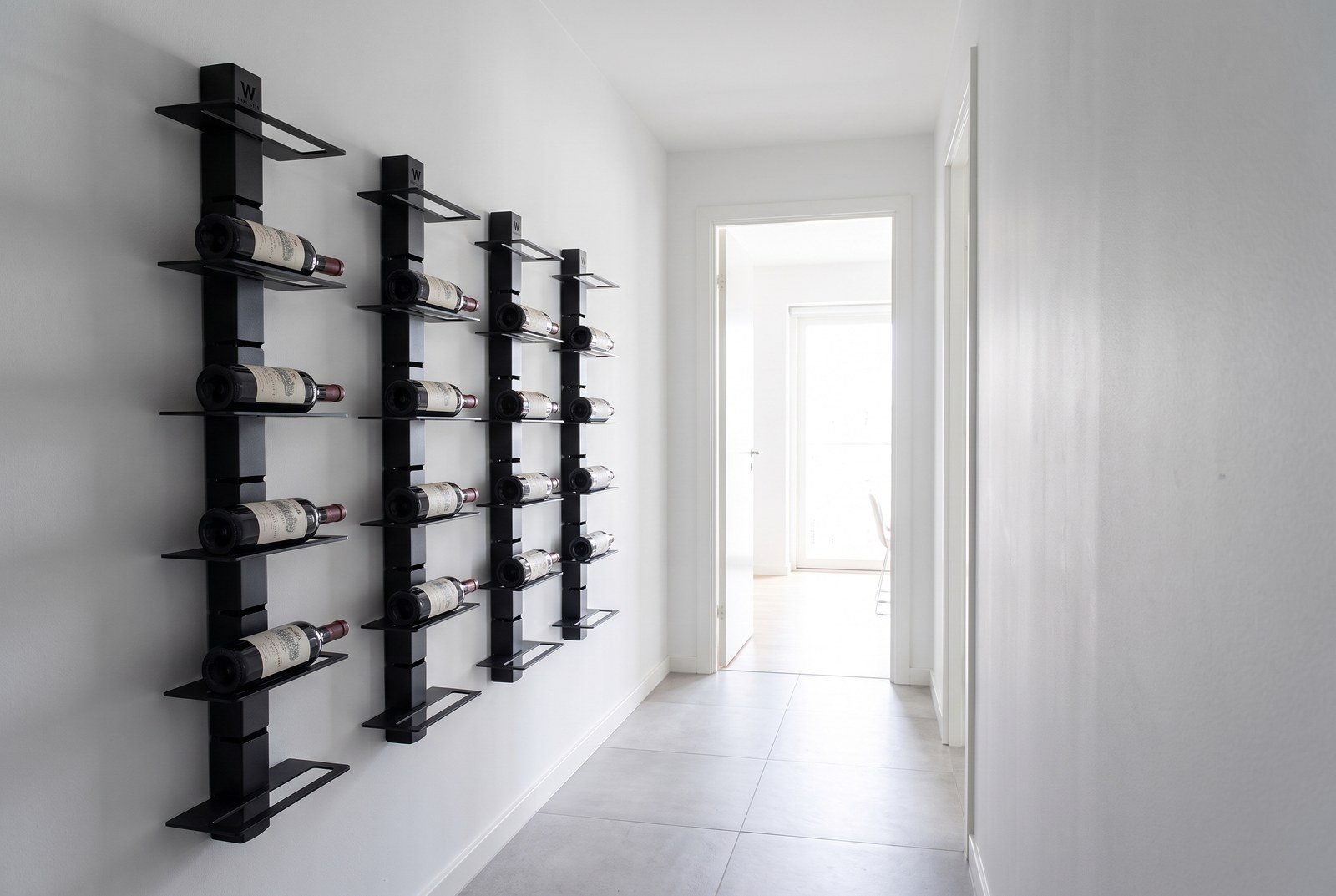
The kitchen: the most in-demand room—and the most challenging
That’s where everyone wants to store their wine, because that’s where they open it. And it’s the worst room in the house in terms of temperature. The oven heats up to 200 °C, the stovetop hotplates heat the air above them, the dishwasher releases steam, and the refrigerator produces two things that wine hates: heat from the condenser and constant vibrations from the compressor.
The top of the fridge, actually. We put everything there, so that’s where the bottles end up. It’s a bad spot: rising heat and vibrations transmitted through direct contact with the car body—a perfect combination.
The verdict is clear: in the kitchen, you have to be careful. Store the bottles you’ll be serving—enough for the next two or three weeks—on a wall away from heat sources. Wall storage has a definite advantage here: it doesn’t take up counter space, and it lets you choose the coolest wall in the room rather than just the first available cabinet.
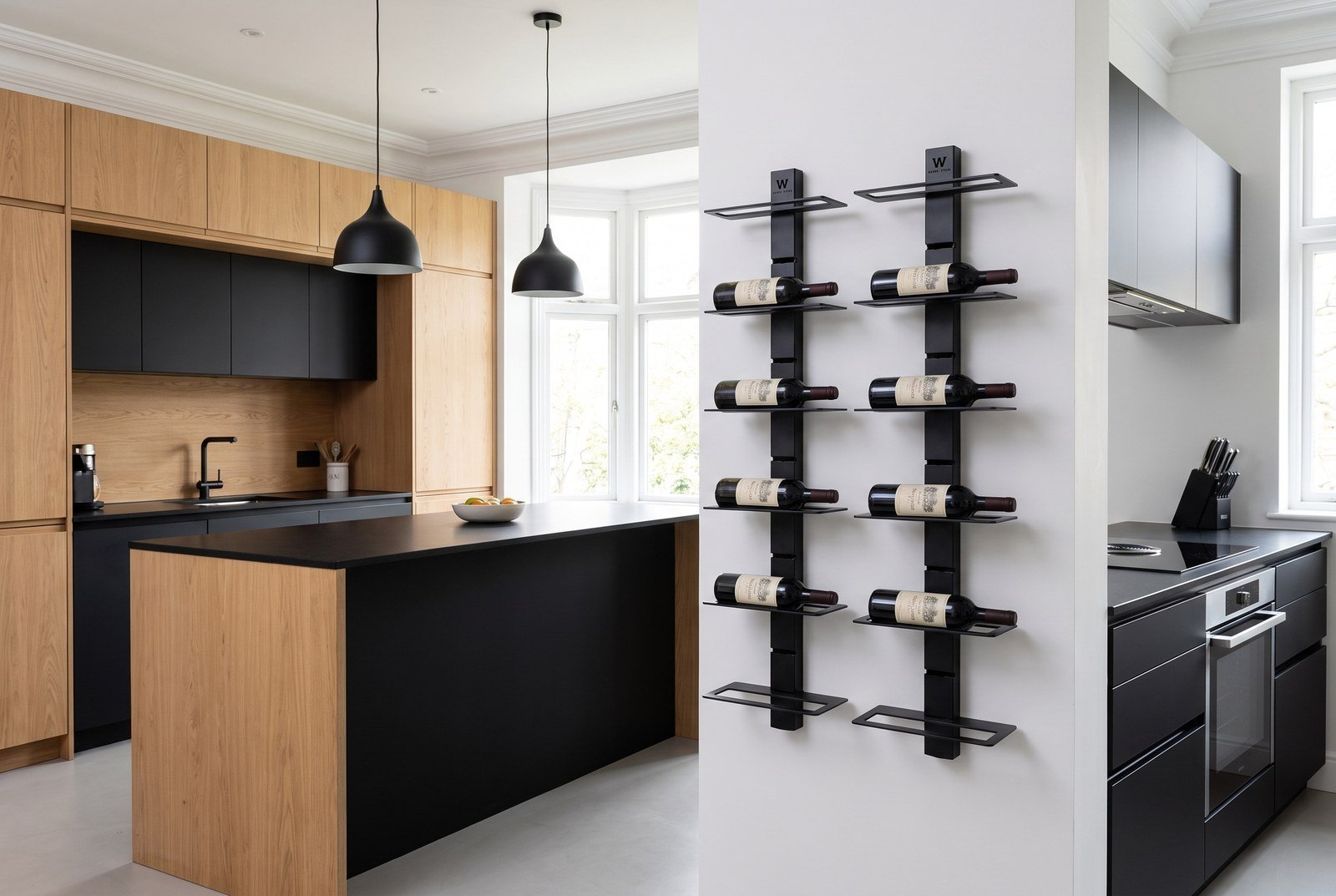
Extra square meters: hallway, entryway, under the stairs
The average French home is full of wasted space. A 3-meter hallway, a wall recess in the entryway, the space under the stairs, a corner between two doors. That’s where coats and dust get stored.
Yet these are the best locations. An interior wall—with no windows and no walls facing the outside—is the most thermally stable surface in the house: no direct sunlight, no sudden temperature changes in the morning, and still air. The hallway has all three.
The challenge lies elsewhere: depth. In an 80-cm-wide passageway, a 40-cm-deep piece of furniture is unusable. Wall storage that’s less than 20 cm deep, on the other hand, allows for free movement. That’s exactly the gap that no one takes advantage of in their own homes.
How many bottles can you actually store?
The only measurement that matters when determining the width is the bottle's diameter: 7.5 cm for a Bordeaux bottle, 8.5 cm for a Burgundy bottle, and 10 cm for a magnum.
- On a one-meter-long shelf, you can fit 10 to 13 bottles laid side by side: 13 standard-size bottles, 11 Burgundy-style bottles, or 10 magnums. Allow for one less bottle if you want to grab one without bumping into its neighbors.
- A full bottle weighs between 1.2 and 1.6 kg (glass + contents). Thirty bottles weigh 36 to 48 kg to carry or hang.
- A 3-meter-long hallway wall with two levels of shelves can already hold 60 to 70 bottles without taking up a single centimeter of floor space. If used to its full height, it can hold more than 100 bottles, at which point the load capacity—and available space—become the limiting factors.
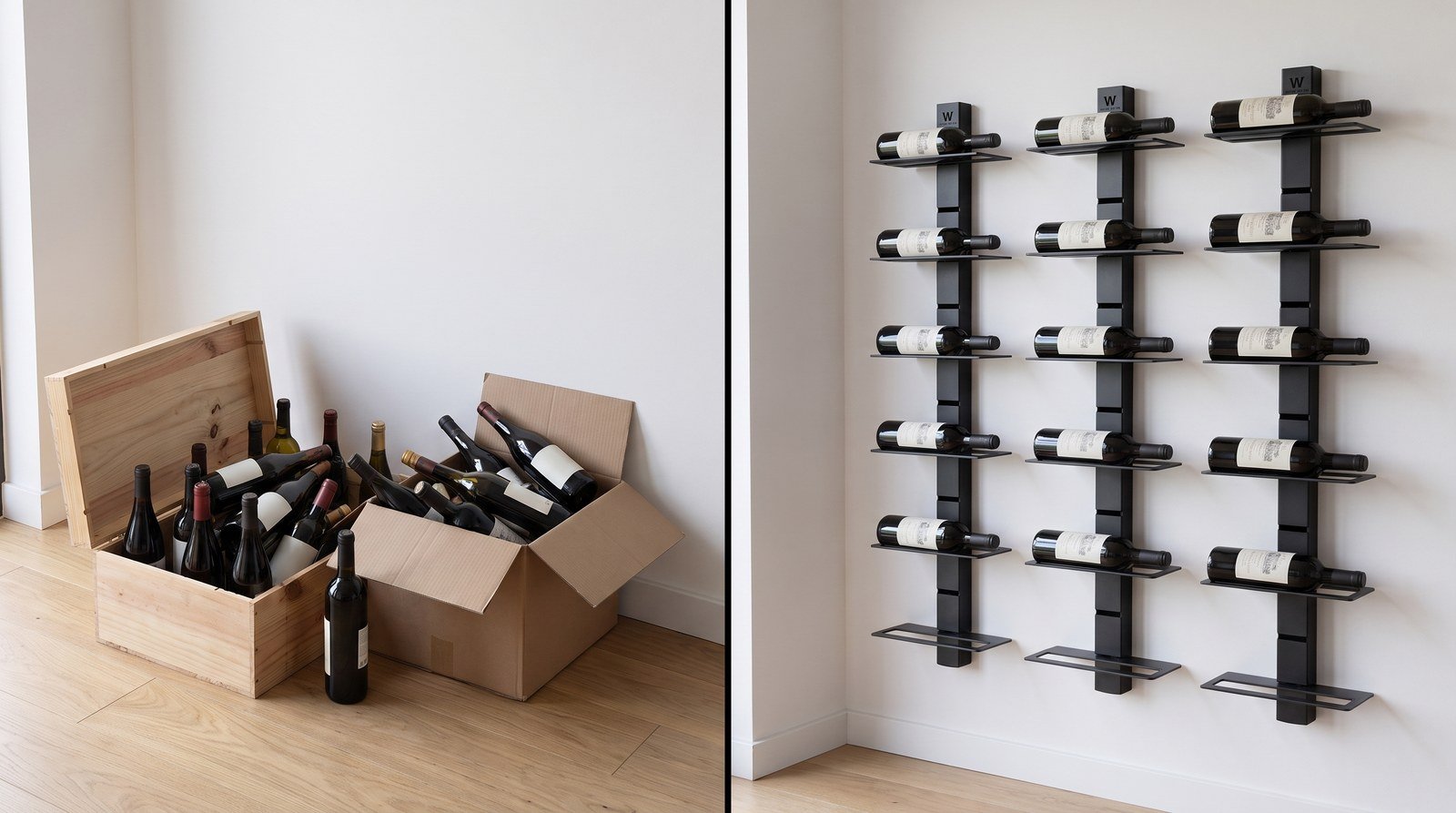
Wine Line® wall-mounted units are arranged side by side to cover an entire wall, with a depth of just 14.8 cm, leaving the labels visible. You start with one module and add more as your wine collection grows, up to the weight limit specified by the manufacturer.
View modular wall storage systems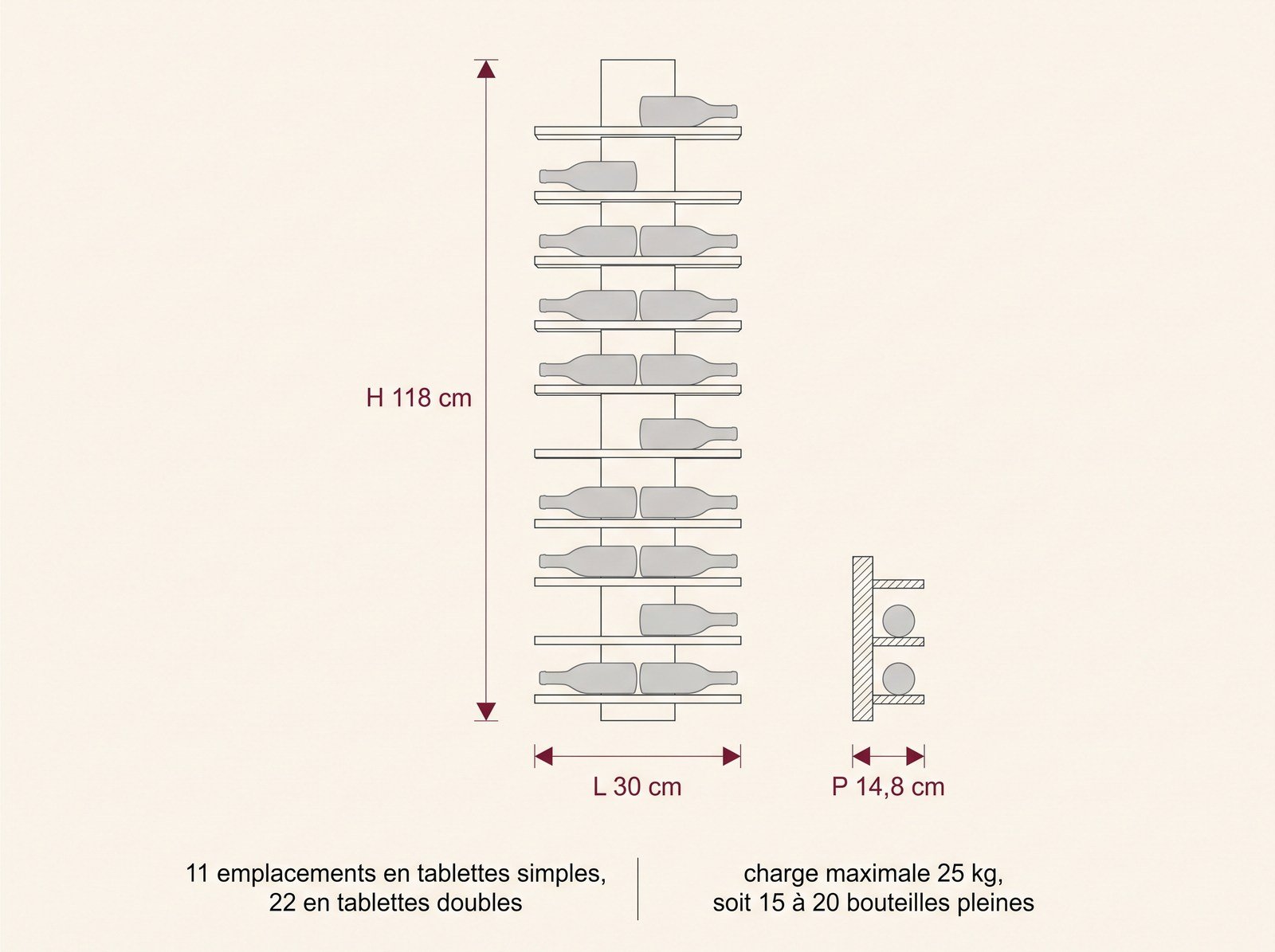
What's the best way to store your wine bottles?
- A cardboard box or crate placed on the floor: just a stopgap measure, nothing more. No protection, no visibility, and on a cold floor (concrete, basement, garage), the cardboard absorbs moisture.
- The stackable storage bin: a good option to start with, versatile, and inexpensive. It takes up a lot of floor space and becomes unstable as it gets taller.
- Wall-mounted shelving: takes up no floor space, labels on the front, and storage capacity that matches the length of the wall. But the wall has to be suitable for it.
- The electric wine cooler: the only true temperature controller. Different budget, different topic.
To help you decide between these items, we've written a dedicated guide: How to Choose the Right Storage Format. And if you're down to two options, check out our head-to-head comparison of wine racks versus wine cabinets.
Making Your Own Locker: A Good Idea or a False Economy?
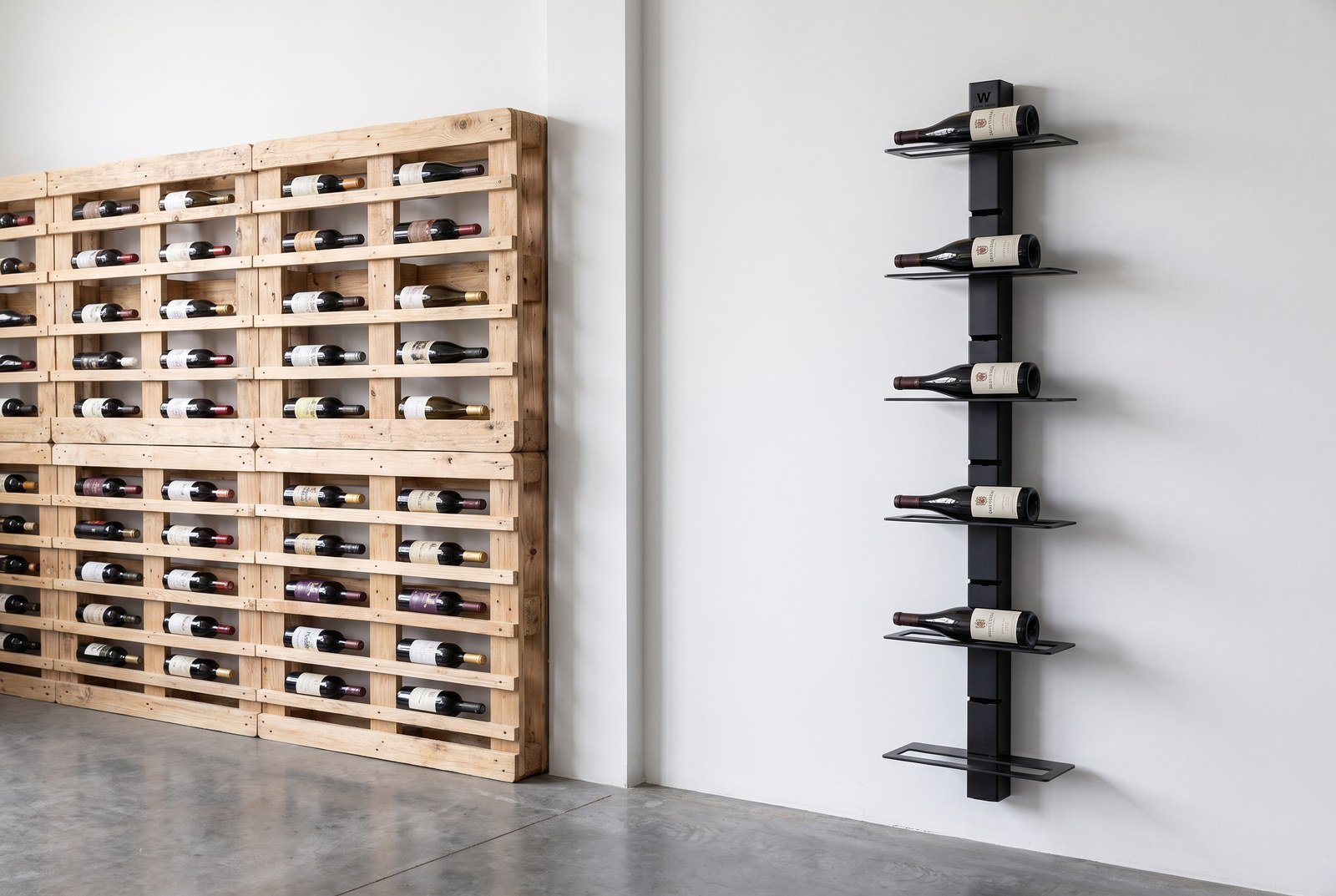
DIY has its successes. A sanded-down wine crate, two rough-cut wooden planks, and some battens—it costs next to nothing and works great for storing about ten bottles on the floor.
One rule before taking anything apart: only reuse pallets marked “HT” (heat treatment). The “MB” mark indicates fumigation with methyl bromide, a toxic gas: these pallets must not be brought into a home, much less placed near bottles of beverages you plan to drink. The marking is stamped on the pallet’s blocks, along with the ear of wheat symbol for ISPM 15.
Where the homemade setup goes wrong next is with the load and how the bottles are secured. A poorly secured bottle rolls; two rolling bottles create a point of contact between the glass bottles; and the wood of a recycled pallet will never tell you how much weight it can hold. Thirty bottles amount to 36 to 48 kg suspended from screws chosen at random.
To be honest, here's our take: DIY on the floor, yes. DIY on the wall, no.
Where should you definitely not store your wine bottles?
- Standing upright for months. Storing bottles on their sides is primarily a matter of space, stability, and legible labels. You can store more, you can see everything, and nothing tips over.
- Above the refrigerator. Heat from the condenser and vibrations transmitted through contact.
- Next to the oven or the stovetop. The temperature there rises by several degrees every time you cook.
- Behind a south-facing window. Just a few hours of direct sunlight are enough to give a white or rosé wine a light, airy flavor. Tinted glass limits exposure—it doesn’t protect—and the greenhouse effect cooks the rest in a single summer.
- Stacked without spacers. If the stack slides, a bottle will break and the rest will get knocked over.
- In a garage. It's freezing in the winter, sweltering in the summer, and it smells like gasoline.
Frequently Asked Questions
Where should you store your bottles if you don't have a wine cellar?
In the coolest and most temperature-stable room in your home, against an interior wall: a hallway, a closet, or a bedroom that isn’t heated much. If you don’t have an entire room, a wall will suffice. For long-term storage, keep in mind that no heated room reaches the recommended temperature of 12 to 14 °C. For more details on storage, see our guide to storing wine without a wine cellar.
Can you store wine in the kitchen?
Yes, for bottles you'll be opening in the coming weeks. Never for bottles meant for aging. Keep them away from the oven, stovetop, and refrigerator.
How many bottles fit on one meter of wall?
Allow for 10 to 13 bottles per meter of shelf space, depending on the bottle size (13 for standard-size bottles, 10 for magnums), and multiply that by the number of tiers. Then check the weight: at 1.2 to 1.6 kg per bottle, weight is what sets the actual limit, not the number of slots.
Do all bottles need to be stored on their sides?
As for storage, yes: you can pack them more tightly, the bottles won't tip over, and the labels stay legible. For a bottle you're drinking tonight, it's not an issue.
Can you store wine in a bedroom?
This is often one of the best spots in an apartment: it doesn’t get very warm, it’s quiet, and there’s no vibration. Just avoid the wall that’s shared with a bathroom, where humidity and heat fluctuate.
A wine collection that grows at your own pace.
Modular wall-mounted shelves in raw or lacquered steel. Holds up to 22 bottles per module, 2-year warranty, free shipping on orders over €350.
Explore the collectionExcessive alcohol consumption is harmful to your health. Please drink responsibly.