
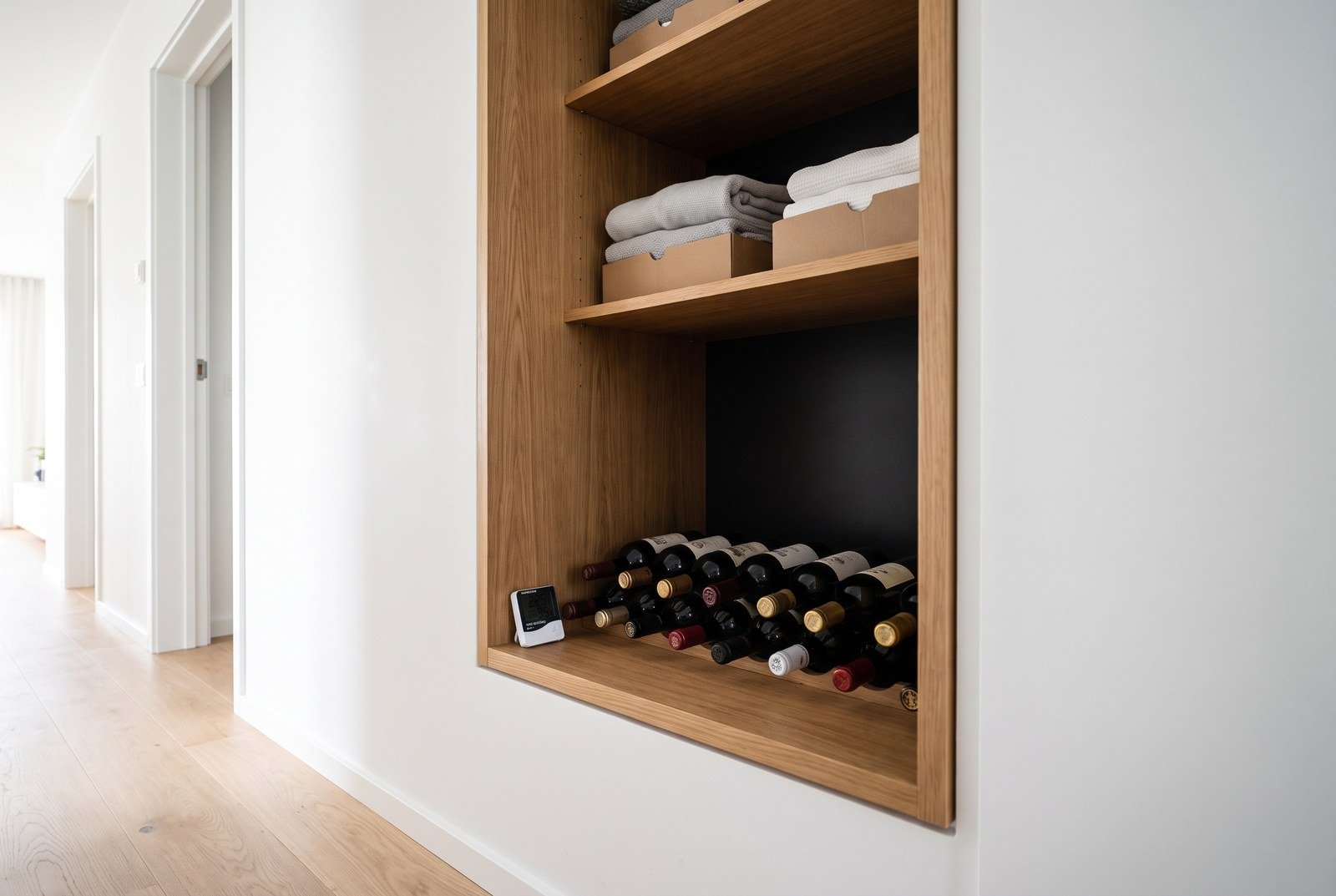
How Can You Store Wine Without a Wine Cellar? The Best Solutions Based on Your Home
A cupboard against a load-bearing wall stays around 17 °C all winter long, without any fluctuations. The same cupboard, right up against a poorly insulated south-facing partition wall, goes from 16 °C in the morning to 26 °C in the late afternoon. Same apartment, same floor. It’s this temperature fluctuation that damages the wine, far more than failing to reach the 12 °C of an ideal wine cellar. The question remains: where are your stable storage spots, what happens to them in August, and do your bottles even need them?

The 4 Enemies of Your Bottles—and Which One Matters Most
- Temperature. The ideal storage range for wine is between 10 and 14 °C, with 12 °C as the ideal benchmark. However, a wine cellar maintained at a constant 17 °C provides better protection than a cupboard where the temperature fluctuates between 11 and 22 °C. Stability is more important than the exact temperature, as long as it stays below about 20 °C; above that, the heat will spoil even perfectly stable wine.
- Humidity. Aim for 50 to 70 percent. If it’s too dry, the cork’s seal may deteriorate over the very long term. If it’s too humid, the labels will mold and peel off. In a heated apartment, this factor rarely causes you to lose a bottle.
- Light. Tinted glass provides significantly better protection than clear glass, but it doesn’t make the bottle opaque. A cardboard box, a cabinet door, or a windowless hallway—that’s all it takes. Whites, rosés, and sparkling wines are the most vulnerable.
- Vibrations. They’re last on the list—by a long shot. At low intensities, studies show no effect on wine, even after months. The top of a washing machine during the spin cycle? Yes, that’s something to avoid. A subway passing three blocks away? Frankly, that’s not your problem.
Wines for aging or wines to drink young: Which ones require different storage methods?
Wines to Drink Young
Most of what a private buyer purchases is consumed quickly, often within a year: a summer rosé, a light white, a €12 table red. These wines don’t age; they’re meant to be enjoyed right away. For them, the “wine cellar” isn’t an issue. Just find a dark spot, away from the radiator, without sudden temperature fluctuations, and you’re all set. Storing a Beaujolais in a room at a steady 20°C won’t ruin it if you drink it in March.Wines for Aging
Wine meant for aging is a whole different story. It requires a cellar dedicated to aging. A wine intended to spend five, ten, or twenty years in the bottle is subjected to repeated exposure: a single period at 24 °C in the summer—repeated three summers in a row—leaves its mark. In this case, yes, conditions matter: if you have neither a cellar nor a cool room, an electric wine cooler (or storage at a wine merchant’s) is the best solution for long-term aging. Our advice: sort your bottles before spending a single euro. Set aside one area for everyday wine and another for aging. Your budget should follow this sorting process—not the other way around.Where should you store your bottles in a home without a cellar?
The table below does the work for you. These are rough estimates for the heating season, in a home heated to around 19–20 °C. Use your actual locations, not those from a catalog home.| Location | Typical temperature (heating season) | Stability | Verdict |
|---|---|---|---|
| Closet on an interior wall (partition wall, north) | 16–19 °C | Good | Serve, and keep the return short if the ball isn't coming in high |
| Walk-in closet, room with limited heating | 15–18 °C | Good | Often the best compromise when it comes to an apartment |
| Under the bed, in a room that isn't too hot | 18–20 °C | Correct | Service Only |
| Entrance / hallway without windows | 17–20 °C | Good | Service, bottles to be consumed within the year |
| Laundry room, unheated pantry | 12–17 °C | Variable | Storage available, subject to confirmation via inventory (be careful with the washing machine) |
| Unheated garage | From below 0 °C in winter to 25 °C and higher in summer | Bad | Not recommended for storage. At sub-zero temperatures, there is a risk of freezing. |
| Kitchen cabinet, above an oven | 22–30 °C | Bad | To be avoided |
| Top of the refrigerator | A few degrees warmer than the room | Bad | Avoid (heat, vibrations, kitchen environment) |
| Near a bay facing due south | 20–32 °C | Bad | Avoid at all costs—light is a bonus |
The Test to Take Before Choosing Your Location
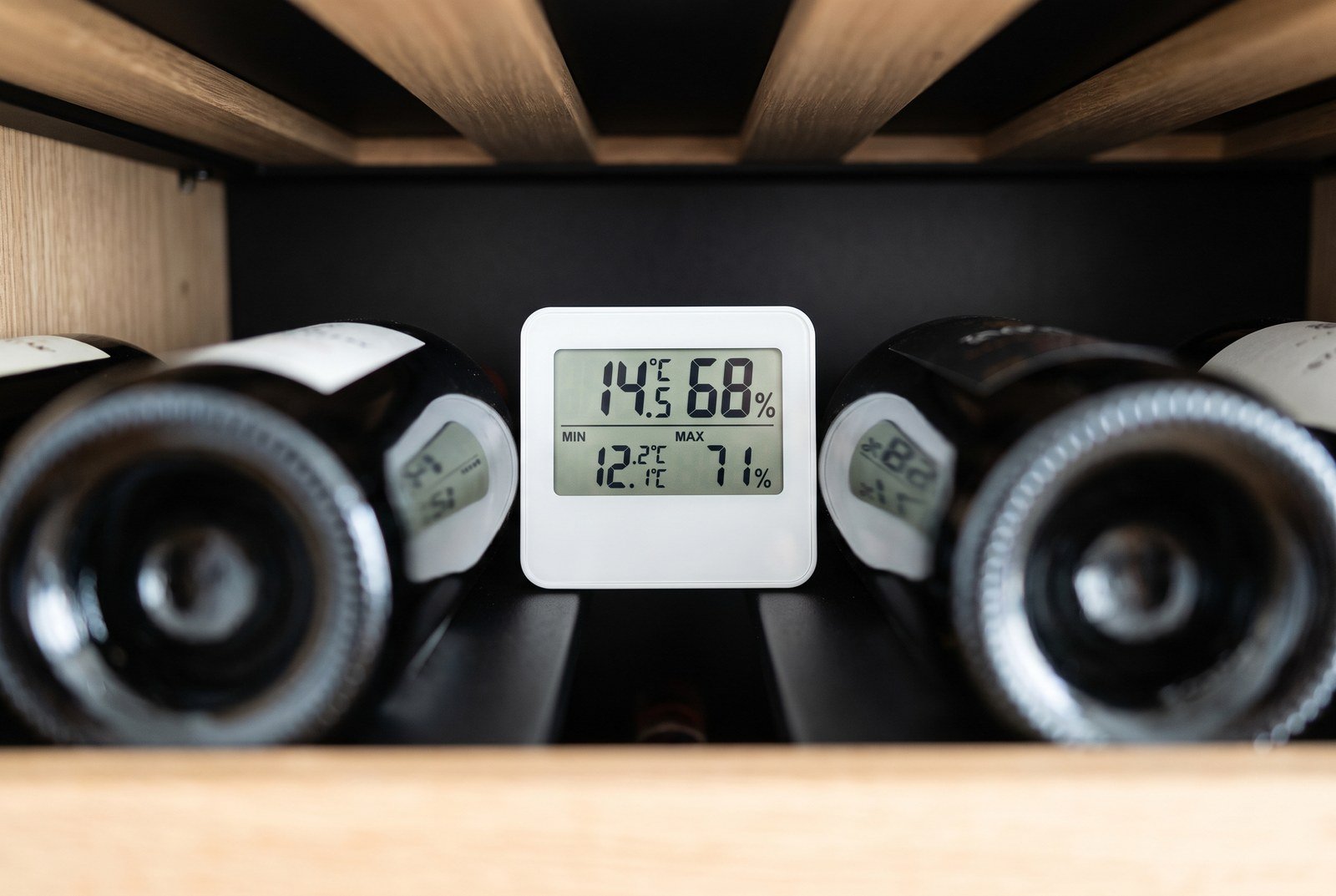
No one knows the actual temperature inside their closet. Fortunately, it can be measured.- Buy a thermometer-hygrometer with memory (min/max).
- Install it at the level of the bottles, not on the ceiling of the room.
- Take readings every morning and evening for fifteen days, including a warm-up weekend and a hot day.
- Look at the range, not the average. A location with an average temperature of 16 °C that fluctuates between 9 and 23 °C is a poor choice. An average of 18 °C with a 2 °C range is excellent.
- Take another reading during the opposite season—including summer—before placing a bottle there for aging.
Lie down, get comfortable, and stay still
A bottle that you take out, turn upside down, and then put back upright behind another one is a bottle you’ll forget about and end up missing out on. Store your corked bottles on their sides. But not for the reason you’re always told: the space between the wine and the cork remains saturated with moisture regardless of the position, and the R&D department of the world’s leading cork manufacturer calls the requirement to store them on their sides a myth. The real reason is more down-to-earth: it stays in place, it’s secure, the label is easy to read, and there’s no downside. Then secure it. A bottle that rolls around in a rack that’s too wide will end up shifting every time the door opens. And making the labels legible is the best way to avoid having to rummage through ten bottles to find the right one. A modular wall storage system Placed against an interior wall—the most thermally stable surface in a home—it serves this purpose perfectly: bottles laid on their sides, secured in place, labels facing forward, and floor space saved.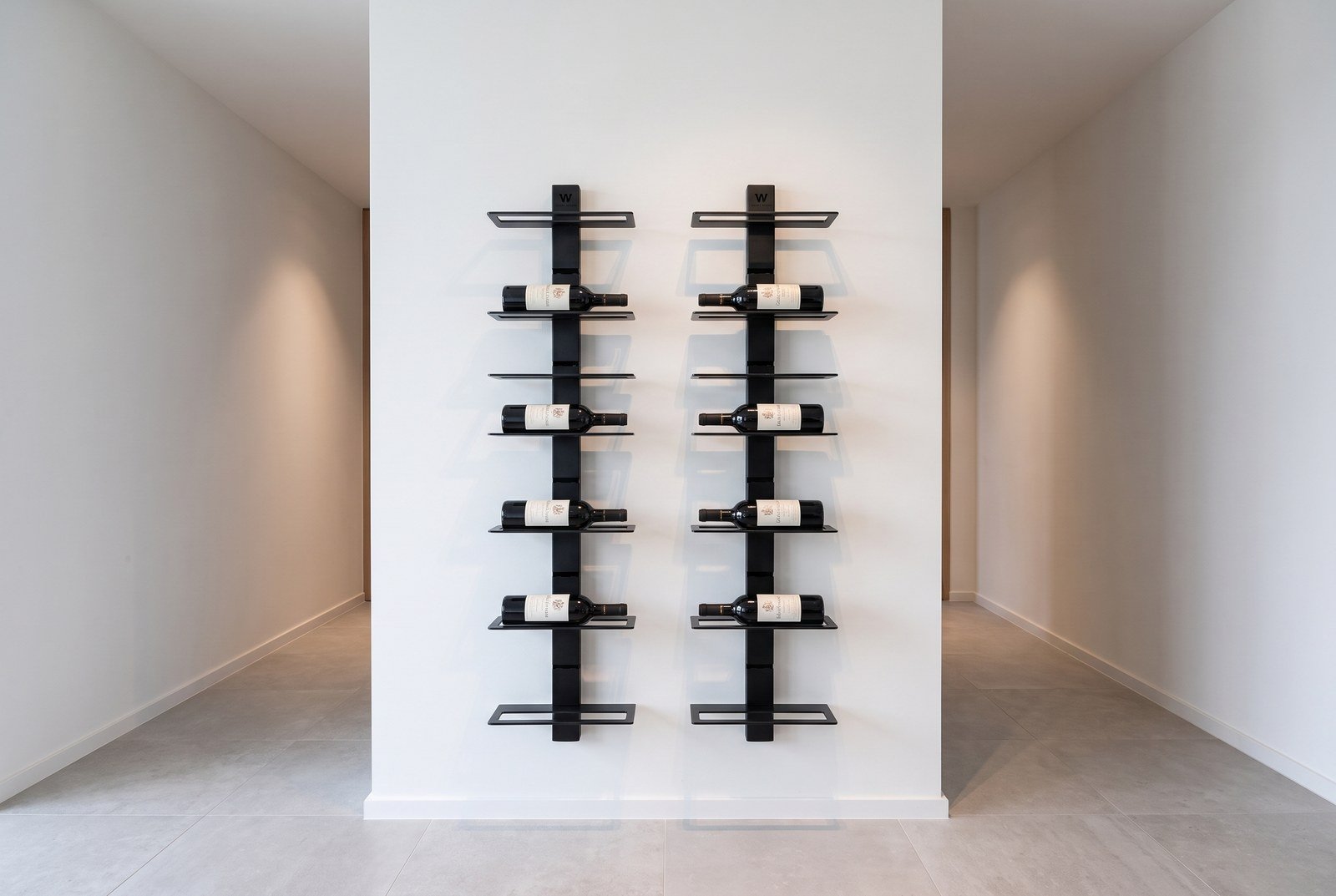
What about a bottle that's already been opened?
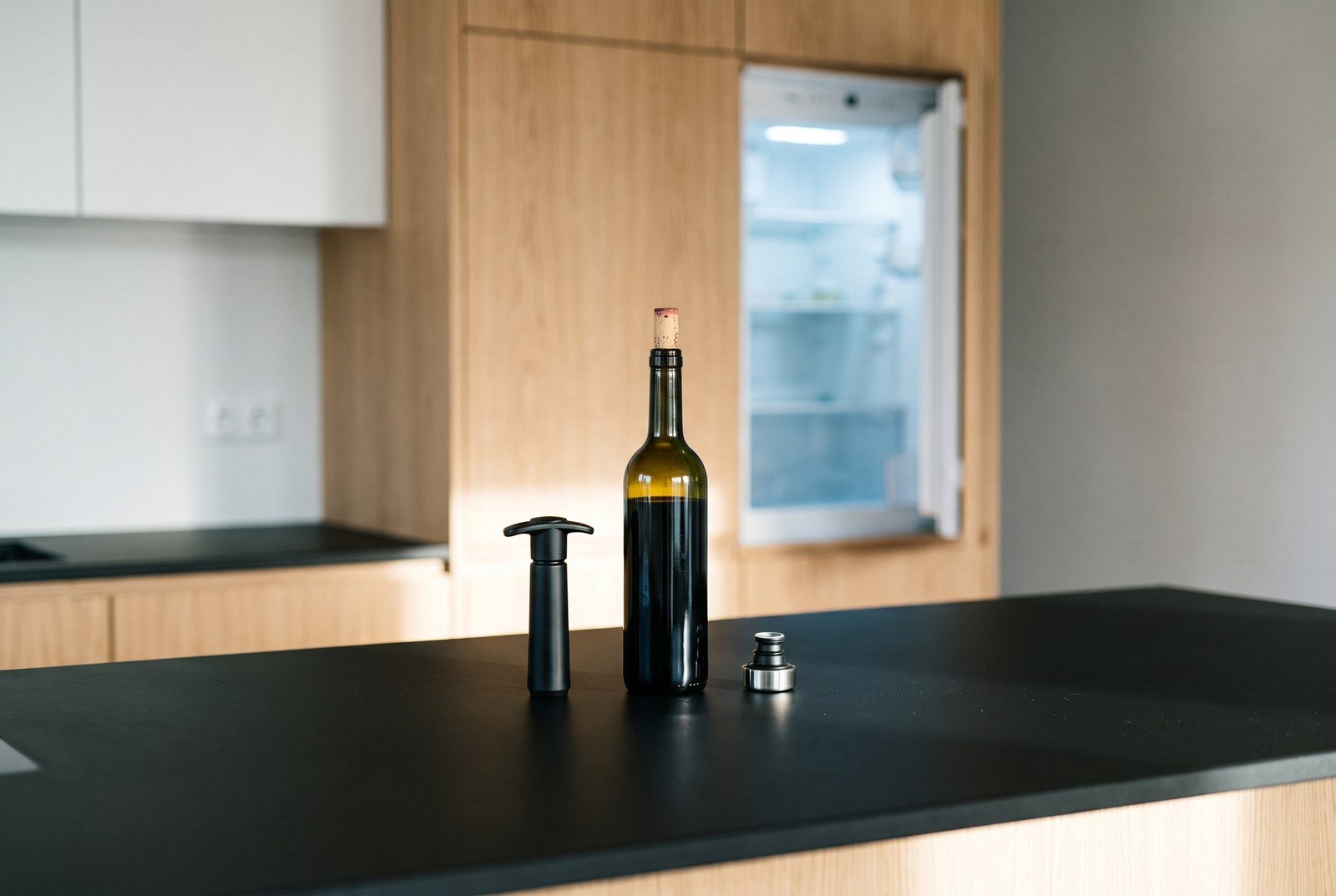
Here, the enemy is no longer the temperature but the air. Oxidation begins as soon as the first glass is poured.- Replace the cork with the original one, making sure to reinsert the side that was already soaked in the wine, and put the bottle in the refrigerator—including red wine. The cold slows down oxidation. Take the red wine out of the refrigerator one hour before serving.
- A vacuum pump or an airtight lid saves a day or two, not a week.
- Allow 5 to 7 days in the refrigerator for a dry white or rosé, 3 to 5 days for a red (especially if it’s tannic), 2 to 3 days for a full-bodied, oaked white, and 1 to 3 days for a sparkling wine with a traditional cork.
FAQ
Can you store wine in the refrigerator?
For a few days, yes. Over the long term, no: it’s too cold, the air is very dry, and the smells from nearby food don’t help. It’s not a suitable place for storage over several months.Is a garage a good idea?
Rarely. Since it’s not designed for wine storage, an unheated garage can drop below 0 °C in February and rise above 25 °C in August. Wine freezes at around -5 °C, which causes the cork to pop out of the bottle. It’s not suitable for long-term storage. As a temporary solution, use it only if you’ve verified that it never freezes.Do You Really Need an Electric Wine Cooler?
Only if you plan to store wine for several years and no spot in your home passes the two-week test. For bottles you’ll drink within the year, this isn’t necessarily a justified expense.How long can you store wine without a wine cellar?
When stored in a stable environment at around 17–19 °C, away from light, most everyday wines will keep well for one to two years. This is a rough estimate, not a guarantee. Beyond that, proper storage conditions are required.A wine collection that grows at your own pace.
Modular wall-mounted shelves in raw or lacquered steel. Holds up to 22 bottles per module, 2-year warranty, free shipping on orders over €350.
Explore the collectionExcessive alcohol consumption is harmful to your health. Please drink responsibly.