
How to Create a Successful Industrial-Style Bar: Materials, Ambience, and the Bar Area
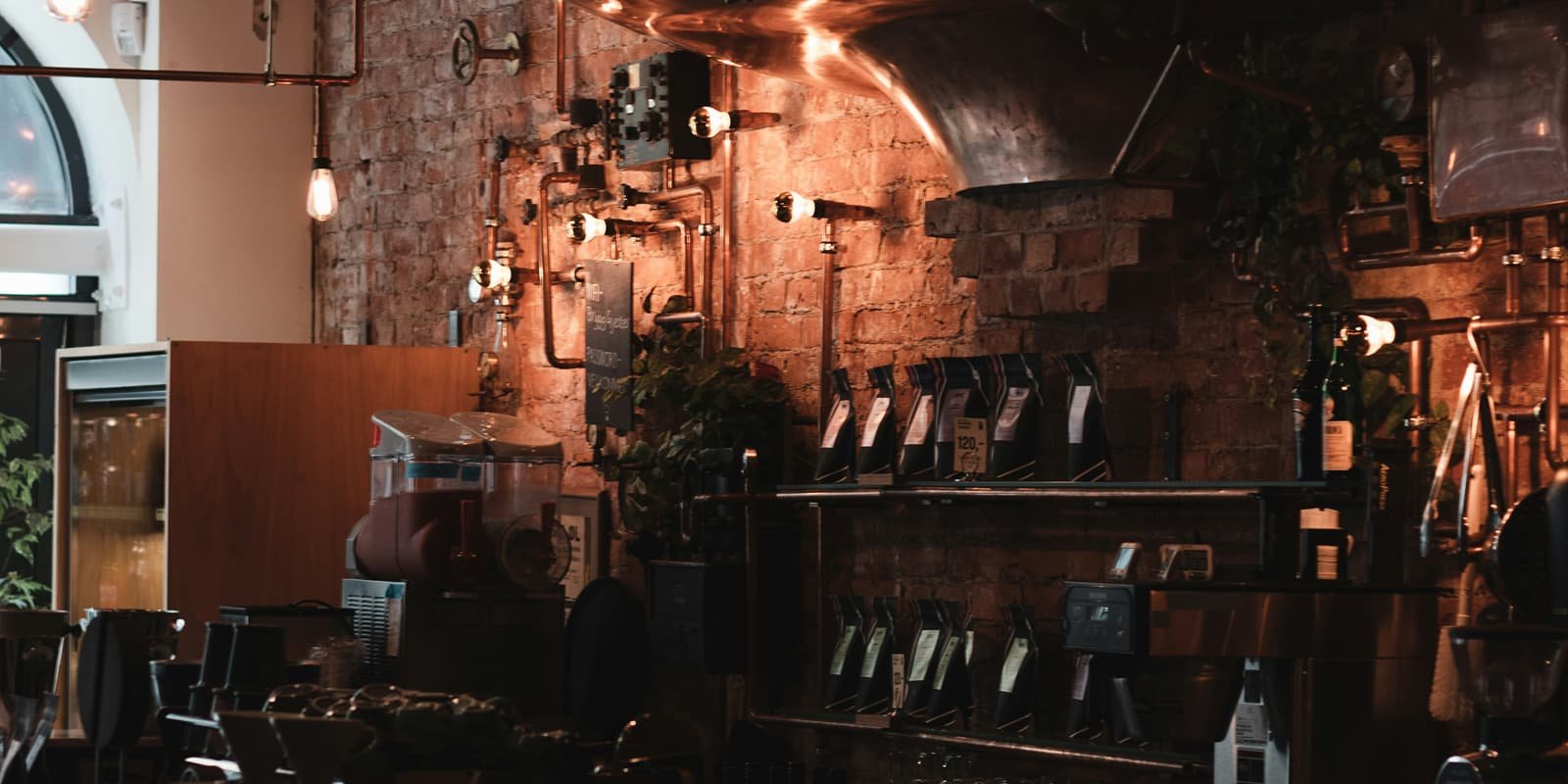
A thick wooden countertop resting on a black metal base. Above it, an Edison bulb casting a warm glow. Behind it, a wall of brick or raw steel where bottles stand, labels facing you. That’s what most people picture when they talk about an industrial-style bar. Now it’s time to actually build one, without getting lost in a photo gallery that never tells you where to start. This guide takes things in order: the atmosphere, materials, color, lighting, furniture, and then the bar area itself.

Where to Start: Set the Mood Before You Buy Anything
The natural instinct is to look for a bar cabinet and start from there. That's a bad idea. Start with the wall and the atmosphere; the furniture comes later.
The industrial style draws inspiration from old workshops and New York City lofts—factories converted into housing between the 1950s and 1970s in neighborhoods like SoHo. Exposed metal, weathered wood, and raw surfaces left intentionally unhidden. Bare brick, polished concrete, steel, exposed piping, and filament light bulbs. In short, the workshop aesthetic, brought into a living room or kitchen.
The trap is overdoing it. If you throw everything in, you end up with a set from a TV show. My advice boils down to one rule: choose two or three dominant materials, not ten. For example, wood and steel, plus a brick wall in the background. The rest should take a back seat to this trio.
Before we continue, let’s talk about space. A bar in a living room corner, an island in an open kitchen, a dedicated section of wall: the amount of floor space you have determines everything else. Pick a spot, take measurements, and only then think about materials.
What materials should you use for an industrial-style bar?
Two materials define the style: wood and metal. The rest is just for accent.
Wood adds warmth. We want it to be solid—or at least look substantial: oak, mango wood, an old reclaimed tabletop. A dark hue or a slightly weathered look works better than light, smooth wood. It’s what warms up a space that could otherwise quickly feel cold.
Metal, on the other hand, provides structure. Legs, frames, shelves—it defines the style. And this is where I’m going to be a bit categorical: if there’s one material that embodies the industrial spirit, it’s steel. Raw steel, with its dark gray hue tinged with blue and its rolling marks, is exactly the material everyone tries to imitate with paint effects. And when left untreated, it continues to evolve: without maintenance, it develops a patina and may take on a rusty hue over time, whereas matte black metal remains unchanged, emphasizing a graphic and minimalist aesthetic.
To help you choose based on the look you're going for:
| Subject | Visuals / Atmosphere |
|---|---|
| Raw Steel | Bluish gray, rolling marks; the most vibrant option (develops a patina if not maintained) |
| Steel with a matte black finish | Minimalist, stable, graphic, remains unchanged over time |
| Dark solid wood | Warmth, contrasting with the metal, softens the overall look |
| Brick / Concrete | Raw canvas; use sparingly as a background |
A quick practical tip: a steel wall-mounted storage unit, installed behind the counter, is one of those elements that adds a signature touch without making the room feel cluttered. We’ll come back to this later, in the bar area section.
Colors and How to Coordinate the Bar with the Rest of the Room
An industrial-style bar doesn't stand on its own. It needs to complement the kitchen or living room around it. The color palette helps with that.
The style's primary colors:
- Black and charcoal gray for metal and structures
- Browns and wood tones for warmth
- Small touches of copper, brass, or rust in subtle accents on the details
- Off-white or light gray on the walls, to let the room breathe
To make the bar blend in with the room, take a look at what’s already there. Do you have a kitchen with dark cabinet fronts? A black metal countertop extends that theme. Is your living room mostly light-colored with wood accents? Raw steel and a warm-toned countertop create a contrast that catches the eye without clashing. The idea isn’t to isolate the bar as a separate object, but to make it complement the surrounding materials.
A splash of bright color is still possible—on a stool or an accessory. But use it sparingly. The style is based on neutrals.
Lighting: Edison bulbs and workshop lighting
This is the detail that most interiors get wrong—and the one that makes the biggest difference. The lighting in an industrial-style bar is warm and subdued, never white and flat.
Classics That Work:
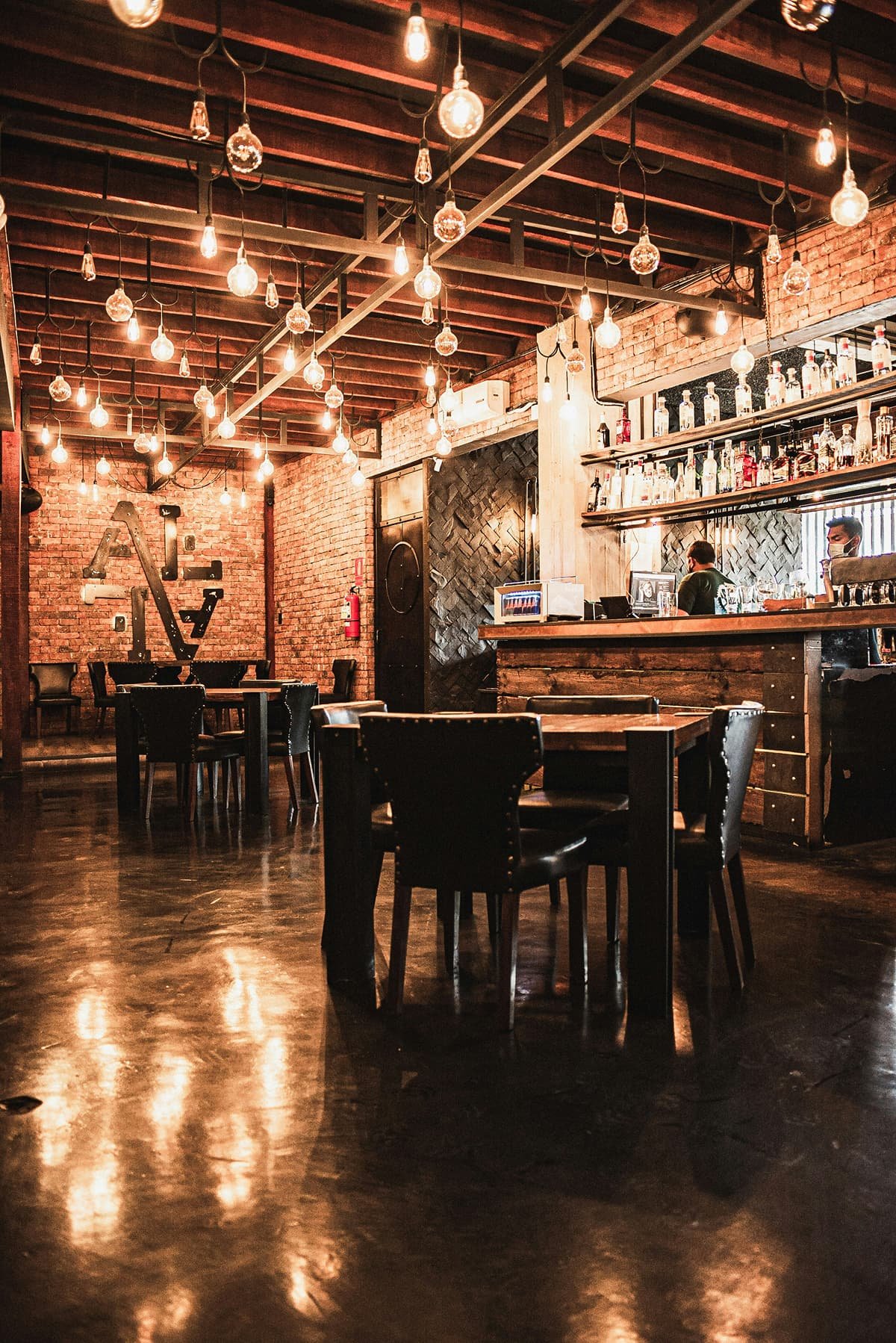
- Edison bulb pendant lights above the counter, exposed filament, amber light
- Black metal lampshades or metal cage shades, factory-style
- Adjustable workshop wall sconce, for highlighting a material
- A discreet strip behind the bottles, to set them apart from the wall
Adjust the height of the pendant lights so that they illuminate the countertop without dazzling anyone sitting there. Warm lighting (around 2700 K) maintains a cozy atmosphere. Avoid using cold kitchen spotlights above the bar—they ruin the whole look.
Bar Furniture and Stools
The furniture arrives now that the set is in place. Not before.
When it comes to stools, the wood-and-metal combination remains a safe bet: a wooden seat, a steel or matte black base, and sometimes a touch of distressed leather. We want them to be a little tall, with a footrest, and simple enough not to overwhelm the space. Two or three are often enough, lined up along the counter.
When it comes to tables and counters, a high table or an island with a wooden top and metal frame will do the trick. A narrow console table placed against a wall is a great solution in a small space. Stick to simple lines: the industrial style doesn’t go well with furniture that’s heavy on moldings.
Here’s a piece of advice I often give: it’s better to have a nice tray and two well-chosen stools than an all-in-one bar set bought on a whim. A simple, understated look stands the test of time better.
The bar area and the display of bottles on the wall
Now we’re getting to the heart of the matter. A bar area isn’t just a counter—it’s what’s behind and above it. And the best way to make use of that wall is to display the bottles themselves.
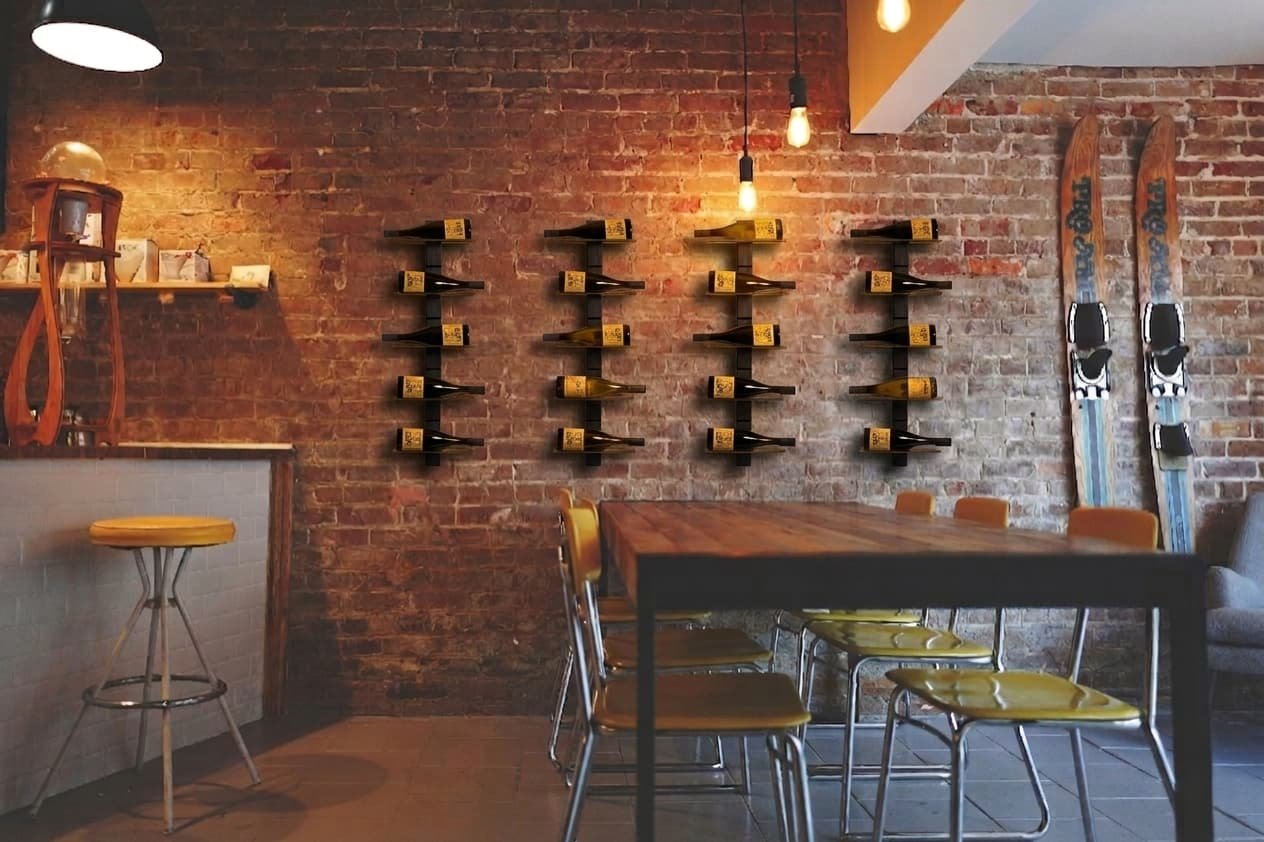
When placed on the wall with the labels facing the room, your bottles become part of the decor. No need for any extra items. That’s exactly what wine shops and wine bars do: the selection on display behind the counter both showcases the space and adds to its appeal. A wine shop owner arranges the wines so they can be taken in at a glance, and that completely changes the atmosphere.
In this regard, the steel wall shelf checks all the style boxes. A raw steel wall shelf, with its bluish-gray hue and rolled-steel marbling, brings the signature industrial look while showcasing the bottles. In the matte black lacquered steel version, the look is more graphic and stands the test of time without fading. In both cases, the labels remain legible, and the wall works for you.
The advantage of a wall-mounted display over a freestanding rack is that it keeps the countertop clear, is visible from a distance, and expands as your collection grows. You start with one module, then add others side by side to create a veritable wall of bottles.
Wine Line® wall-mounted wine racks are made of steel (either raw steel, which develops a vibrant patina if left untreated, or a more durable matte black lacquer finish), and can hold up to 22 bottles per module, with labels visible. One person can install them in just a few minutes, and you can add modules as your collection grows.
View steel finishes in the store · Discover the raw steel finish
Accessories and Finishing Touches
Once the base is in place, the details complete the look. Again, it’s a matter of finding the right balance.
- Hanging or lined-up glassware, stemware, and whiskey glasses
- Wall chalkboard for the current wines or a menu
- Houseplants (lush foliage softens the look of metal)
- Vintage finds: old sign, enamel plaque, old siphon
- Wooden or metal serving tray for the glass-raising ritual
The goal isn't to fill every centimeter. Two or three well-placed pieces are better than a cluttered shelf.
Frequently Asked Questions
What materials should you use for an industrial-style bar?
The combination of wood and metal takes center stage. Dark solid wood adds warmth, while steel (raw or matte black) provides structure and character. In the background, brick or concrete complete the workshop-style aesthetic. Raw steel—with its vibrant, marbled appearance—remains the most true to the style.
How can you create a loft-style atmosphere with a bar?
Start by focusing on the wall (brick, concrete, or steel), leave raw materials exposed, and pay special attention to the lighting: Edison bulbs, black metal pendant lights, and warm, low-level lighting. Stick to two or three dominant materials to avoid a cluttered look.
How can you customize an industrial-style bar without falling into clichés?
Focus on the overall presentation rather than piling up objects. A well-arranged wall of bottles, a carefully chosen pendant light, a weathered wooden tray: it’s the personal touches that make the difference, not the sheer quantity of decor.
Should you buy a ready-made bar cabinet or build one yourself?
A custom design yields a more refined and long-lasting result. A beautiful tabletop, simple stools, and wall-mounted bottle storage stand the test of time better than a single piece of furniture. It’s also easier to adapt as your needs change.
One last tip—and the most useful one: start with the wall and the lighting. Once you’ve got those two right, the rest will fall into place almost on its own.
A wine collection that grows at your own pace.
Modular wall-mounted shelves in raw or lacquered steel. Holds up to 22 bottles per module, 2-year warranty, free shipping on orders over €350.
Explore the collectionExcessive alcohol consumption is harmful to your health. Please drink responsibly.