
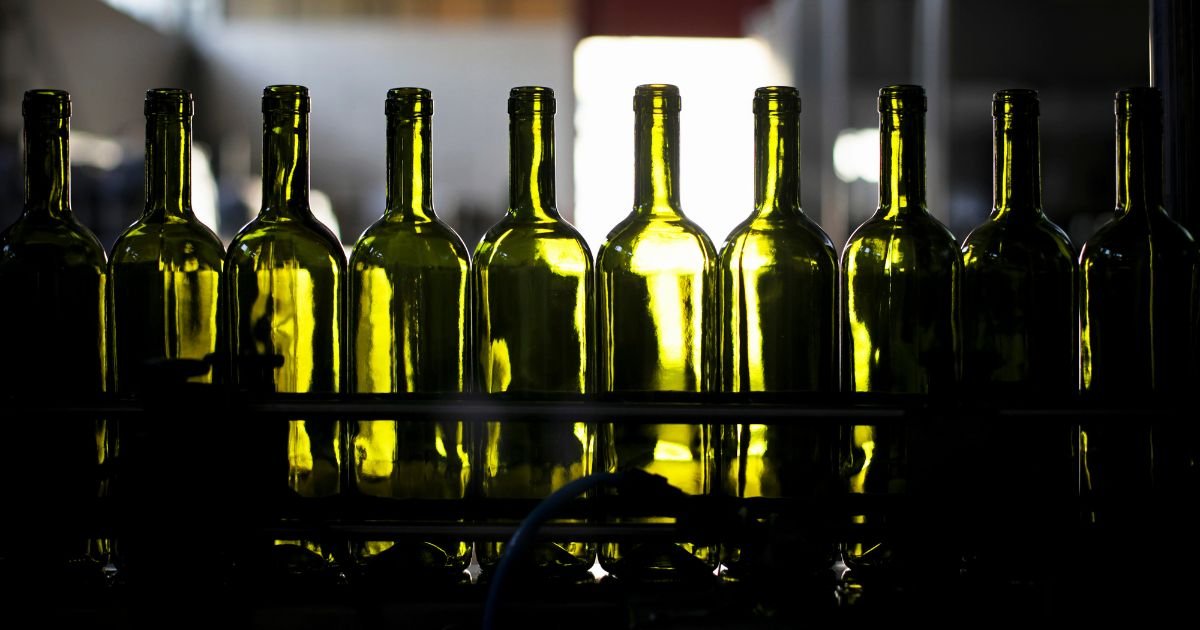
Why are wine bottles green?
A fine wine ruined in two weeks on a sunny shelf—it happens more often than you’d think. The culprit: light, which green glass has been shielding wine from for centuries. You’ll learn why your bottles are green, what this color actually blocks, and which shades offer the best protection depending on the type of wine. You’ll be able to read a bottle at a glance and preserve your collection without any unpleasant surprises. And it all starts with a story about sand.
Green glass filters out the rays that spoil wine and helps protect it. A green bottle protects its contents for about two months, whereas a clear bottle loses its effectiveness in two weeks. Red wine holds up better than white wine thanks to its tannins.
Why are most wine bottles green?
At first, the color green was more of a necessity than a choice.
The first wine bottles, hand-blown beginning in the 17th century, were made from local sand. This sand contains small amounts of iron oxides, which naturally give the glass its blue-green color. Green and amber bottles, the most common types, come in various shades resulting from the presence of iron in its two oxidation states in different proportions: blue-green and yellow. At the time, producing colorless glass required costly expertise and specific additives. Tinted glass was therefore the default choice, as it was the least expensive to produce.
Winemakers quickly realized that these dark bottles preserved wine better than the few clear containers available. What had been a manufacturing constraint became an advantage for preservation. In the 19th century, as on-estate bottling became widespread, green glass established itself as the standard for wines meant for aging—from Bordeaux châteaux to Burgundy wine merchants and the estates of the Rhône Valley. This practice has been passed down through generations: for a wine intended to age, tinted glass is chosen, regardless of the terroir.
Today, color is carefully controlled and intentional, but the principle remains the same. The dark glass acts as a barrier against light, which damages the wine.
What is the purpose of green glass?
The primary function of green glass is to protect the wine from light before it reaches it. Not all light rays are created equal: it is primarily ultraviolet rays (UV light) and a portion of the visible spectrum—blue-violet light—that cause damage. Tinted glass bottles absorb a significant portion of these wavelengths, whereas wine remains sensitive to UV rays throughout its entire time in the bottle.
Without this protection, wine undergoes two main changes:
- excessive oxidation of the aromas and color, causing the fruit flavors to fade and the color to lose its luster;
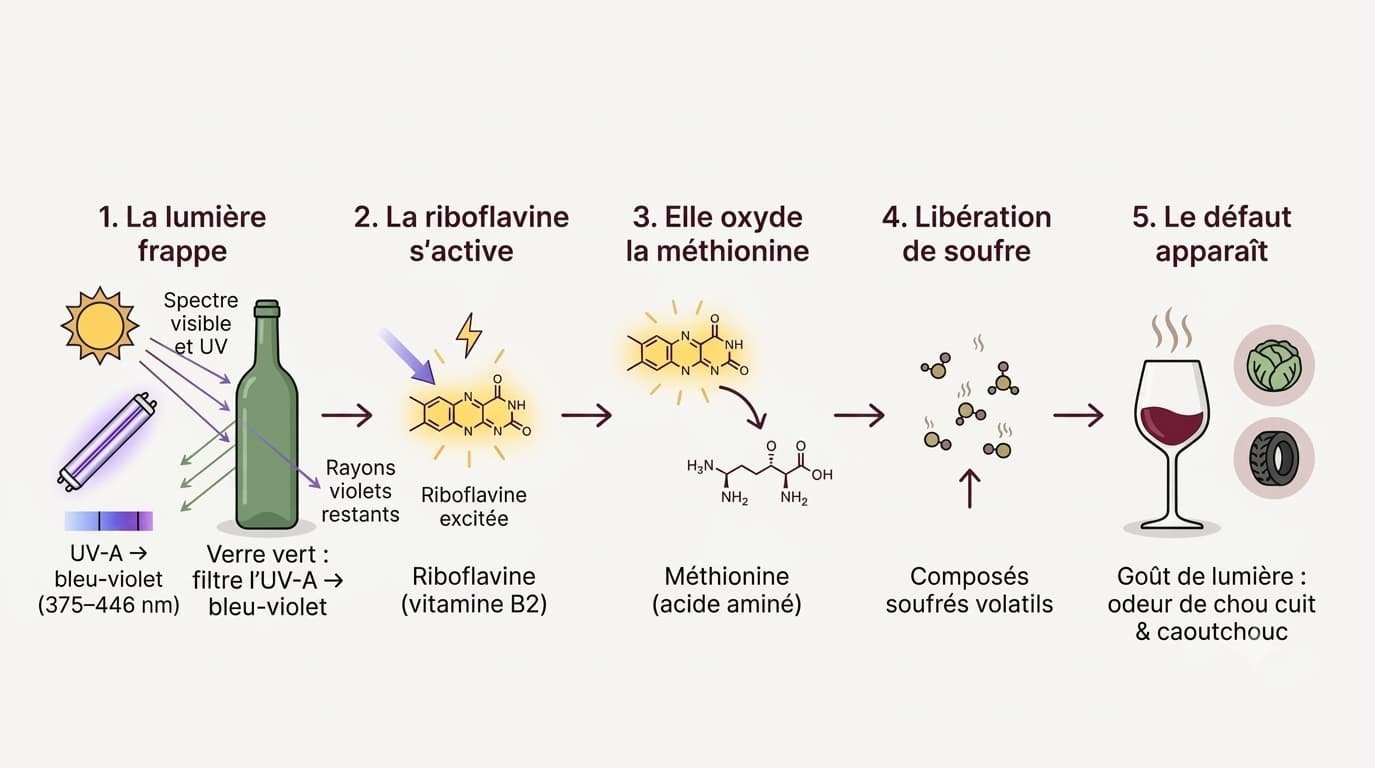
- the onset of the so-called “taste of light, ” an olfactory defect that smells like cooked cabbage or rubber.
Green glass doesn't block everything. It slows things down. It buys the wine time against an enemy to which it remains vulnerable throughout its entire life in the bottle.
How does green glass protect wine?
It all comes down to a chemical reaction triggered by light.
The mechanism behind the “light-induced off-flavor” results from a photochemical reaction between two compounds naturally present in wine: riboflavin, a light-sensitive yellow pigment that transitions to an excited state, and methionine, an amino acid derived from the grapes themselves, which alcoholic fermentation redistributes without actually creating it, and which is then oxidized by riboflavin. This oxidation releases volatile sulfur compounds—the very ones that cause these unpleasant odors. The more riboflavin a wine contains, the higher the risk.
Riboflavin does not react to just any light. Vitamin B2 reacts to wavelengths ranging from 375 nm for UV-A to 446 nm in the visible spectrum, which are present in sunlight as well as in many neon lights. Not all light is harmful to wine, but these specific wavelengths are, and they are the ones that tinted glass absorbs most effectively. The darker the tint, the more effective the filtering.
A practical tip for those who store their bottles: for the same shade, the darker the glass, the better it filters. But no green glass—even thick green glass—can match the protection provided by amber glass. Color matters more than thickness.
How long does each shade protect the wine?
Not all colors are equally suitable for wine storage. Here’s the margin of error allowed by continuous light exposure before a defect becomes apparent.
| Bottle Color | Protection Level | Time before deterioration* |
|---|---|---|
| Clear/colorless glass (white glass) | Virtually zero | ~2 weeks |
| Green glass (ranging from light green to dark green) | Okay | ~2 months |
| Amber glass (amber bottle, brown) | The Best | ~3 months |
*These time frames apply to continuous exposure to room or store lighting. In direct sunlight, damage occurs much more quickly—within a few hours. And they vary depending on light intensity, temperature, and the type of wine.
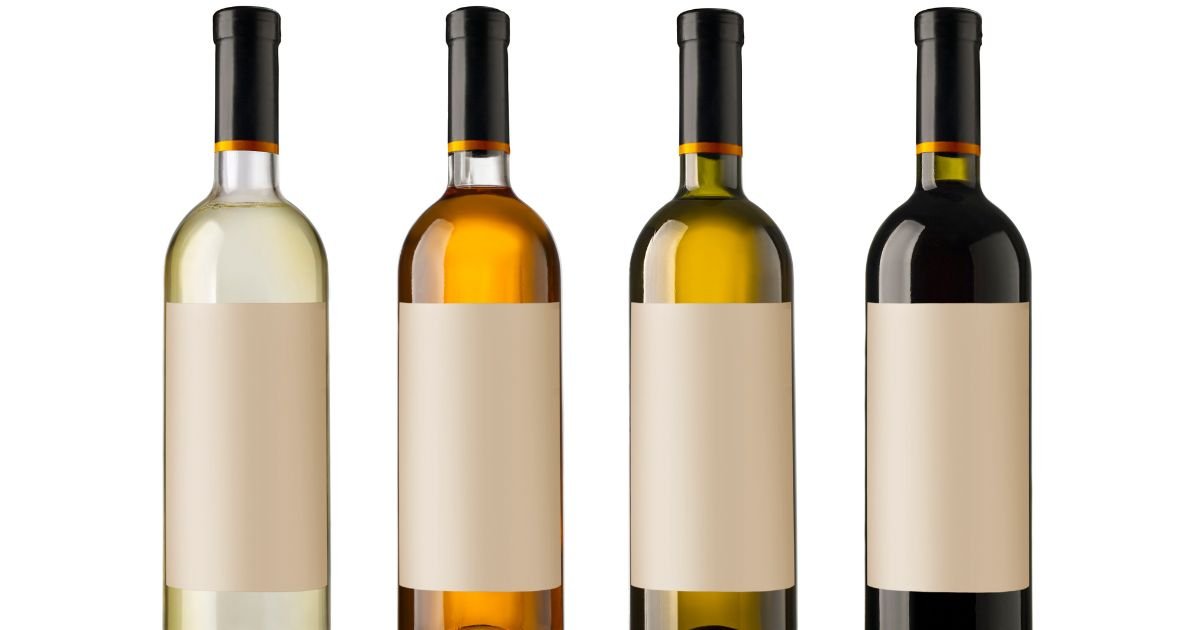
Contrary to popular belief, clear glass filters out virtually none of the wavelengths that damage wine. It is therefore used primarily for rosés and certain young wines meant to be drunk quickly, where the decorative effect of the color takes precedence over long-term preservation.
Why is wine sensitive to light?
Because light acts as an accelerator of aging—and not in a good way.
A wine normally evolves through slow micro-oxidation—through the cork—over the course of several years. Light short-circuits this process. It triggers rapid chemical reactions that degrade the aromas and color within a few weeks—sometimes within a few days for a delicate wine exposed to direct sunlight.
Two factors make matters worse:
- Heat is often associated with light. A bottle placed near a window is exposed to both at the same time.
- Clear glass, which lets through what tinted glass blocks.
That’s also why it’s recommended to use a wine cellar with opaque doors and to avoid storing bottles in direct sunlight for long periods of time. Green glass provides protection, but it doesn’t do all the work. Where you store your bottles matters just as much.
Not all wines react the same way
One fact that often comes as a surprise: red wine withstands light much better than white or rosé.
Red wines are naturally better protected against the effects of light thanks to their much higher content of phenolic compounds compared to white and rosé wines. Tannins and anthocyanins act as an internal shield against light-induced oxidation.
Champagne and white wines, on the other hand, are particularly vulnerable. Just a few minutes in direct sunlight are enough to spoil a glass of champagne—a flaw that a taster will notice immediately. The light first washes away the most delicate notes—white flowers and fresh fruit—before replacing the wine’s flavor with the smells of cabbage and sulfur. This is why so many prestige wines are sold in boxes or bottles covered with a protective layer. Sweet and syrupy wines, rich in sugar but not necessarily in protective compounds, require the same care. One exception is Vin Jaune from the Jura region, which is aged under a veil of yeast in extremely oxidative conditions; it follows its own rules and keeps for a very long time once bottled.
| Type of wine | Sensitivity to light | Why |
|---|---|---|
| Red | Low | Rich in tannins and anthocyanins |
| White | High | Few protective compounds, often rich in riboflavin |
| Rosé | High | Low phenolic barrier |
| Champagne | Very high | The wine is often clear, and aging on the lees enriches it with reactive compounds |
What other bottle colors are there, and what do they mean?
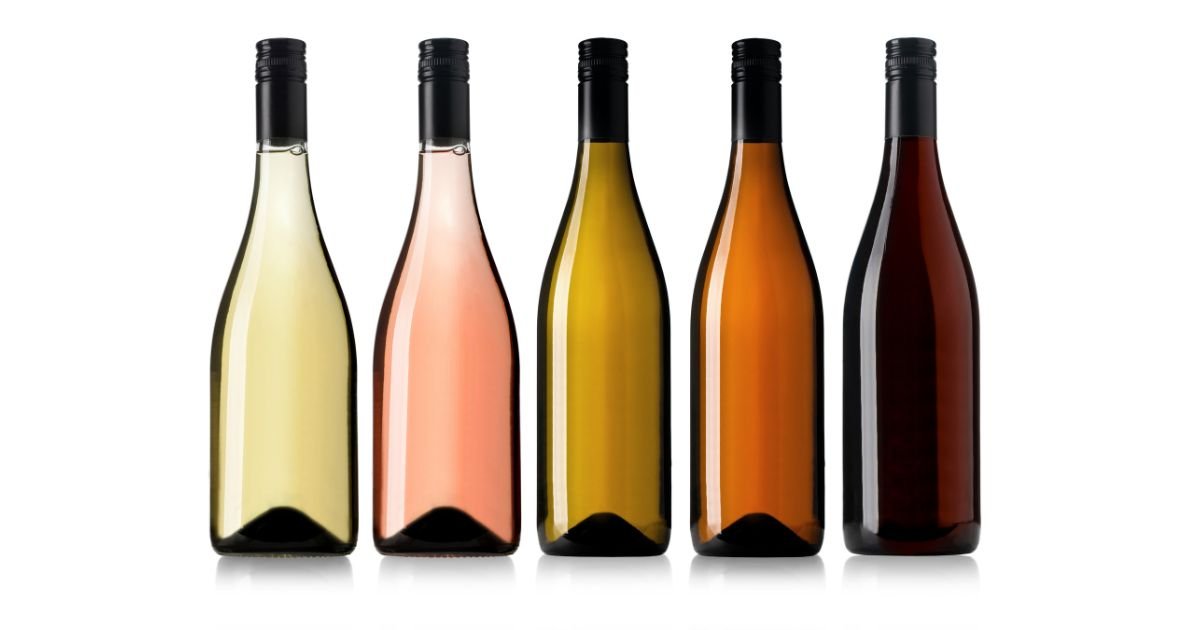
Green dominates, but it coexists with other shades, each of which serves a specific purpose. The choice of color is based on both the local environment and the intended use.
- Amber (brown): maximum protection. Reserved for wines that are most sensitive to light and for certain regions that have made it their hallmark, such as the Rhine wines in Germany (the Moselle, however, remains green).
- Dark green: the standard for age-worthy wines, with Bordeaux and Burgundy leading the way. A good balance between protection and the ability to assess the wine’s color.
- Light green (tall flute): This color is commonly found on Alsatian white wines, where regional tradition dictates both the shape and the color.
- Transparent (colorless): chosen to showcase the wine’s color; commonly used for Provence rosés and young wines such as Beaujolais Nouveau. Offers minimal protection, so it is intended for immediate consumption.
The color thus conveys two things at once: a regional tradition and an intention to age the wine. A wine in a clear glass implicitly tells you, “Drink me quickly.” A grand cru in a dark glass tells you, “I can wait.”
Choosing and Storing Bottles Based on Their Color
The glass does its part. The rest is up to you—and especially where you store your bottles.
A few simple guidelines:
- Wines meant for aging, when stored in dark-colored bottles, can be kept for a long time, provided they are kept away from direct light and heat.
- White wines, rosés, and champagnes require more care. Prolonged exposure—even behind tinted glass—will eventually affect them.
- Regardless of the type of wine, direct sunlight and fluorescent lighting should be avoided when storing it for several months.
A beautiful collection is worth showing off. It also deserves to be properly stored. The Wine Line modular system strikes a balance between the desire to display your bottles and the need to store wine properly.
Explore the collectionWhat the Color of the Glass Says About the Wine
Let’s recap the impact of color on what you drink. Wine is a living beverage: halfway between the original grape juice and a stable alcoholic beverage, it continues to evolve in the bottle. Light disrupts this evolution by attacking its most fragile component—its aromas. Tinted glass filters out some of the harmful effects of light, and the chosen tint speaks volumes about the producer’s intent.
In the market, the rule is almost obvious at a glance:
- A premium wine meant for aging comes in a dark-colored bottle, a sign that it is meant to be cellared;
- A rosé or white wine meant to be enjoyed within the year is often served in a clear glass, which is more decorative;
- A wine intended to be used in a cocktail or drunk quickly doesn't need the same protection.
Knowing how to choose the right color means, above all, knowing how to interpret the information on the bottle about the wine’s aging potential. The quality of the wine isn’t determined by the color of the glass, but the color does provide information on how to store it.
Frequently Asked Questions
Why are red wine bottles green, even though red wine is more resistant to light?
Mainly out of tradition and manufacturing practice. Green glass remains the standard in major wine-producing regions known for age-worthy wines, such as Bordeaux and Burgundy. Even though red wine holds up better than white, tinted glass provides an extra layer of protection for wines intended to age for a long time.
Does green glass completely protect wine from light?
No. It filters out a large portion of UV rays and blue light, but it doesn’t block everything. A green bottle left in continuous exposure will eventually deteriorate after about two months. The protection provided by the glass is complemented by storing the bottle away from light.
What exactly is the “taste of light”?
This is an aromatic defect caused by light. The riboflavin present in wine reacts with an amino acid—methionine—and releases sulfur compounds that smell like cooked cabbage or rubber. White wines and champagne are particularly susceptible to this defect.
Why are some rosé wines sold in clear bottles?
To showcase their color, which is a key selling point for this type of wine. Clear glass offers virtually no protection from harmful light, so these wines are meant to be drunk young and stored away from light.
Where should you store your bottles of wine?
In a dark, cool, and stable place, away from direct light and heat. A cellar with opaque doors is ideal. For wall displays, choose a location away from windows and bright lights.
A wine collection that grows at your own pace.
Modular wall-mounted shelves in raw or lacquered steel. Holds up to 22 bottles per module, 2-year warranty, free shipping on orders over €350.
Explore the collectionExcessive alcohol consumption is harmful to your health. Please drink responsibly.