
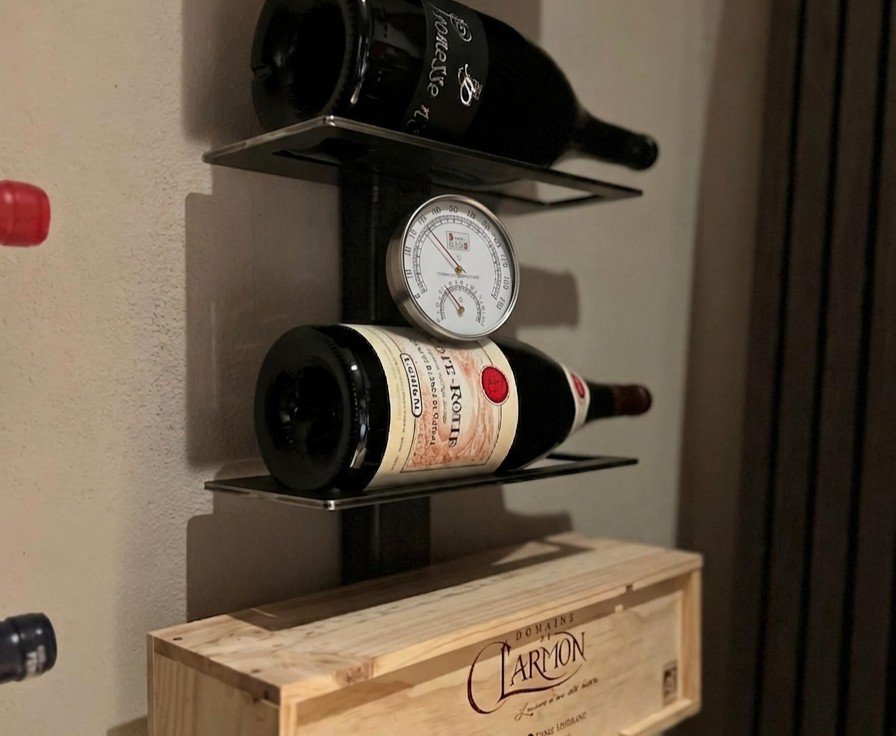
Wine cellar temperature: 12 °C, and above all, stable
You’ve probably been told that your wine cellar should never exceed 14 °C. It’s the kind of figure people repeat without really knowing where it comes from. The truth is less rigid. Wine handles a cellar that gently fluctuates between 11 and 17 °C throughout the seasons just fine. What it hates are sudden temperature changes. Here are the right temperature guidelines for aging and serving by wine type, along with other factors that matter just as much as the thermometer.
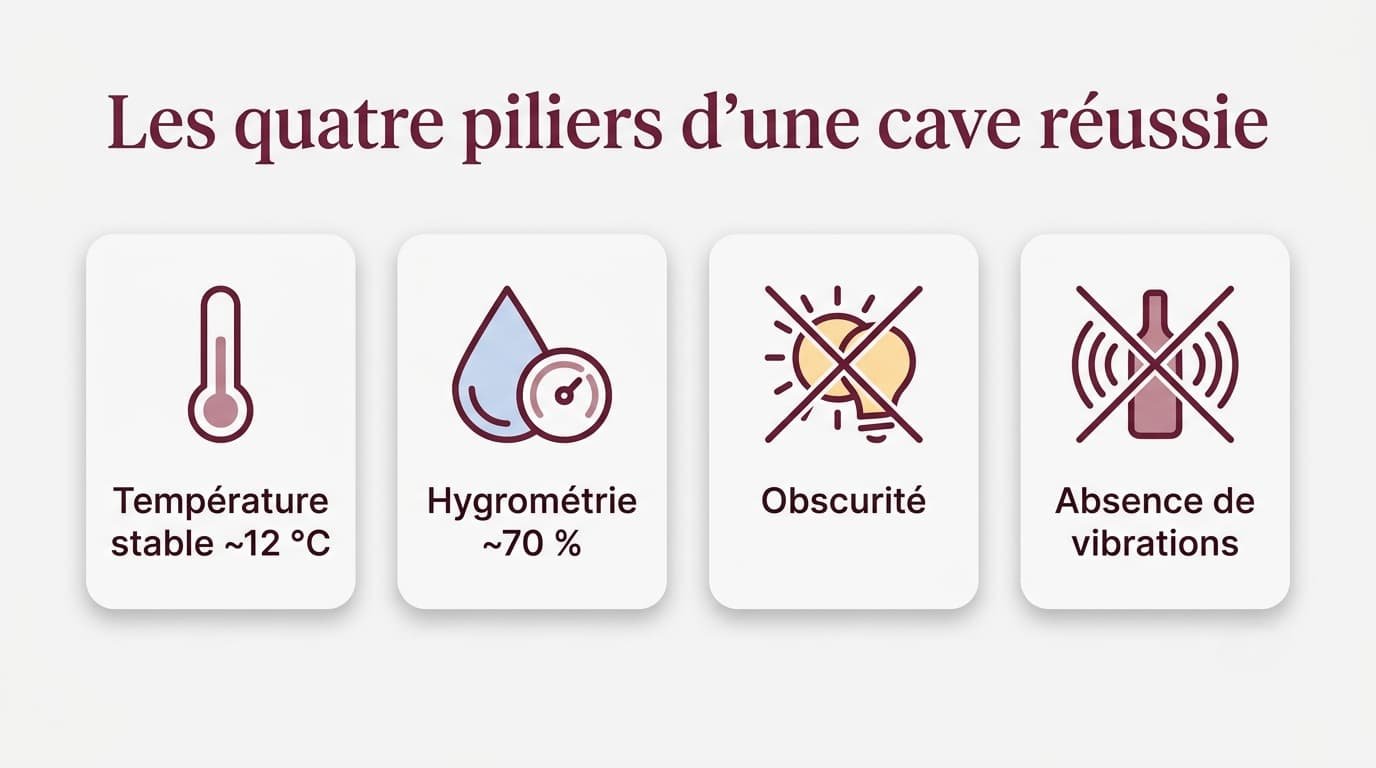
To age wine, aim for a temperature of about 12 °C—and, above all, keep the temperature stable. When it’s time to drink, the ideal temperature depends on the wine: around 16–18 °C for a full-bodied red, 10–12 °C for a dry white, 8–12 °C for a rosé, and 6–8 °C for a sparkling wine. In addition to temperature, humidity (around 70%), darkness, and the absence of vibrations are also important factors.
The ideal storage temperature is around 12 °C
For a wine cellar, the standard temperature is around 12 °C. This temperature has one advantage: it is suitable for all wines, from reds meant for aging to whites and sparkling wines. At this temperature, the chemical reactions that cause the wine to evolve proceed slowly, at just the right pace. The wine gains complexity without becoming tired.
Should you panic if your wine cellar reads 14 °C? No. A few degrees above or below that won’t ruin anything. The myth of a strict 14 °C limit needs to be put into perspective. What damages a bottle isn’t one degree too much—it’s instability.
Why Consistency Is More Important Than the Exact Number
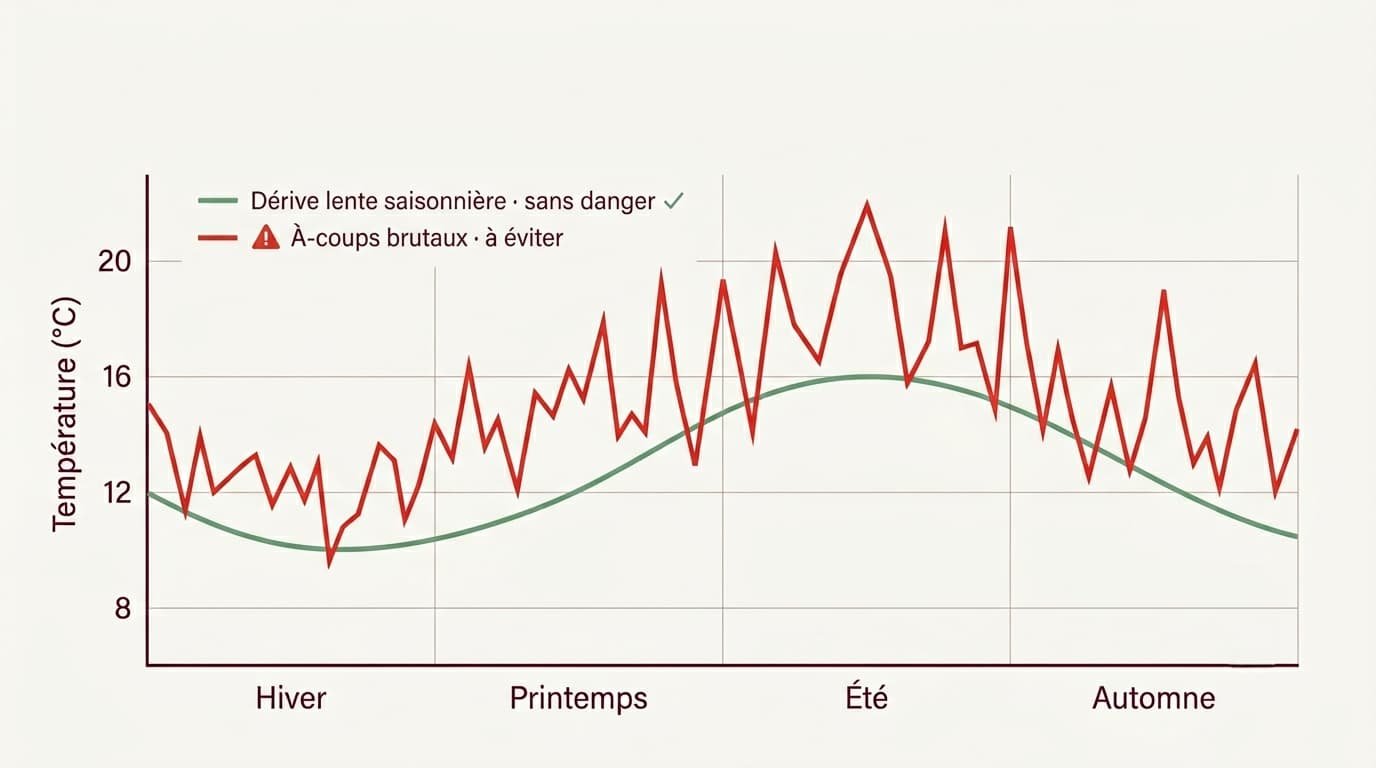
A natural cellar changes with the seasons. Temperatures can drop to 10 °C in January and rise to around 16 °C in August. This slow fluctuation, spread out over months, is well tolerated: the wine adapts to the changes without suffering. At most, it ages a little faster during the hottest weeks. For bottles intended for very long-term aging, the goal is to keep the temperature around 14–15 °C, but for the vast majority of cellars, this slow fluctuation is not a concern.
The danger lies in sudden temperature fluctuations. A bottle that goes from 12 to 22 °C in a single day causes the liquid to expand rapidly. The cork shifts, air enters, and oxidation accelerates. When repeated often, this thermal stress causes the wine to age prematurely. So if you have to choose a battle, choose stability over the pursuit of the perfect temperature.
When the temperature stays above 18 to 20 °C for an extended period, what happens?
Prolonged heat accelerates aging. Storing your bottles at 22 or 24 °C for months is like skipping steps. The fruit aromas fade, and the wine becomes flat—sometimes even cooked. If you plan to drink it soon, it’s not a big deal. But if you plan to age it for a long time, it’s best to find a cooler spot.
Storage or serving: two temperatures that should not be confused
This is the most common mistake. People store their wine at the right temperature, then serve it immediately at that same temperature. But the two have nothing to do with each other.
The storage temperature refers to aging, sometimes for years. We’re talking about a stable 12 °C. The serving temperature, on the other hand, is adjusted just before drinking, and for a red wine, it’s almost always higher than the cellar temperature. A Bordeaux served at 12 °C remains closed; its tannins seem harsh. The same wine, brought up to 17 °C, releases its fruit.
The opposite is true for white wines and sparkling wines. A wine cooler set to 12 °C keeps them in good condition, but they’re often served cooler. In short, we store them at one temperature and serve them at another. This distinction also applies to two types of appliances: serving coolers and aging coolers.
At what temperature should each type of wine be served?
Serving temperature makes all the difference on the palate. If it’s too cold, a wine closes up and hides its aromas. If it’s too warm, the alcohol comes to the forefront and throws it off balance. Here are the serving temperature ranges that wine enthusiasts generally agree on.
| Type of wine | Operating temperature |
|---|---|
| Full-bodied red (Bordeaux, Côtes-du-Rhône) | 16 to 18 °C |
| Light red (Beaujolais, Pinot Noir) | 14 to 15 °C |
| Dry white wine | 10 to 12 °C |
| Sweet white wine | 8 to 10 °C |
| Rosé | 8 to 12 °C |
| Champagne and Sparkling Wines | 6 to 8 °C |
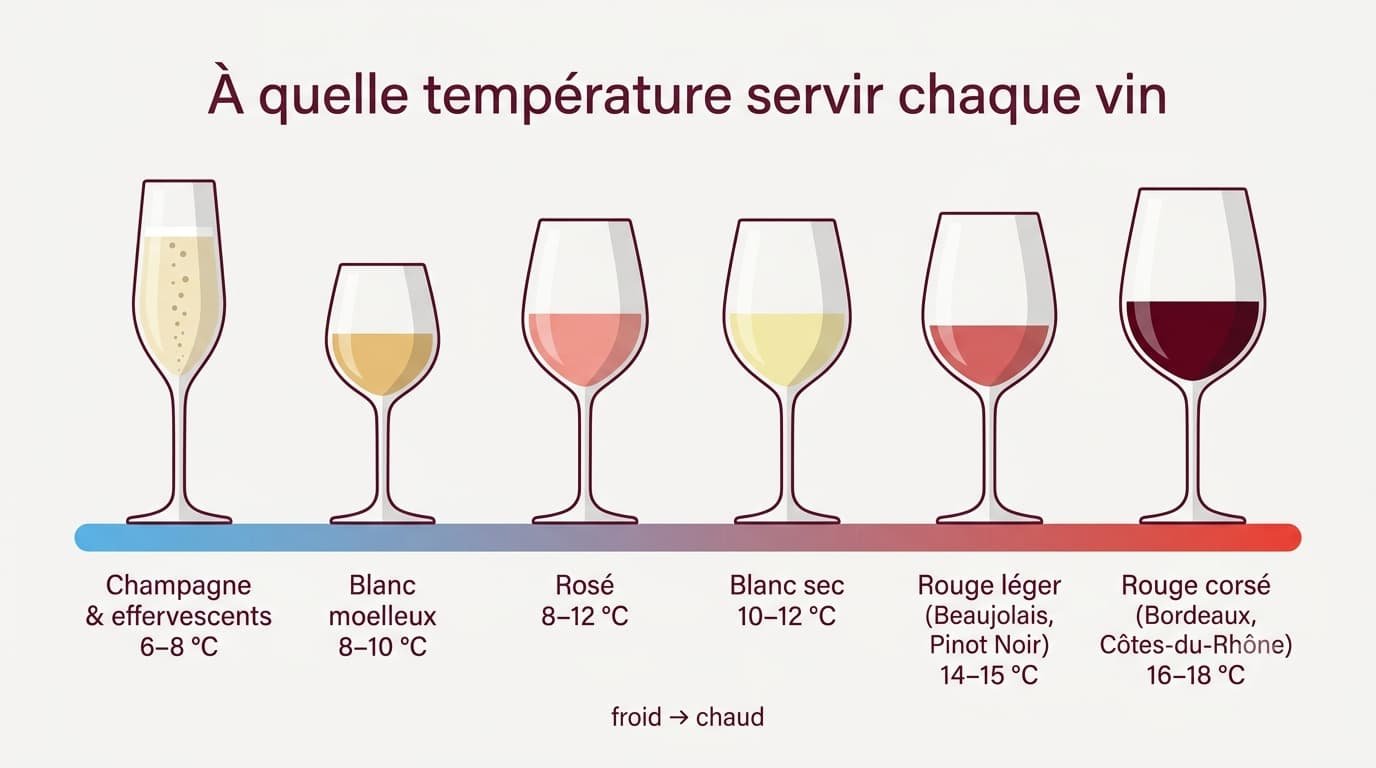
There are two useful points to note in this chart. Most dry white wines are best served at around 10–12 °C; you can go as low as 8 °C for a very crisp or sparkling white, but a fine white wine served too cold will become closed off and lose its body. As for rosé, the range is broad: 8–10 °C for a light, refreshing rosé, and 10–12 °C for a more structured rosé meant to accompany a meal. For sparkling wines, too, there are nuances: standard brut wines are served at 6–8 °C, but a vintage Champagne or a grand cuvée benefits from being served slightly warmer, around 10–12 °C, to reveal its body.
A handy tip: Take a red wine out of the cellar a good half hour before the meal—it will reach the right temperature gradually. For a white wine or champagne, a quarter of an hour in the cool or in an ice bucket is enough. And be wary of the famous “room temperature”: the expression dates back to a time when rooms were cooler than a modern heated living room—probably around 16–17 °C rather than today’s 21 °C. Serving a red wine at modern living room temperature is often too warm.
Other factors that are just as important as temperature
The thermometer isn't everything. A successful wine cellar depends on several factors, and neglecting the others means all your efforts to maintain the right temperature will be for nothing. Four factors always come up: humidity, darkness, quiet, and air.
Humidity around 70%
The ideal humidity level is around 70%. Humid enough to keep the corks supple, but not too humid to prevent mold and peeling labels. A cork that dries out lets air in, which is a surefire way to cause oxidation. That’s why bottles are stored on their sides: the wine remains in contact with the cork, which helps keep it moist. It’s worth noting that this long-standing practice is now being debated—according to some cork manufacturers, it’s primarily the moisture inside the bottle that protects the cork, and screw caps or synthetic closures keep very well when stored upright. Storing bottles on their sides, however, remains a safe and convenient practice.
In practice, a range of 60 to 75% is acceptable. If it’s too dry—below 50%—the caps shrink. If it’s too humid—above 80%—the labels curl, and mold grows on the cardboard and packaging. A small wall-mounted hygrometer, costing less than 20 euros, is all you need to keep an eye on these conditions at a glance.
Darkness and UV Rays
Light is a subtle enemy of wine. Ultraviolet rays catalyze reactions that degrade aromas, especially in white wines and sparkling wines stored in clear bottles, which offer less protection than the dark green glass of wine bottles. A wine cellar must remain dark. Avoid direct sunlight and fluorescent lights; opt for soft, spot lighting when you need to see. An LED light that doesn’t generate heat—turned on only when you’re passing by—works perfectly.
Vibrations
Vibrations are often cited as one of wine’s enemies, even though their actual effect is more modest and more debated than that of heat, which remains the primary factor in wine degradation. Strong or repeated shaking can stir up the deposits in wines meant for aging—which form a sediment—so it’s best to exercise caution. Be wary of hidden sources: an adjoining washing machine, a boiler, or a wine cellar located under a staircase. A wine cellar should be a quiet place. Place your bottles on a stable, securely anchored rack, then leave them be.
Ventilation
Fresh air prevents odors from seeping through the cork. Cork is microporous, and a cellar that smells musty, like fresh paint, or damp cardboard will eventually affect the wine. Discreet ventilation is enough to refresh the air without creating a warm draft. Also avoid storing paint, solvents, or aged cheeses in the cellar, as their odors travel farther than you might think.
Natural wine cellar or electrical cabinet: which should you choose?
Not everyone has an underground wine cellar or a wine cooler. The good news is that for bottles you plan to drink in the coming weeks or months, maintaining the temperature to the nearest tenth of a degree doesn’t matter at all. What matters is a place that’s already at a moderate and stable temperature.
A natural cellar—whether underground or semi-underground—offers ideal thermal inertia: its temperature changes slowly with the seasons and costs zero euros in electricity. It’s the best solution for long-term storage, provided you have one. If you’re starting from scratch, there’s nothing stopping you from building a real cellar yourself if you have the space. An electric wine cooler, on the other hand, is a good option when you don’t have a cool room, or when you want to maintain a specific serving temperature so the wine is ready to drink. To decide between the two, ask yourself the real question: are you looking to age wine for ten years, or to properly store a supply for immediate consumption?
A wine cellar, a north-facing room sheltered from the sun, or a basement often maintain a suitable temperature year-round. In this type of already cool room, the focus becomes primarily practical: organizing your wine cellar methodically so you don’t forget anything, keeping the labels legible, and easily accessing the right bottle. A wall-mounted storage system with visible labels, such as the modular Wine Line® system, meets this need to showcase your collection in a room you’ve already chosen for its cool temperature.
Keep in mind
To age your wines, aim for 12 °C and, above all, a temperature that doesn’t fluctuate wildly. Then serve each bottle at its ideal temperature: warmer for reds, cooler for whites and sparkling wines. And don’t forget to maintain humidity around 70%, along with darkness and quiet. A successful wine cellar is, first and foremost, a consistent environment.
Frequently Asked Questions
What is the ideal temperature for a wine cellar?
Around 12 °C for a wine cellar. This temperature is suitable for all types of wine. More than the exact number, it is the consistency over time that protects your bottles.
How do you store wine at the right temperature?
Choose a cool, stable location, protected from sudden temperature fluctuations. A gradual change between 10 and 16 °C over the course of the seasons is not a problem. Store the bottles on their sides to keep the corks moist.
At what temperature should wine be served?
Aim for 16 to 18 °C for a full-bodied red, 14 to 15 °C for a light red, 10 to 12 °C for a dry white, 8 to 12 °C for a rosé (preferably chilled if it’s light), and 6 to 8 °C for champagne or sparkling wine.
What is the difference between a wine aging cellar and a wine serving cellar?
The aging cellar maintains a stable temperature of around 12 °C for long-term storage. The serving cellar adjusts the temperature to suit the type of wine just before it is served.
What is the ideal humidity level for a wine cellar?
About 70%, with an acceptable range of 60 to 75%. This is enough to keep the corks supple, but not so much as to cause mold or damage to the labels. A wall-mounted hygrometer makes it easy to monitor this.
Do you need a wine cooler to store wine properly?
Not necessarily. A natural cellar or a cool, stable room is sufficient for storage. A wine refrigerator is mainly justified when no room in the house stays cool and at a consistent temperature year-round.
A wine collection that grows at your own pace.
Modular wall-mounted shelves in raw or lacquered steel. Holds up to 22 bottles per module, 2-year warranty, free shipping on orders over €350.
Explore the collectionExcessive alcohol consumption is harmful to your health. Please drink responsibly.